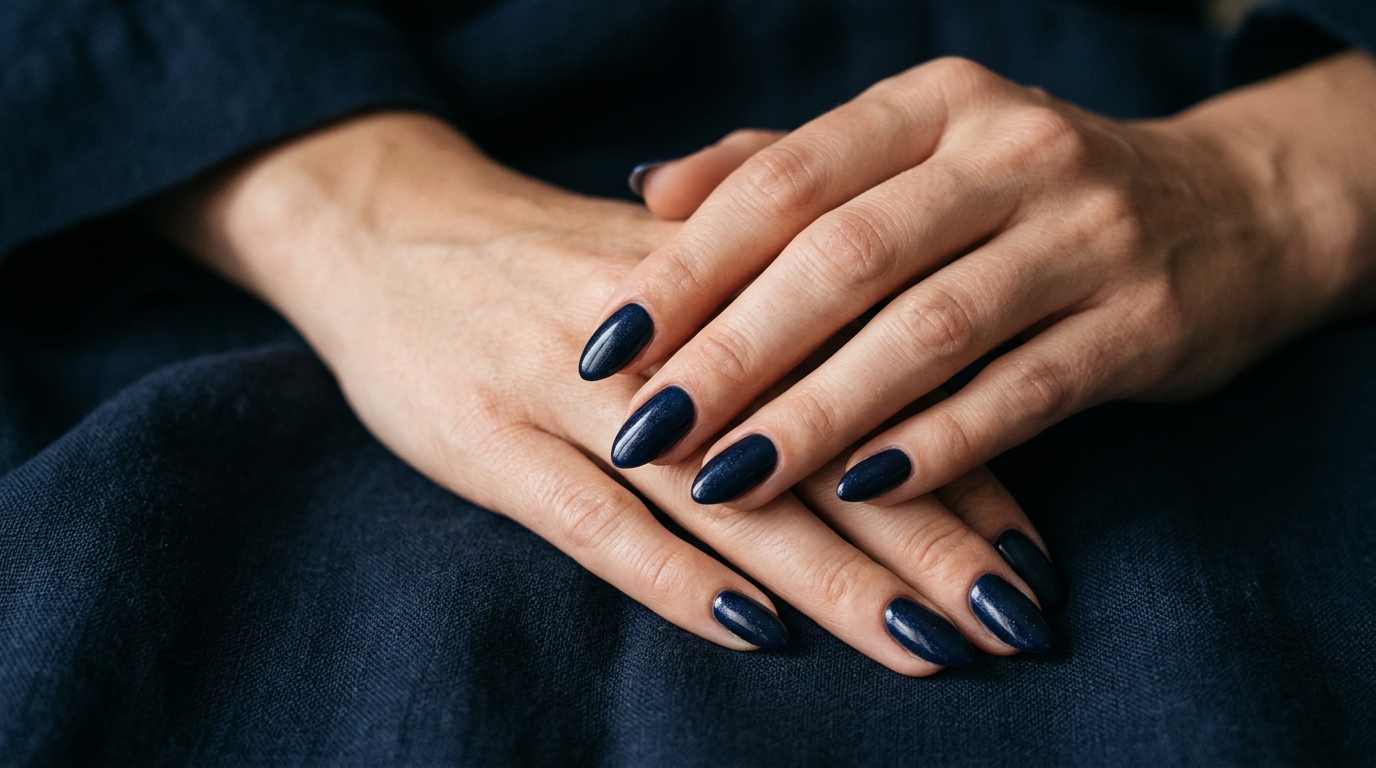
You’ve seen the nails you want. You’ve saved the picture, you’ve imagined them on your hands, and you’ve mentally planned three outfits around them. Then you sit down in my chair, and I tell you we can’t go that long.
It’s not what you want to hear. I know that. But it’s one of the most important things I’ll ever say to you as your nail tech, and honestly, it’s one of the reasons you should trust me.
The 50% Rule: Why Extension Length Has a Limit
There’s a principle in nail enhancements that doesn’t get talked about nearly enough: the free edge of your nail extension should never be longer than your nail bed.
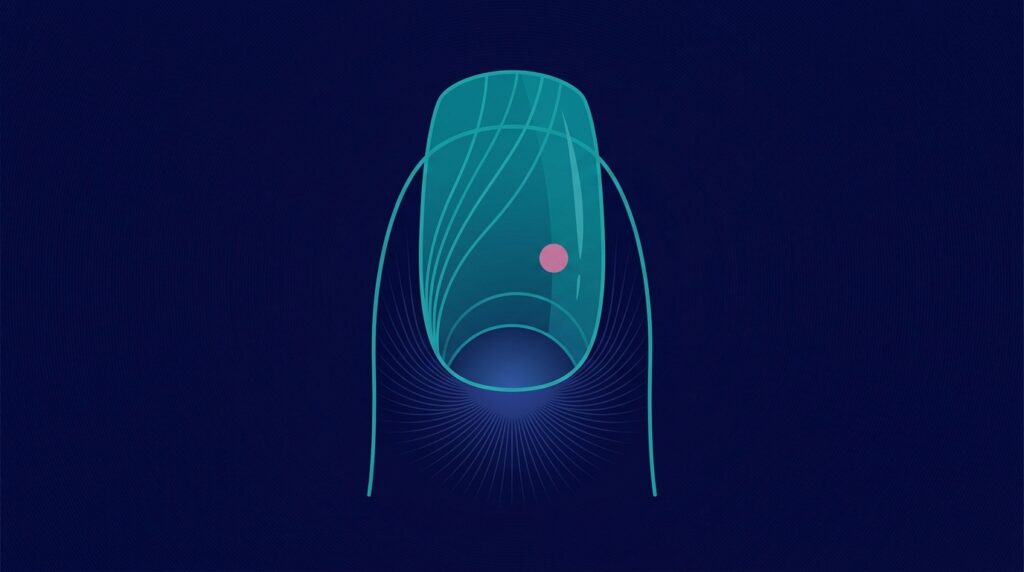
Your nail bed is the pink part of your nail, the bit that’s attached to the skin underneath. The free edge is everything beyond that. If your nail bed is, say, 15mm long, your free edge shouldn’t exceed 15mm either. Some techs call it the 50% rule. It’s not arbitrary, and it’s not about being cautious for the sake of it. It’s structural.
Think of it like building a shelf. If half the shelf is bolted to the wall and the other half extends outward, it’s stable. But if you try to extend it three times further than the bit that’s secured? It’s coming down. And it’s taking whatever’s on it with it.
Your nails work the same way. The nail bed is your anchor point. The further past it you extend, the more stress you place on that connection, and eventually, something gives.
Here’s the thing, though: the 50% rule is a starting point, not a life sentence. It’s most important for clients who are new to extensions, or who haven’t worn them consistently before. Your nail beds need time to adapt to carrying extra length and weight. If I’ve never seen your hands before, or you’re coming to me after a long break from enhancements, the 50% rule is where we begin.
Over time, as your nail beds adjust to wearing extensions regularly, you may be able to go longer. Some people’s nail beds adapt brilliantly. Others are more reluctant. That’s not a failing on anyone’s part; it’s just anatomy. But it does mean that what I offer you on your first visit might not be the same as what we can achieve six months down the line, and that’s a good thing. It means your nails are being built up properly, not pushed beyond what they can handle from day one.
What Happens When You Go Too Long
When extensions are pushed beyond what the nail bed can support, a few things happen, and none of them are good.
Lifting and breakage become inevitable. The leverage on the nail increases with every millimetre of extra length. Daily tasks, such as opening a car door, typing, and even washing your hair, put disproportionate force on the base of the nail. That’s where lifting starts, and once it starts, moisture gets trapped underneath. That’s how you end up with greenies or worse.
Your natural nail takes the hit. When an over-extended nail snaps or lifts, it rarely breaks cleanly at the product. It tears into your natural nail. I’ve seen clients come to me after having nails ripped off at the nail bed because their previous set was simply too long for their hands. That kind of damage takes months to grow out, and it hurts.
The shape suffers too. Overly long nails on a short nail bed lose their structural integrity. They flex, they warp, they don’t hold a clean shape. No amount of skill can override physics.
Why Other Places Might Say Yes
I understand the frustration. You might have been somewhere else where they happily gave you super-long stiletto nails and didn’t bat an eye. There are a few reasons for that.
Some techs prioritise giving the client exactly what they ask for, even when it’s not in the client’s best interest. It avoids a difficult conversation, and it keeps the booking. I get the logic, but I don’t agree with it.
Others might genuinely not have been taught the 50% rule, or they’ve learned to work around it by applying thicker product, which creates its own problems. Bulky nails are heavy nails, and heavy nails put even more strain on the nail bed.
And sometimes, honestly, it’s a volume issue. In a busy salon environment, there isn’t always time to assess each client’s nail beds individually and have that conversation. That’s one of the advantages of working one-on-one — I have the time and the space to get this right.
How I Assess Safe Nail Extension Length for Your Hands
When you come to me wanting length, I don’t just say no and leave it at that. I look at your nail beds, assess their length and condition, consider your history with extensions, and tell you exactly what we can achieve safely right now.
For some clients, that’s a decent amount of length straight away. Not everyone has short nail beds, and if yours can support longer extensions, brilliant. But if your nail beds are on the shorter side, or you’re new to enhancements, I’ll suggest a length that gives you the look you’re after without compromising your nails’ health. We can always build up over time as your nail beds adapt.
Often, that means working with nail shape to create the illusion of more length. An almond or coffin shape, for instance, visually elongates the fingers far more than a square shape at the same length. A well-structured short acrylic set can look more elegant than an over-extended long set that’s fighting against your anatomy.
This is where the prescriptive approach matters. I’m not picking a shape and length off a menu. I’m looking at your hands, your nail beds, your lifestyle, and building something that works for all of it.
It’s Not About What I Won’t Do. It’s About What I Will
I will give you nails that last properly between appointments. I will protect your natural nails underneath. I will make sure your enhancements work with your hands, not against them. And I will always tell you the truth, even when the truth is “that length isn’t going to work for you yet.”
That might not be what every client wants to hear on a first visit. But the clients who stick with me? They come back because their nails genuinely hold up. They don’t have mystery breakages a week in. They don’t lose a nail pulling on a pair of jeans. Their infills go smoothly because the foundation was right from the start.
Bringing an Inspo Pic? Good. Let’s Talk About It
I always encourage clients to bring reference photos. They’re genuinely helpful. But I treat them as a starting point for a conversation, not a set of instructions.
If your inspo pic shows a length that won’t work for your nail beds right now, I’ll let you know, then show you what we can do instead. Nine times out of ten, clients are happier with the result than they expected, because the nails actually suit their hands rather than just replicating someone else’s.
Your nails are unique. Your nail beds, your cuticle shape, the way your nails grow, all of it is specific to you. The best set of nails I can give you is one that’s been designed around that, not in spite of it.
The Bottom Line
If a nail tech tells you they can do any length you want, no questions asked, that should give you pause. It’s not a sign of skill or flexibility. It’s a sign that your nail health isn’t a priority for them.
I’d rather have an honest conversation now than deal with the fallout of a set that was never going to hold. And I’d rather you leave with nails you can actually live in, nails that look beautiful, feel comfortable, and stay put until your next appointment.
That’s the standard. And I won’t compromise it.