
You’ve probably had this experience before. You book a nail appointment, pick a colour, sit down, and the technician gets straight to work. No questions asked. Maybe the nails look great for a few days — then the chipping starts, or an edge lifts, or one nail snaps while you’re doing something completely mundane like opening a tin.
And you think it’s your fault. That you’re too rough with your hands, or your nails are just “bad.”
Nine times out of ten, it’s not you. Nobody stopped to figure out what your nails actually needed before they started.
That’s what a prescriptive manicure is really about — and it’s the way I work with every single client who sits in my chair.
What a prescriptive manicure actually means
It sounds fancy, but the concept is straightforward. Instead of applying the same product, the same way, to every client, I assess your nails individually and choose the service and products based on what I see and what you tell me.
Your nail type matters. Your lifestyle matters. Whether you work with your hands, how much water exposure you get, whether your nails are naturally flexible or rigid — all of this affects which product system will actually perform well on your nails.
Someone with thin, flexible nail plates might do brilliantly with a builder gel overlay for added strength. Someone with strong, healthy nails who just wants colour might only need a gel polish. And someone who’s hard on their hands might benefit from acrylic because of its durability.
There’s no single product that’s right for everyone. The skill is in knowing which one to recommend and why.
The problem with generic nail services
When a technician doesn’t assess your nails before starting, you’re essentially getting a lucky dip. Sometimes it works out. Often it doesn’t.
Here’s what tends to go wrong:
Lifting and peeling. If the wrong product is applied to a nail plate it’s not suited to, it won’t bond properly. That leads to lifting — usually at the cuticle area first — which then catches on things and peels away. It’s not just annoying, it can damage the nail underneath if you start picking at it.
Breakage. Choosing a rigid enhancement for naturally flexible nails (or vice versa) creates a mismatch. The product and the natural nail move differently, and something has to give. That’s usually the nail. If you find one nail keeps breaking while the others are fine, there’s often a specific reason that a proper consultation would catch.
Unnecessary weakness. Applying strengthening products to nails that don’t need them can actually make things worse over time, creating a cycle of dependency. Equally, skipping proper nail care because “the product will fix it” is a recipe for ongoing problems.
None of this happens because you’ve done something wrong. It happens because nobody took the time to look at your nails properly before they started working on them.
How I approach it
Every appointment at my studio starts with a conversation. If you’re a new client, I’ll ask about your nail history — what you’ve had before, what worked, what didn’t. I’ll look at your natural nails and assess their condition, thickness, and flexibility. I’ll ask about your job, your hobbies, how you use your hands day to day.
This isn’t a tick-box exercise. It genuinely changes the service I recommend.
If your nails are brittle or dehydrated, I might suggest a structured manicure with builder gel to protect them while they recover. If you want length but have shorter nail beds, I’ll be honest about how far we can safely extend without compromising the nail. If you’ve been picking off your gel (I won’t judge, but I will gently tell you to stop), we’ll talk about what’s going on and find a better approach.
The consultation your nail tech should be having with you is the foundation of everything else. Without it, the rest is guesswork.
And it doesn’t stop at your first visit. I reassess every time you come in because nails change. The seasons affect them. Stress affects them. Medications, hydration, even switching jobs — all of it can shift what your nails need from one appointment to the next.
Why the setting matters too
I work from a private home studio in Waterloo, and that’s a deliberate choice. When it’s just you and me, there’s no rush. No one else waiting. No background noise from six other stations.
That one-on-one time means I can give your nails my full attention — noticing things I might miss in a busy salon environment. A slight change in texture, a nail that’s grown differently this time, early signs of lifting that we can address before it becomes a problem.
It also means there’s space for you to actually relax. Sit back, have a coffee, and let me do what I do. Your appointment is yours — no sharing, no rushing.
If you’re curious about the difference between a high-street salon and an independent technician, I’ve written about the rise of independent nail techs and why more people are making the switch.
What you can do between appointments
A prescriptive approach doesn’t stop when you leave the studio. How you look after your nails at home has a huge impact on how well your manicure holds up.
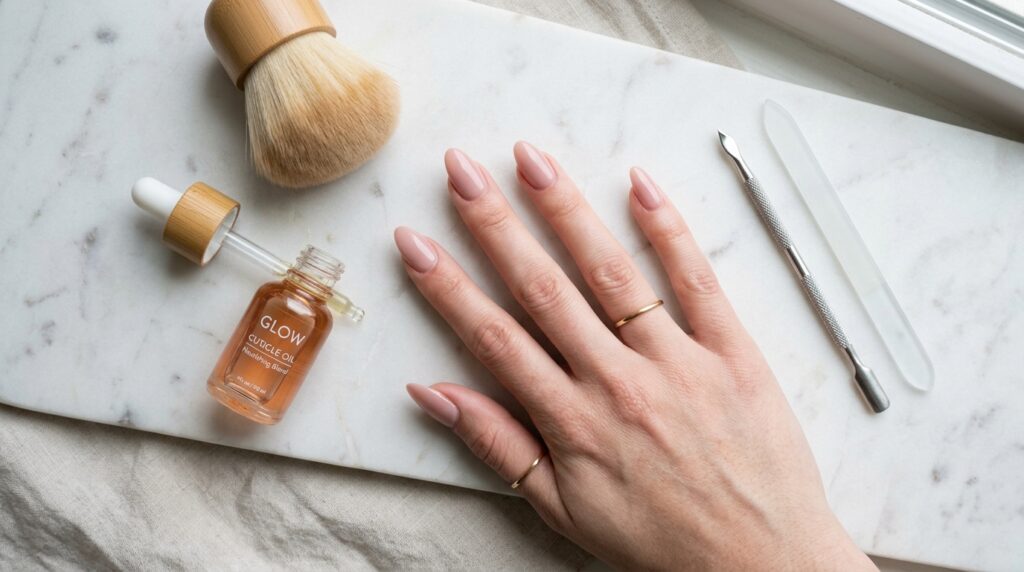
The single most effective thing you can do? Use cuticle oil. Twice a day, every day. It keeps the natural nail and the surrounding skin hydrated, which helps your product last longer and your nails grow healthier.
Beyond that, proper cuticle care and being mindful of how you use your nails (they’re not tools, no matter how tempting it is to prise open a ring pull with them) will make a real difference to how long your manicure lasts.
The right nails for you
A prescriptive manicure isn’t a premium upsell or a trend. It’s simply the way nail services should be done — and it’s the way I’ve always worked.
If you’re in Crosby, Waterloo, or the surrounding areas, you can book your appointment online. I’d love to have a proper look at your nails, talk through what would work best for you, and build a service plan that actually makes sense for your hands and your life.
Your nails deserve more than a lucky dip.