
You found a deal. Thirty quid for a full set of acrylics, maybe less. The photos on their page look fine. The salon is busy, so they must be good, right?
I’m not here to shame anyone for watching their budget. But I am going to be honest about something I see constantly in my treatment room: the nails that cost the least upfront almost always cost the most in the end.
The Price Tag Doesn’t Tell the Whole Story
When a set of nails is priced significantly below the going rate, something has to give. Product quality, time spent on preparation, proper technique — one or more of these is being cut. That’s not a guess. It’s maths. A nail technician who understands their true costs knows that professional-grade products, thorough prep, and careful application take time, and time has a value.
A rushed appointment means corners get cut where you can’t see them. The nail plate might not be properly dehydrated. The cuticle work might be minimal. The product might be applied too thick in places and too thin in others. You leave happy because the nails look decent on day one. But what happens three days later, or a week later, when things start to lift?
Lifting Is Where the Real Cost Begins
When product lifts away from the natural nail, it creates a gap. That gap traps moisture. Moisture breeds bacteria. And that’s how you end up with greenies — those unsettling green patches underneath your enhancement that aren’t an infection, but are certainly a sign that something went wrong.
Lifting also weakens the structure of the entire nail. A set that should last three to four weeks starts popping off at ten days. So you go back for a repair, or worse, you glue it back on at home with something from the chemist. Now you’re paying for a repair appointment on top of the original set. Or you’re creating more damage by using adhesives that were never meant for natural nails.
The cost is already climbing.
Removal Damage Is the Bit Nobody Mentions
This is the part that frustrates me most. A cheap set often means a cheap removal — if removal is even offered at all. I’ve had clients sit in my chair with nails so damaged from improper removal that we couldn’t apply a new set straight away. The natural nail was paper-thin, peeling, and in some cases, genuinely painful.
Aggressive e-filing, prying product off, or picking and peeling at home — all of these strip layers from the nail plate. Your natural nail is only around 0.5mm thick. It doesn’t take much to cause real damage.
And here’s the kicker: repairing that damage takes time. Weeks, sometimes months, of careful care. You might need a prescriptive approach — starting with a structured manicure to protect and strengthen while your nails grow out. That’s another appointment. More cost. All because the original work was done on the cheap.
The Repair Cycle Nobody Budgets For
Let me walk you through what I actually see happen. Someone gets a cheap set. It lifts or breaks within two weeks. They go back for a repair or a new set — sometimes to the same place, sometimes somewhere else. The second application goes on top of nails that are already compromised. More lifting. More damage. More repairs.
Within a few months, they’re spending more than they would have if they’d booked with a qualified technician charging a fair price from the start. Except now their nails are also in worse condition, so the first proper appointment needs to address the damage before we can even think about what they actually want.
I’m not exaggerating when I say I’ve spent entire appointments just doing damage control — removing badly applied product, assessing the nail plate, and working out a realistic plan to get their nails healthy again. That’s a whole appointment where you’re paying to undo someone else’s work.
What You’re Actually Paying For With a Qualified Tech
When you book with a nail technician who charges what the service is worth, you’re paying for more than pretty nails. You’re paying for:
Proper preparation. Thorough cuticle work, correct dehydration, and a clean nail plate. This is the foundation. Skip it, and everything that goes on top is compromised.
Quality products. Professional-grade products that are formulated to work with the natural nail, not against it. They cost more to buy, and they perform better.
Correct application. The right product for your nails, applied at the right thickness, with the right apex placement. This isn’t cosmetic fussiness — it’s structural. A well-built nail lasts longer and protects the natural nail underneath.
Safe removal. When it’s time to take the product off, it’s done properly. No ripping. No excessive filing. No unnecessary trauma.
Ongoing assessment. A good tech looks at your nails every time you sit down. They notice changes. They adjust the service. They tell you if something needs attention. That kind of care doesn’t happen in a fifteen-minute turnaround.
“But My Nails Are Fine From the Cheap Place”
Maybe they are. Right now. Some people do get lucky, and I’d never claim that every budget salon does poor work. But I’d ask you to think about what “fine” means. Are your nails lasting the full three to four weeks? Is there any lifting? Have you noticed your natural nails feeling thinner or more brittle when the product comes off? Do your nails hurt during or after the appointment?
These are the early signs that something isn’t right. And they’re easy to dismiss when the price feels like a win.
The Honest Maths
Let’s say a cheap set costs £30 and lasts ten days before something lifts or breaks. You go back for a repair at £10. Two weeks later, you need a new set because it’s past saving. Another £30. That’s £70 in six weeks, plus two extra appointments, plus nails that are starting to thin out.
A properly applied set at £50–£60 lasts three to four weeks. You book your infill on time. No repairs needed. Your natural nails stay healthy underneath. Over the same six weeks, you’ve spent roughly the same amount — but your nails are in better condition, you’ve had fewer appointments, and you haven’t spent a single minute worrying about something pinging off in the shower.
The cheap option isn’t cheaper. It just spreads the cost across more problems.
What I’d Suggest
If budget is a genuine concern — and I completely understand that it can be — here’s what I’d recommend before defaulting to the cheapest option you can find:
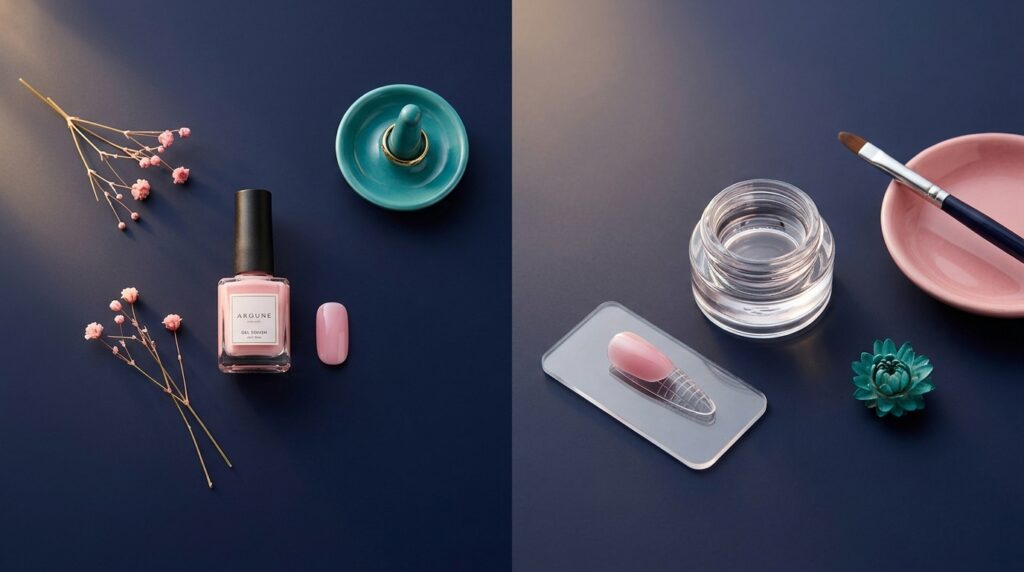
Talk to your technician about what’s realistic for your budget. A gel manicure or structured manicure might give you what you need at a lower price point than a full set of extensions, without compromising on quality.
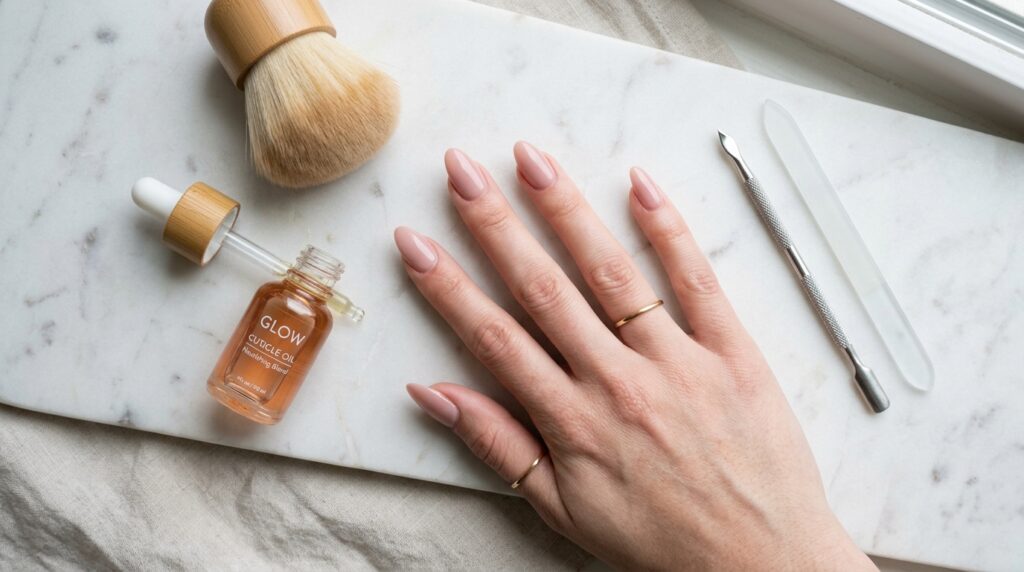
Look after your nails between appointments. Proper cuticle care, cuticle oil, and sensible habits can extend the life of your manicure and reduce the need for repairs.
Ask questions. A good technician won’t mind explaining what products they use, how they prep your nails, and why their service costs what it does. If they can’t answer those questions, that tells you something.
Cheap nails aren’t a bargain. They’re a down payment on a problem you haven’t met yet. Your nails deserve better than that, and honestly, so does your wallet.