Somewhere between the checkout queue and the Instagram ads, most of us have been sold the idea that nails are a supplement problem. Gummies, capsules, sachets, powders you stir into coffee. All of it promising thick, fast, unbreakable nails in thirty days.
I have nothing to sell you here. I don't stock supplements, I don't take a commission on any of them, and I have no reason to talk them up or run them down. So this is just what the evidence actually says, what it doesn't say, and what I genuinely see happening to nails at my desk.
What nail supplements claim, and what they usually contain
Most products marketed for nails, including the hair and nail formulas you see everywhere, are built around biotin, sometimes called vitamin B7. You'll also see collagen, zinc, iron, silica, and a scattering of B vitamins on the label. The pitch is nearly always the same: your nails are weak because something is missing, and this bottle is the missing thing.
That logic isn't mad. Your nail plate is made of keratin, which is a protein, and building keratin does need a range of nutrients. Where it falls apart is the jump from "nails need nutrients" to "therefore everyone benefits from a supplement".
What the evidence on biotin for nails actually shows
Biotin for nails has a surprisingly thin evidence base, and today we’ll talk about why.
A dermatology review by Lipner and Scher looked at the published research on biotin and nail disease. They found clinical reports of improvement in the firmness, hardness, and thickness of brittle nails with oral biotin, plus some case reports covering other nail conditions. Promising, on the face of it.
The important part is their conclusion: larger clinical trials with proper controls are still needed to establish whether it works and at what dose. In other words, the supportive studies are small, mostly uncontrolled, and in some cases decades old. They also tended to involve people who had genuinely brittle nails or a documented deficiency, not people with perfectly ordinary nails who fancied a bit more length.
So when someone asks me, "Do nail vitamins work?", the honest answer is that the research doesn't support the confident claims on the packaging. It doesn't prove they do nothing either. It's just thinner than the marketing suggests, and it was mostly done in a different group of people than the one buying the gummies.
I can't tell you whether you personally have a deficiency, and no one can read it off your nails from across a table. That's a blood test and a GP conversation, not a guessing game.
Why an honest trial takes months, not weeks
This is the bit I wish everyone knew before they spent any money.
Fingernails grow roughly 3mm a month. That's an average, and it varies with age, health, circulation, and the finger itself, but it's the right ballpark. A full nail plate takes about four to six months to grow from the matrix to the free edge, depending on the individual.
Which means the nail you're looking at today was made months ago. Nothing you swallow, oil, or apply can change nail that has already hardened and grown out. It can only affect what's forming underneath, and that new growth needs months to become visible.
So a four-week trial of anything tells you almost nothing. If you're going to test something, you need to give it a season, and you need to be honest about what else changed in that time. Most people who start a supplement also start paying attention to their hands. They stop picking at their gel, they oil their cuticles, they file instead of clipping. Then they credit the capsule.
The safety point most people haven't heard
Here's the genuinely useful thing, and it has nothing to do with whether supplements work.
High-dose biotin can interfere with certain laboratory blood tests. Biotin is used in the chemistry behind many common immunoassays, and excess biotin in a blood sample can skew the result, either falsely high or falsely low depending on the test. The US National Institutes of Health Office of Dietary Supplements flags this, and it affects tests people rely on, including thyroid function tests and cardiac troponin, one of the markers used when someone presents with chest pain.
A skewed result can mean a missed problem or an unnecessary investigation. It's not a reason to panic, and I'm not telling you to stop anything. It is a very good reason to mention every supplement you take, including anything bought for hair and nails, to your GP or the person taking your blood. Many people don't think of a beauty gummy as a supplement worth declaring. It is.
What I actually see at the desk
I look at a lot of hands. Same clients, every three to four weeks, over years. That's a decent, if unscientific, view of what changes nails and what doesn't.
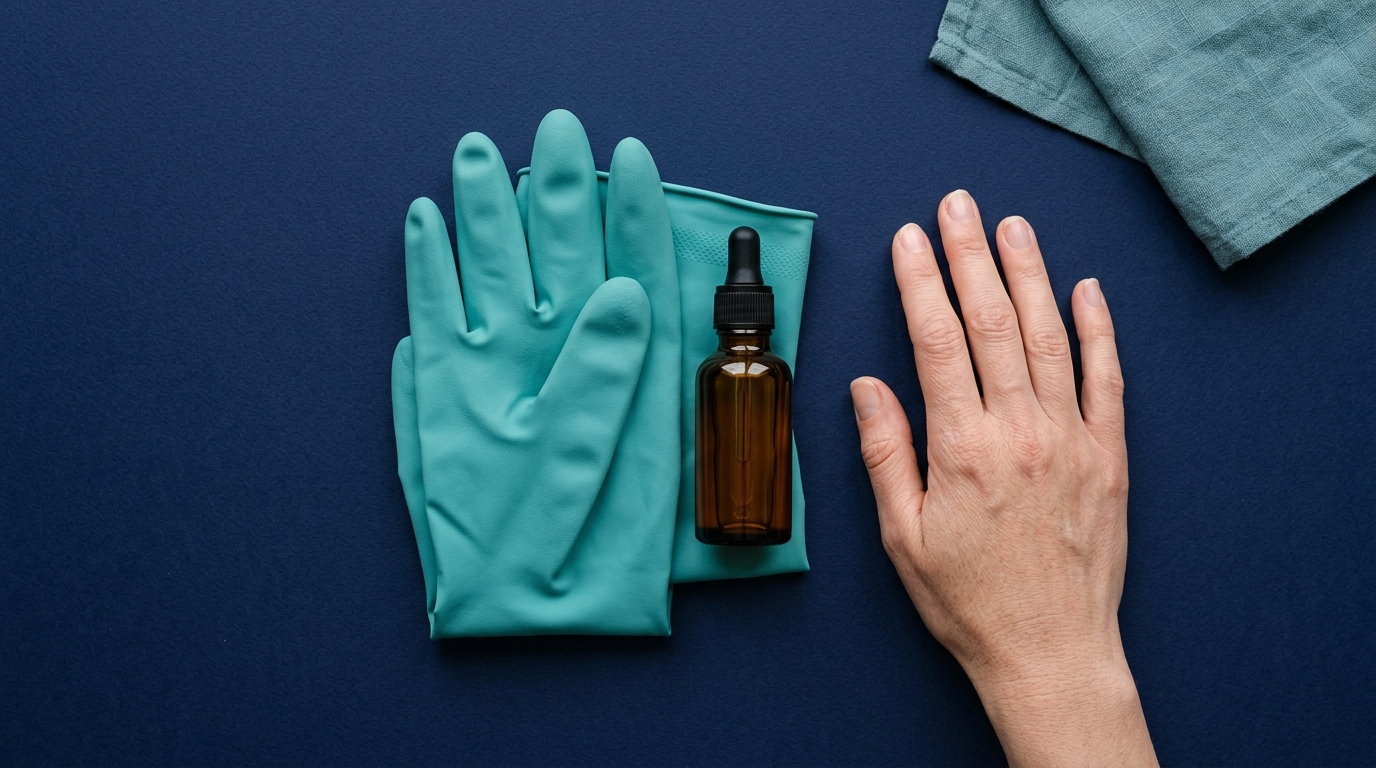
The clients whose nails visibly improve are almost never the ones who started a supplement. They're the ones who started using cuticle oil daily rather than occasionally. They're the ones who finally bought rubber gloves for washing up and cleaning. They're the ones who stopped picking their enhancements off and stopped using their nails to open things.
That's not a glamorous answer, and it doesn't come in a nice bottle, but it's what I have observed. Dehydration and mechanical damage are behind the overwhelming majority of the brittleness, peeling, and splitting I see. If you're not sure which camp you're in, my post on whether your nails are weak or just dehydrated will help you work it out, and the fuller rundown on brittle nails covers the causes in detail.
Eating properly matters, and I'd never suggest otherwise. Protein, iron, and healthy fats are the raw material your nails are built from, so nail health and diet are genuinely connected. But food and a supplement aren't the same conversation, and one of them needs a pharmacist's input.
If your nails changed noticeably in your forties or fifties, hormones are a far more likely explanation than a nutrient gap, and I've written about menopause and nails separately.
When to speak to your GP or pharmacist
Please have a proper conversation with a clinician rather than an ad if any of this applies:
- You're considering starting any supplement, and particularly if you're already taking other medication.
- You're pregnant, trying to conceive, or breastfeeding.
- You have any blood tests booked or expected, including routine monitoring.
- Your nails have changed suddenly or dramatically, or alongside other symptoms such as fatigue or hair changes.
- Your nails are discoloured, thickened, painful, lifting from the nail bed, or changing shape.
The NHS has a straightforward guide to nail problems and when they need looking at, and your pharmacist is a genuinely underused resource for supplement interactions. Both are free.
Where that leaves you
If you want to try a nail supplement after speaking to a pharmacist or your GP, that's entirely your call and none of my business. I'd just ask you to go in with realistic expectations: give it months rather than weeks, don't change five things at once, and tell whoever takes your blood that you're taking it.
And if you'd rather spend the money on something with a much more reliable return, buy a decent cuticle oil and a pair of gloves. That's the intervention I watch work, over and over, on real hands.
I'm a nail technician, not a doctor, dietitian, or pharmacist. Nothing here is medical advice, a diagnosis, or a recommendation to take or stop taking anything. For anything to do with supplements, medication, or a change in your health, speak to a qualified healthcare professional.