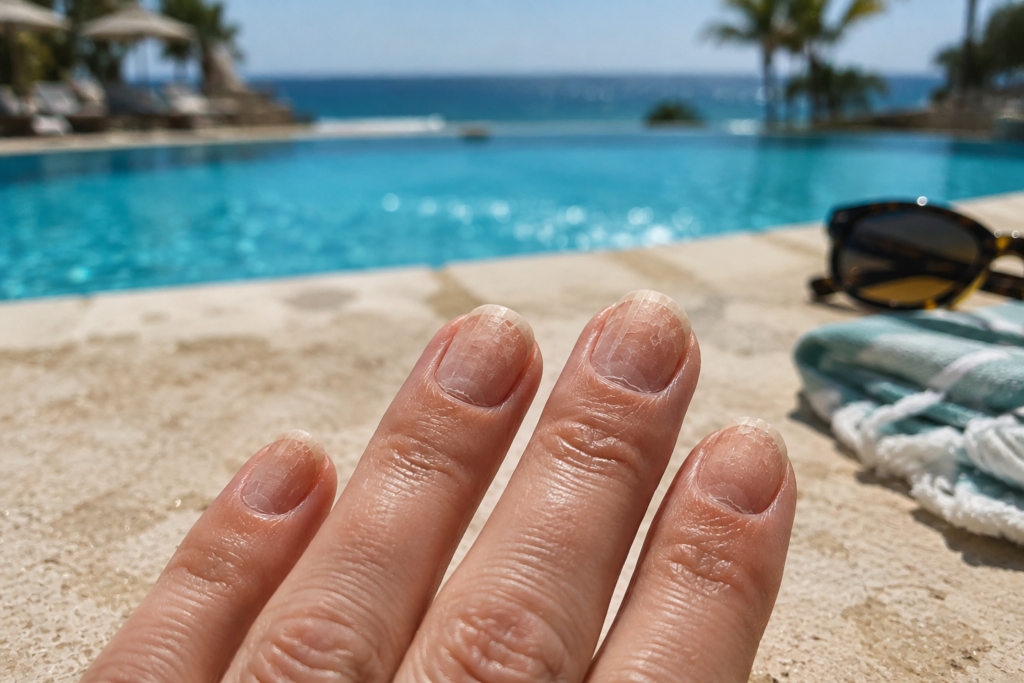

You've probably heard it your whole life. You spot a little white mark on your nail, and someone tells you it means you're low on calcium. Maybe you started taking a supplement. Maybe you just felt vaguely guilty about your diet.
I'd like to gently put that one to rest.
The calcium explanation is one of the most persistent nail myths going, and there's no good evidence behind it. What I want to do here is explain what those white marks actually tend to be, based on what I see across the desk every week, without pretending I can diagnose anything from a distance. Because I can't, and neither can anyone else who isn't examining your nail in person.
Where the calcium myth comes from
It's an old bit of folklore. The logic seems to make sense on the surface: your nails are hard, calcium makes bones hard, so white spots must mean you're running low.
The trouble is that nails aren't made of calcium. They're made of keratin, the same protein as your hair. Calcium plays a very minor role in the nail plate at best, and there's no reliable link between white marks and your calcium intake.
So if you've been dutifully topping up your calcium every time a white spot appears, I'm afraid you've been sold a story. The white mark was going to grow out either way.
What white spots on nails usually are
The proper name for these white marks is leukonychia, if you want the medical term. But the name matters far less than the mechanism.
Most of the white spots I see at the desk can be linked to minor trauma to the matrix. Your matrix is the part tucked under the skin at the base of your nail, where new nail is made. It's delicate. When it takes a small knock, the nail it produces in that moment can form with a tiny air pocket or imperfection that shows up as a white patch.
Here's the part that trips everyone up.
Nails grow slowly, roughly 3mm a month. So a white mark sitting halfway up your nail reflects something that happened to the matrix weeks ago, sometimes a couple of months back. That's why you can never remember the injury. The knock was so minor and so long ago that it didn't register at the time, and by the time the mark appears, the moment has passed.
This is also why these marks tend to grow out rather than respond to anything you put on them. The nail is already made. You're just watching it travel up and off the end.
I want to be careful here, though. Minor knocks to the matrix are the most common cause I see, but I'm describing a general pattern, not diagnosing your specific nail. White marks can be linked to other things too, which is why the bottom of this post matters as much as the top.
What I actually see cause them at the desk
When someone shows me white marks, there's usually a story in how they've been treating their hands. These are the patterns I notice most often.
Rough or forced removal
If gel or acrylic is taken off with force instead of patience, the nail underneath pays for it. Proper removal is slow and gentle, and your natural nail should come out of it looking normal. When it doesn't, the removal was the problem, not the product. I've written more on the difference between damage and removal trauma if you want the full picture.
Picking gel off
This is the big one. Peeling your gel off in that one satisfying strip takes the top layers of your nail with it, and it can leave white, chalky patches behind. I know the urge is strong, but picking off your gel does real damage, and white marks are one of the milder signs of it.
Aggressive cuticle work
The matrix sits just under the skin at the base of the nail, and it's protected by your cuticle. When someone digs in with a cuticle tool or cuts too deep, that protective seal is broken and the matrix underneath is more exposed. Gentle care matters here, which is exactly why I'm so particular about how cuticles should be handled.
Knocks you never registered
Trapping a finger in a drawer. Catching your hand on the car door. Bumping the edge of a worktop. None of these feel like injuries at the time, but the matrix is sensitive enough that a small knock weeks ago can show up as a white mark now.
Why you can't treat them away
I get asked fairly often how to get rid of white spots, and the honest answer is that you mostly don't. You wait.
Nothing you rub into the surface can change a mark that's already formed inside the nail plate. Buffing at it just thins your nail. The mark will travel up as your nail grows and disappear off the end, which usually takes a few months depending on where it started.
What you can do is look after the nail while you wait. Keep it hydrated with cuticle oil, be gentle with removals, and keep your hands off any lifting gel. That won't erase a mark that's already there, but it gives your nails the best conditions to grow out cleanly.
If your nails also feel bendy, soft, or generally fragile alongside the marks, that's a separate conversation about whether they're genuinely weak or just dehydrated. Worth a read, because the fix is different depending on which one you're dealing with.
When to speak to your GP or pharmacist
Most of the time, a stray white mark that grows out is nothing I'd think twice about at the desk. But I'm a nail technician, not a clinician, and there are changes that genuinely deserve a professional eye rather than my best guess.
Speak to a pharmacist or GP if you notice any of the following:
- a dark line or streak running down one nail
- changes affecting one nail only, with no injury you can think of
- pain, swelling, heat, or discharge around the nail
- a nail lifting away from the bed with no obvious cause
- horizontal dents or ridges running across several nails
- any nail change alongside feeling generally unwell
The NHS has a clear, sensible page on nail problems and when to get them checked if you'd like to read further before deciding.
There's no harm in getting something looked at. If it turns out to be nothing, you've lost ten minutes. If it's something worth catching early, you'll be glad you went.
The short version
White spots on your nails almost certainly aren't a calcium deficiency. Most of the marks I see can be linked to minor knocks to the matrix weeks earlier, which is why you can't remember the injury and why they grow out rather than respond to treatment.
Be gentle with your nails, keep them hydrated, and let the mark travel up and off. And if something looks different in the ways I've listed above, get it checked rather than waiting it out.
I am a qualified nail technician sharing what I see professionally at the nail desk. This is not medical advice and is not a substitute for assessment by a healthcare professional.