The central heating goes on, and within a fortnight I start seeing the same thing at my desk. Tiny splits of skin at the sides of nails. Little slivers lifted at the edge, some already pulled at, some caught on a jumper sleeve that morning. Hangnails arrive every autumn like clockwork, and they are one of the few nail complaints where the thing most people instinctively do about them makes the next one worse.
So let's sort out what they actually are, why you get a run of them at this time of year, and what to do instead of pulling.
A hangnail is skin, not nail, and it isn't a cuticle problem
This trips people up constantly, so it's worth being precise.
Your cuticle is the thin, non-living layer that grows out from under the skin at the base of your nail and sticks to the nail plate. That's the bit a nail tech can safely tidy. I've written a full guide to cuticle care if that's what you came for.
A hangnail is something different. It's a split or a lifted sliver in the skin that runs along the sides and base of your nail, known as the nail fold. That skin is living tissue. It has a blood supply and nerve endings, which is exactly why a hangnail stings when it catches and bleeds when you tear it.
Same neighbourhood, completely different tissue. Treating a hangnail as a cuticle issue is why so many people end up making a mess of it.
What causes hangnails, and why you get more of them in autumn
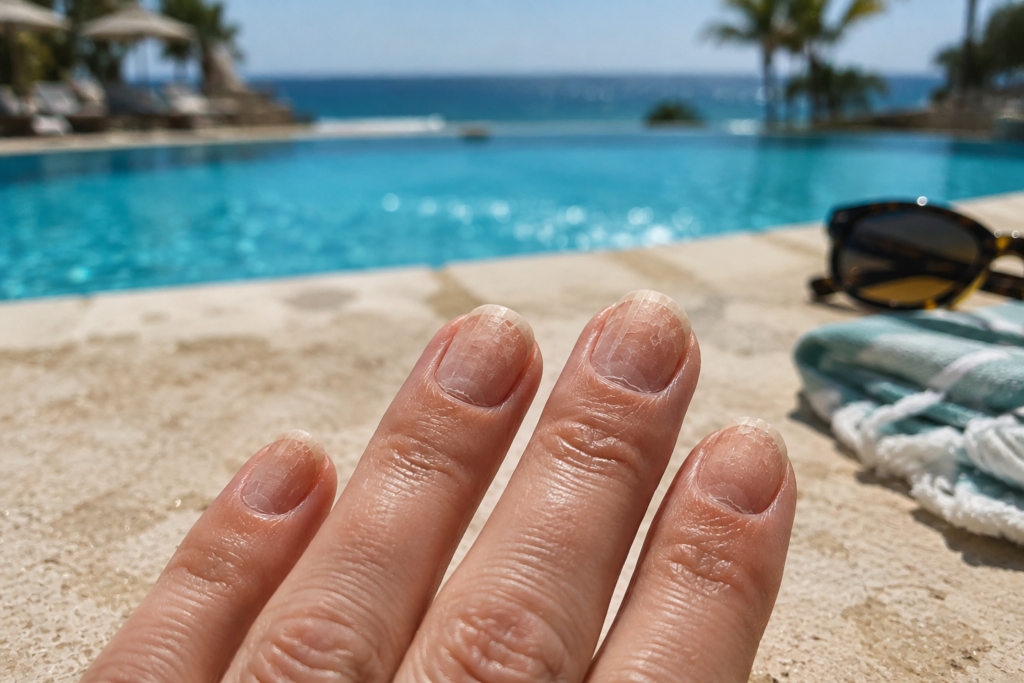
Hangnails can be linked to skin around the nail losing flexibility. Dry skin doesn't stretch. It splits.
Autumn stacks the odds against you. Cold air outside, dry heated air inside, and your hands moving between the two all day. Add the things that already strip your skin and it adds up quickly:
- Frequent hand washing and alcohol sanitiser
- Washing up and cleaning without gloves
- Going out with bare hands in cold wind
- Picking or biting at the skin around your nails, often without noticing
- Non-living tissue building up around the nail fold, drying out, and lifting so it catches on fabric
None of that is you doing something wrong. It's a seasonal shift, and it's manageable once you know what you're managing. My winter nail care guide covers the wider picture, but hangnails deserve their own answer because the fix is specific.
Why pulling a hangnail makes the next one worse
Here's what happens when you grab the loose bit and pull, whether with your teeth, your other nails, or tweezers.
The sliver of skin is still attached at one end. Skin doesn't tear along a neat line, so instead of removing the loose piece, you rip further into tissue that was perfectly intact. You've turned a snag into a small open wound at the edge of your nail.
Two things follow. First, it hurts, and it keeps hurting every time you use your hands. Second, you've broken the skin barrier in one of the grubbiest places on your body, right beside the nail edge. The NHS advice on looking after your nails is explicit about not biting or picking the nails or the skin around them, and this is why.
Then there's the longer-term problem. Skin that has been torn and healed repeatedly doesn't come back smoother. It comes back tougher and more irregular, which gives you more edges to catch and split next time. That's how one hangnail becomes a habit, and how a habit becomes a whole finger you're constantly picking at.
How to get rid of hangnails properly
The aim is to remove the loose piece cleanly without touching anything that's still attached.
1. Soften the skin first. Do this after a shower or a wash, never dry and never in a rush at a red light.
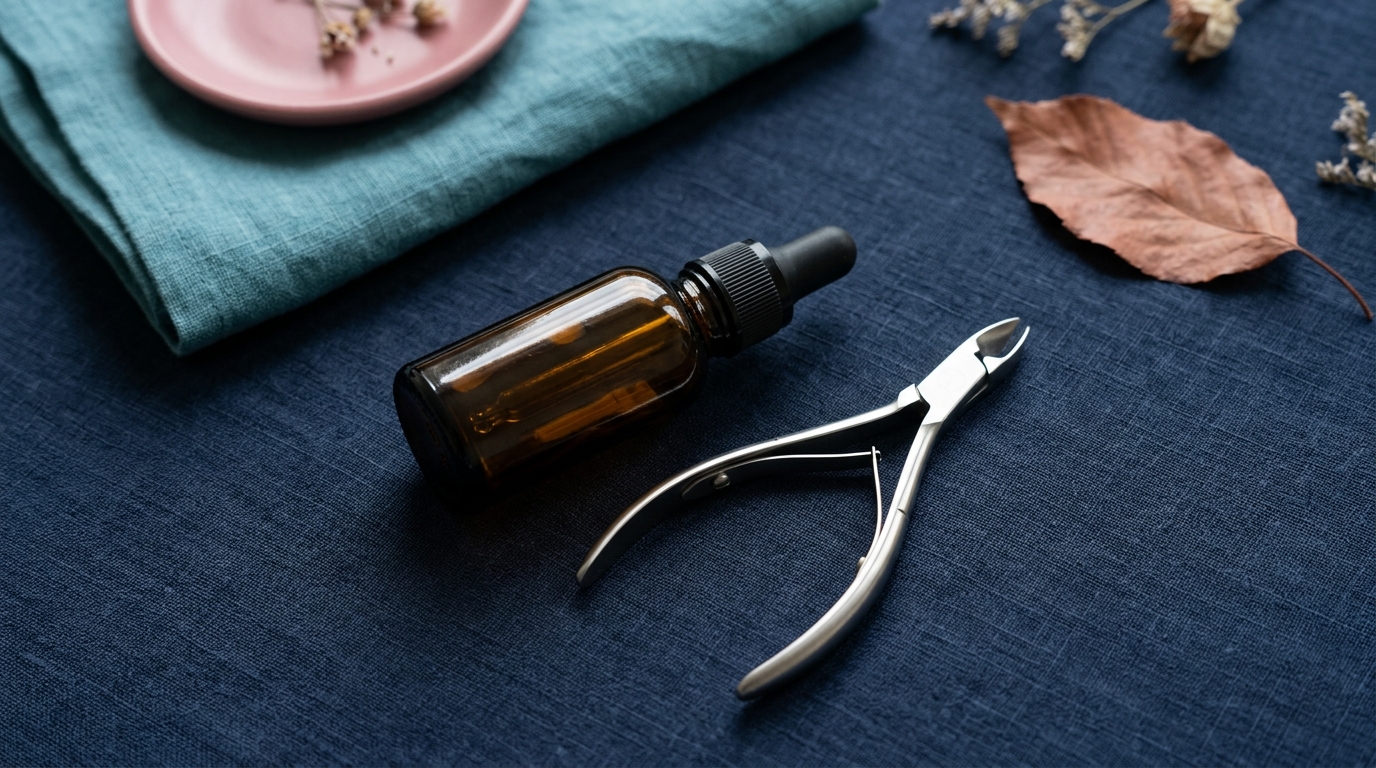
2. Use clean, sharp cuticle nippers or small nail scissors. Sanitise them before and after. Blunt tools crush and drag rather than cut, which is half the problem.
3. Cut the sliver flush where it has already separated. You are trimming off the loose flap, not digging out a root. Do not chase it down into the skin.
4. If it hurts, stop. Pain means you've reached living, attached tissue. That's your line.
5. Oil the area straight away, and again that evening. Skin that stays supple is far less likely to split again in the same spot.
6. Cover it if you're going to snag it. A tiny plaster for a day is not an overreaction if you're working with your hands or wearing knitwear.
What not to do: teeth, other nails, or twisting with tweezers. And please don't use a scalpel-style tool you bought online because it looked like something a professional would use.
What I do at the desk, and why it helps
I work with a dry manicure, so no soak bowl. Water makes the tissue around the nail swell and go soft, which sounds helpful but actually makes it much harder to see where non-living tissue ends and your living skin begins.
Using an e-file with a fine bit and a light hand, I remove the dry, non-living tissue that builds up around the nail fold and along the nail plate. That's the tissue that dries out, lifts, and catches on things, and it's a genuine contributor to the hangnails you get between appointments. Taking it away removes the snag point before it becomes one.
I never cut living tissue. Not the nail fold, not the skin at the sides. If you've had someone come at that area with nippers and it stung, that wasn't a technique, it was a mistake. You can read more about how the dry manicure process works if you want the detail.
If you're prone to hangnails, mention it when you're in the chair. I'll adjust how much attention that area gets and tell you honestly whether what I'm seeing looks like dryness or a picking habit.
Oil once a week does nothing
I want to be blunt about this, because it's the single biggest gap between clients who get hangnails all winter and clients who don't.
Cuticle oil applied on a Sunday because you noticed your hands looked rough is not a routine. It has no meaningful effect by Wednesday. Skin around the nail needs consistent, repeated hydration to stay flexible enough not to split, which means daily, ideally morning and night. It takes about fifteen seconds.
Keep a bottle somewhere you physically cannot ignore it. Bedside table, desk, handbag, car door. I go into the why in more detail in cuticle oil is not optional, but the short version is that this one habit does more for the skin around your nails than anything else available to you at home.
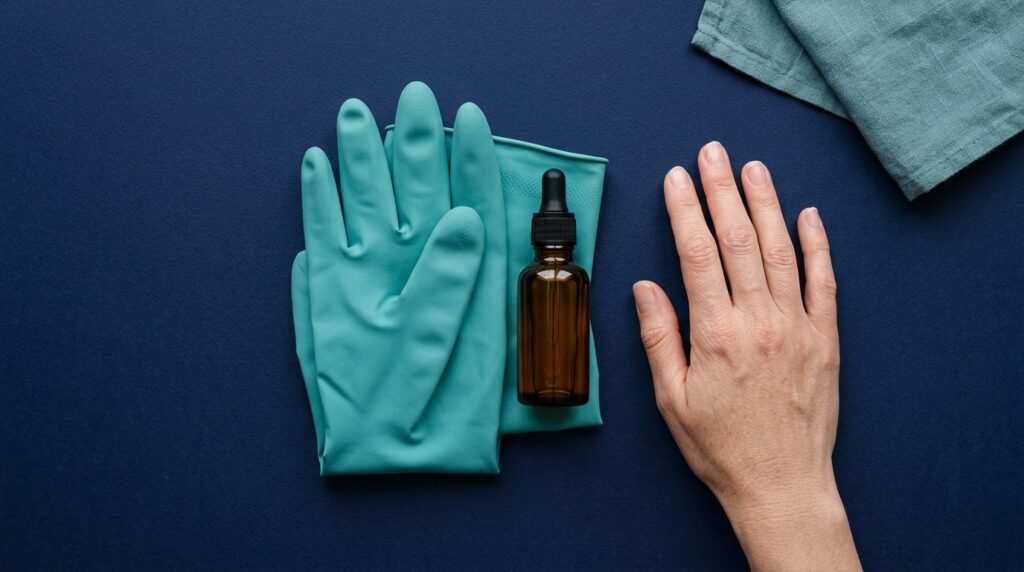
Alongside that: rubber gloves for washing up and cleaning, hand cream after every wash, and actual gloves when you go outside. The NHS gives the same advice for looking after nails, and it holds up.
When to speak to your GP or pharmacist
I'm a nail technician. I'm not qualified to diagnose anything, and I won't guess at what's going on with your skin. Please speak to a pharmacist or your GP if:
- The skin around your nail becomes sore, red, swollen, or warm
- There is any discharge from the area
- It isn't settling down, or it's getting worse
- Your nail itself changes shape or colour and you don't know why
- You're worried about it, for any reason at all
A pharmacist is free to speak to, knows what they're looking at, and would far rather see you early than late.
The short version
A hangnail is split skin, not nail, and pulling it tears living tissue and sets up the next one. Trim it cleanly with sharp, clean tools, oil the area daily rather than occasionally, and let me deal with the dead tissue that keeps creating snag points. That's genuinely the whole answer.
I'm a qualified nail technician, not a medical professional. Everything here is general nail care and skin care guidance based on my training and experience at the desk. It isn't a diagnosis or medical advice. If you have any concern about your skin or nails, please speak to your GP or pharmacist.