
(Originally Published: February 2024. Updated: March 2026)
You want to make better choices. You recycle, you’ve swapped out your plastic bags, and you try to buy consciously where you can. But when it comes to your nails, it gets murky fast. Every brand seems to call itself “clean” or “green” these days, and it’s hard to know what actually means something and what’s just good marketing.
I think about this a lot. Running a home-based nail studio in Waterloo means I get to choose exactly what comes through my door, and over the years I’ve become much more deliberate about those choices. Not in a preachy, “save the planet one manicure at a time” way. Just in a practical, eyes-open way.
So let’s talk about what eco-friendly nail care actually looks like, how to spot the real thing, and what you can do at home to make choices that hold up to scrutiny.
What “Cruelty-Free” and “Vegan” Actually Mean
These two terms get used interchangeably, but they’re not the same thing.
Cruelty-free means the product and its ingredients haven’t been tested on animals at any stage of production. That includes the finished product and the individual raw ingredients.
Vegan means the product contains no animal-derived ingredients. Things like carmine, a red pigment made from crushed cochineal insects, or guanine, a shimmery substance sourced from fish scales. A product can be cruelty-free but still contain animal-derived ingredients, and technically a product could be vegan but still tested on animals. You really want both.
Here’s where it gets tricky. Any brand can write “cruelty-free” on their packaging. There’s no legal regulation around the term in the UK, which means it only carries weight if it’s backed by an independent certification.
The ones worth looking for are Leaping Bunny and PETA’s Beauty Without Bunnies programme. Leaping Bunny is considered the gold standard because it requires brands to commit to a supplier monitoring system, not just a promise. If a brand doesn’t carry either of these logos and can’t point you to their certification, take their claims with a pinch of salt.
How I Approach It in My Studio
When I set up my studio, I made a conscious decision to stock only cruelty-free brands. That hasn’t always been the easiest path, because the nail industry isn’t short on products that perform brilliantly but don’t meet those standards.
I use brands like HONA and Nail Order, which are cruelty-free and offer vegan options across their ranges. I’ve written more about the brands I use and why I chose them in my post on vegan and cruelty-free nail brands. I also look at what’s in the formula itself. All the gel polishes and builder gels I use are free from formaldehyde, toluene, and DBP, which used to be referred to as the “toxic trio” in nail products. These are chemicals that have been flagged for potential health concerns with prolonged exposure.
That said, “free from the toxic trio” used to be the benchmark. The industry has moved on. Many professional brands now formulate to “10-free” or beyond, excluding additional ingredients like formaldehyde resin, camphor, xylene, and TPHP. The products I stock meet these higher standards, which is part of why I chose them. If a brand is still marketing itself as “3-free” in 2026, that’s no longer a sign of strong ethical commitment. It’s the bare minimum.
On the packaging side, I use biodegradable packing materials for anything I send out, and I recycle what I can from the products I use in the studio. I’m not going to pretend that running a nail business produces zero waste. It doesn’t. Nail files wear out, cotton pads get used, and product packaging adds up. But I try to be honest about where I can reduce and where the industry still has work to do.
That honesty matters more to me than a perfect image. I’d rather tell you what I actually do than make sweeping claims about being entirely “green.”
How to Spot Greenwashing
Greenwashing is when a brand presents itself as more environmentally friendly than it actually is. It’s everywhere in the beauty industry, and nail care is no exception.
A few red flags to watch for.
Vague language with no evidence. Phrases like “natural,” “eco-conscious,” or “clean beauty” aren’t regulated. They can mean anything, or nothing. If a brand uses these terms but doesn’t list specific certifications, ingredient exclusions, or sourcing practices, it’s likely more marketing than substance.
Green packaging, questionable contents. A recyclable bottle is a nice touch, but it doesn’t tell you anything about what’s inside it. Always check the ingredient list and the certification logos before you let the packaging do the talking.
No third-party certification. As mentioned above, Leaping Bunny and PETA certifications require independent verification. A brand’s own “cruelty-free” stamp, designed in-house and verified by nobody, isn’t the same thing.
Being a conscious consumer doesn’t mean you need a chemistry degree. It just means slowing down slightly before you buy and asking whether the claims on the label are backed by anything real.
Practical Tips for Greener Nail Care at Home
If you want to make more eco-friendly choices in your own routine, here’s where to start.
Read ingredient lists, not just front labels. Look for products that are formulated to at least a “5-free” standard, meaning they exclude formaldehyde, toluene, DBP, formaldehyde resin, and camphor. Many quality brands now go well beyond that. Check for Leaping Bunny or PETA certification if cruelty-free matters to you. The information is usually on the brand’s website if it’s not on the packaging.
Store your products properly. Nail polish that dries out before you’ve used it is waste. Keep bottles tightly closed, store them upright, and keep them away from direct sunlight and heat. You’ll get more life out of every bottle, which means buying less often.
Be realistic about acetone. There’s a common idea that acetone-free removers are automatically better for you and the environment. It’s more complicated than that. Acetone is actually biodegradable and, when used properly, is the professional standard for removing gel polish and enhancements. Acetone-free removers often require more product and more rubbing to get the job done, which isn’t necessarily gentler on your nails. For regular polish, acetone-free can work well. For gel or builder gel removal, proper acetone-based removal is still the recommendation.
Consider the brands you support. You don’t need to overhaul everything at once. Next time you need a new base coat or cuticle oil, take five minutes to check whether the brand is certified cruelty-free. Small, independent brands often have stronger ethical commitments than the big-name players, and you’ll usually find ingredient transparency is better too.
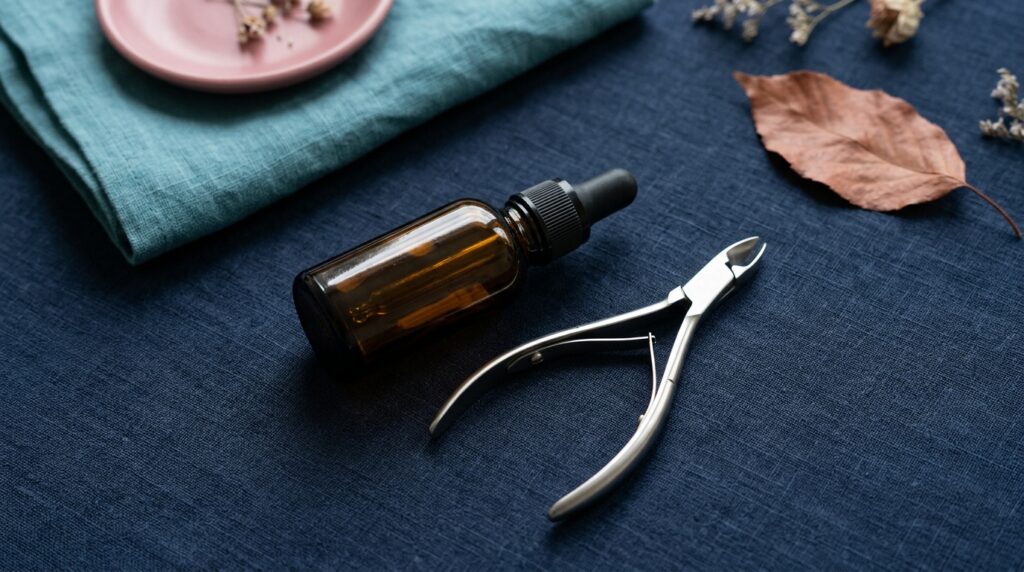
Use cuticle oil. This is more of a general nail health tip, but healthy nails need fewer products overall. Keeping your nails and cuticles hydrated means less reliance on treatments, less breakage, and fewer emergency fixes. It’s one of the simplest things you can do, and it reduces product consumption over time.
It Doesn’t Have to Be All or Nothing
The pressure to be perfectly “green” puts a lot of people off making any changes at all. But you don’t have to be perfect. Reading one label more carefully, choosing one certified brand over an unverified one, or simply keeping your existing products in good condition so they last longer are all real, tangible steps.
I’m still learning and adjusting my own approach. When I started, “3-free” felt like a strong standard. Now I wouldn’t consider stocking a product that didn’t go further than that. The bar keeps moving, and it should. That’s the honest version of eco-friendly nail care. Not a polished manifesto, just a series of informed choices made one at a time.
If you’d like to see what cruelty-free, considered nail care looks like in practice, you’re always welcome to book an appointment and experience it first-hand.
(Originally Published: February 2024. Updated: March 2026)
Excerpt: Eco-friendly nail care isn’t about perfection. It’s about informed choices. From understanding cruelty-free certifications to spotting greenwashing and knowing what “free-from” standards actually mean in 2026, this guide covers what to look for and what to question.