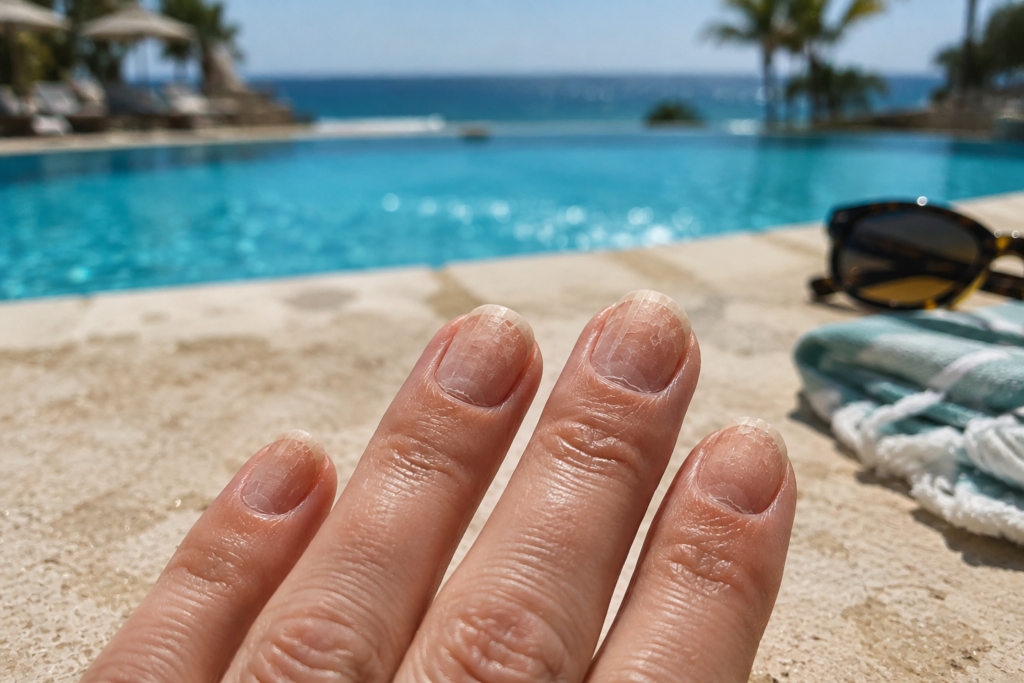
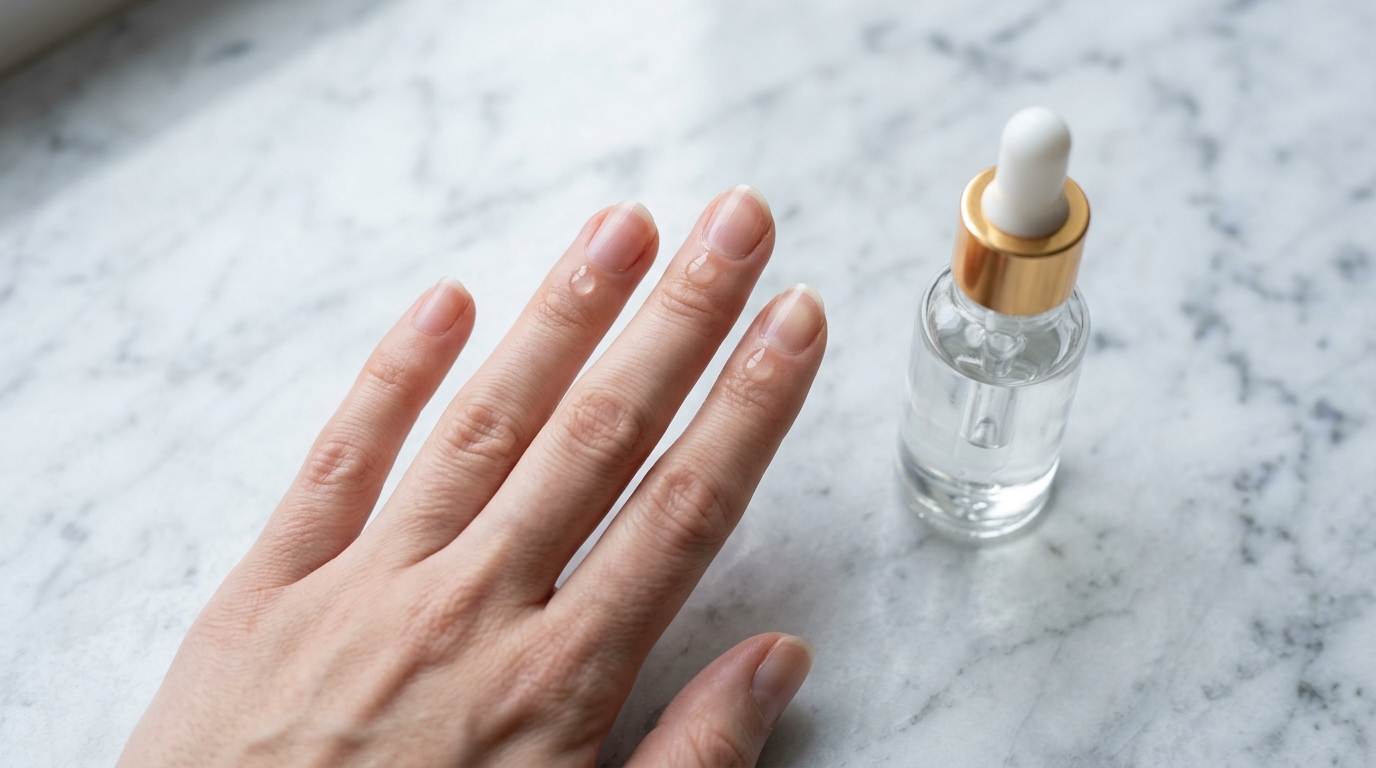
You notice it while you’re doing something mundane. Washing up, maybe, or peeling a label off a jar. A thin layer of your nail catches on something and lifts away. You pick at it (you know you shouldn’t, but you do), and suddenly you’ve got a rough, flaky edge that snags on everything.
Peeling nails are one of the most common complaints I hear from clients. And most people assume it means their nails are weak. But peeling isn’t really about weakness. It’s about what’s happening to the layers of your nail plate, and once you understand that, you can actually do something about it.
Your nails aren’t one solid sheet
This is the bit most people don’t realise. Your nail plate isn’t a single piece of material. It’s made up of around 50 to 100 layers of keratin cells, pressed tightly together. When those layers are healthy and hydrated, they bond to each other and behave as one unit. Strong, flexible, smooth.
When something disrupts that bond, the layers start to separate. That’s peeling. It’s called onychoschizia if you want the technical term, but what it really means is that the glue holding your nail layers together has broken down somewhere.
The question is why.
Dehydration is almost always part of the picture
If you’ve read my post on whether your nails are weak or just dehydrated, you’ll know that dehydration is behind far more nail problems than most people think. Peeling is no exception.
Your nail plate needs moisture to stay flexible and cohesive. When it dries out, those tightly bonded keratin layers lose their ability to stick together. They become brittle at the surface level and start to split apart.
The biggest culprits are the ones you’d expect. Frequent hand washing without moisturising afterwards. Cleaning products used without gloves. Alcohol-based hand sanitiser, which strips moisture every time you use it. Cold, dry weather that pulls hydration from your skin and nails alike.
It doesn’t happen overnight. It builds up over time. Weeks of low-level dehydration that you don’t notice until a layer lifts and catches your eye.
Trauma you don’t even register
When I say “nail trauma”, people tend to think of something dramatic. Slamming a finger in a door, or ripping a nail clean off. But most of the trauma that causes peeling is so minor you don’t give it a second thought.
Using your nails to open a can. Scratching at a stubborn sticker. Typing on a keyboard all day with long nails that take the impact at the tips. Even tapping your nails on a hard surface repeatedly can cause micro-damage to the free edge where those keratin layers are most exposed.
The free edge is vulnerable because it doesn’t have the nail bed underneath it for support. The layers there are relying entirely on their bond with each other. Add a bit of dehydration to the mix, and it doesn’t take much force to start the peeling process.
Product damage is more common than you’d think
This one can be uncomfortable to hear, but some of the things people do to “look after” their nails are actually making peeling worse.
Harsh nail polish removers, particularly acetone-based ones used frequently without any aftercare, strip oils and moisture from the nail plate. If you’re removing and reapplying polish every few days, your nails are going through repeated cycles of dehydration.
Peeling off gel polish or any nail product is another big one. I know it’s tempting when a bit starts to lift, but when you peel it away, you’re not just removing product. You’re pulling the top layers of your nail plate off with it. That’s direct, visible damage, and it takes months to grow out because your nails only grow about 3mm per month.
Over-buffing is another culprit. A light buff to remove shine before polish is fine. But aggressive buffing, or buffing every single time you have your nails done, gradually thins the nail plate. Thinner nails have fewer layers to hold together, and they peel more easily.
Your cuticles play a role too
Your cuticle area has a function. It’s a seal. The skin around the base of your nail protects the nail matrix, which is where new nail cells are produced. When that area is dry, damaged, or neglected, it affects the quality of the nail that grows through.
Keeping your cuticles healthy and hydrated isn’t just about making your nails look neat. It supports better nail growth from the start. Nails that grow through from a well-maintained matrix tend to be more cohesive, smoother, and less prone to peeling further down the line. If you want to know more about looking after that area properly, my cuticle care guide covers it in detail.
What you can actually do about it
Here’s the practical bit. If your nails are peeling right now, you can’t repair what’s already damaged. That nail has to grow out. But you can protect what’s there and make sure the new growth comes through healthier.
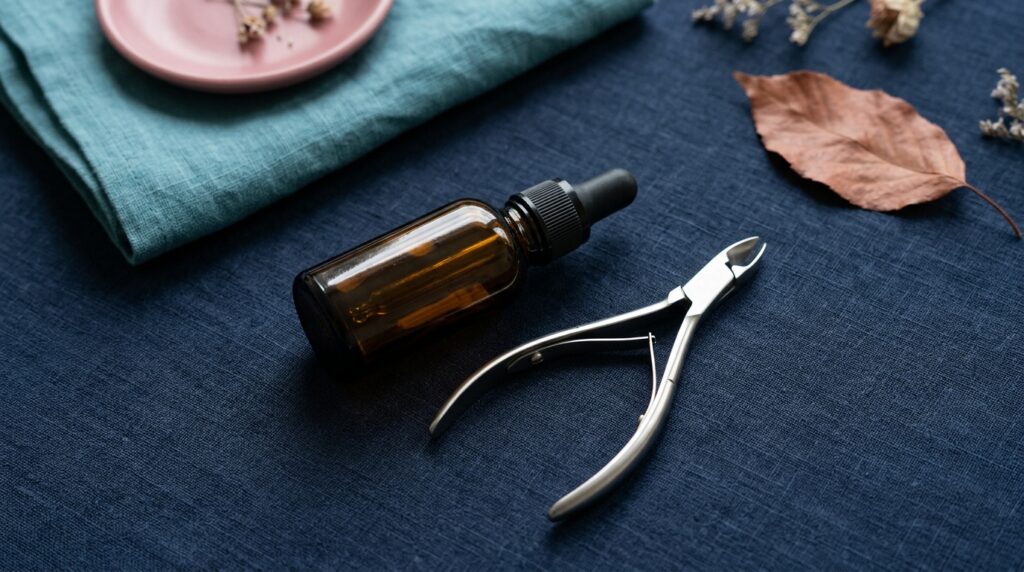
Cuticle oil, twice a day. Morning and evening, minimum. This is the single most effective thing you can do for peeling nails. It won’t fix existing damage, but it hydrates the nail plate and the surrounding skin, which helps prevent further peeling. I’ve written more about why dehydration matters and what to do about it if you want the full picture.
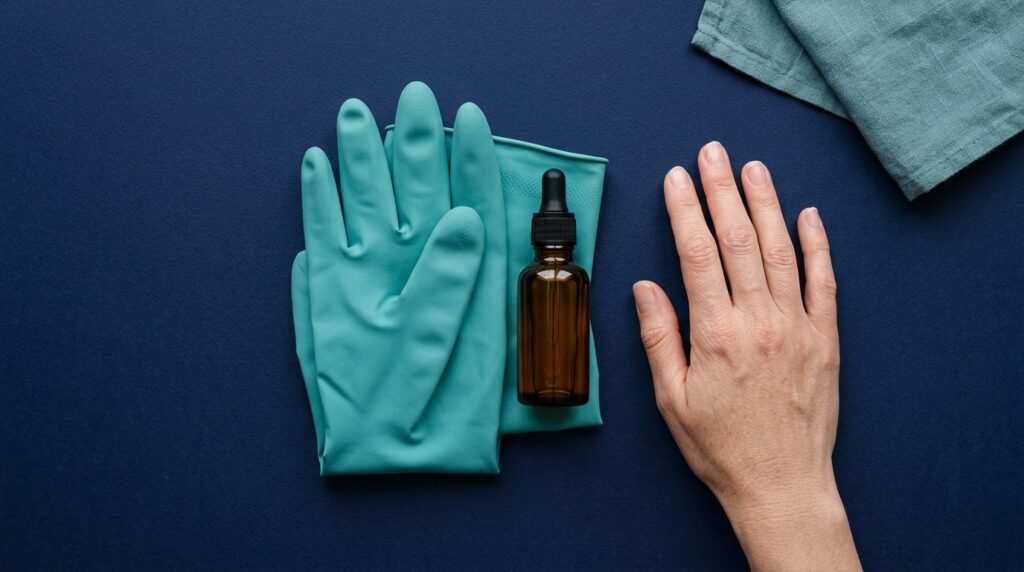
Wear gloves for cleaning and washing up. Every time. Non-negotiable if you’re serious about fixing this. Water is one of the biggest dehydrators of nails because it causes them to swell and then contract as they dry, weakening those layer bonds each time. This is especially true in winter, when cold air and central heating compound the problem.
Stop peeling your nail products. If something is lifting, book a removal or a maintenance appointment. Don’t pull it off yourself. The short-term satisfaction is not worth the months of lasting damage.
Be honest about how you use your nails. They’re nails, not tools. If you’re routinely using them to pry, scratch, or pick at things, the tips will keep peeling no matter how much oil you apply.
Ask your nail tech about your buffing routine. A good tech will only buff as much as necessary and will be mindful of nail plate thickness. If you’re not sure, ask. It’s a completely reasonable question.
When to look deeper
For most people, peeling nails come down to dehydration, minor trauma, or product habits. But if you’ve addressed all of those and the peeling persists, or if it’s accompanied by changes in nail colour, texture, or shape, it’s worth mentioning to your doctor. Occasionally, persistent peeling can be linked to nutritional deficiencies or other health factors that need a different kind of attention.
The short version
Peeling nails aren’t a mystery. Your nail plate is made of layers, and when those layers lose their bond through dryness, damage, or bad habits, they separate. The fix isn’t complicated, but it does require consistency. Oil your nails, protect them from water and chemicals, stop peeling off your products, and give the new growth time to come through stronger.
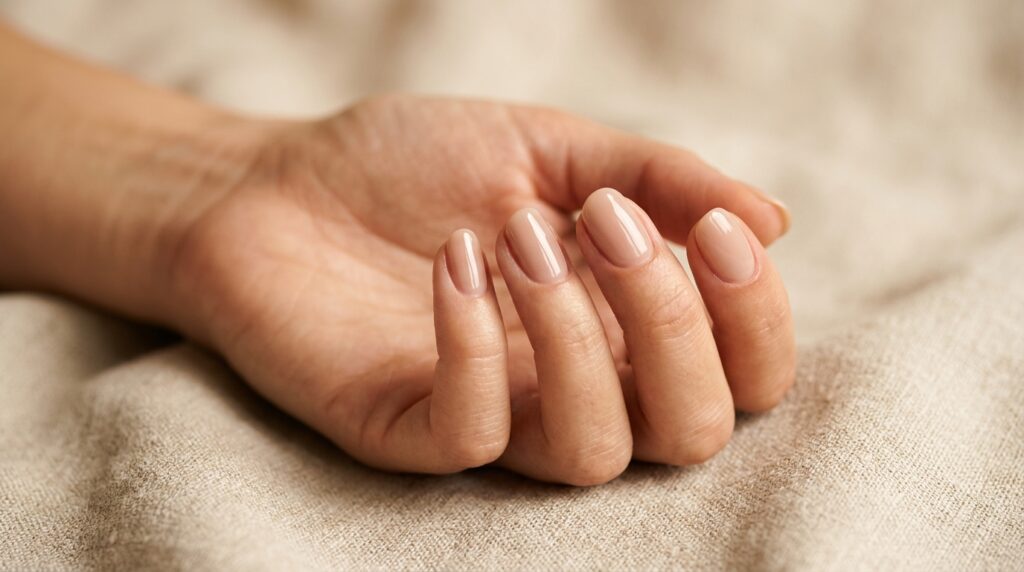
If this post has hit a nerve (or a peel), that’s a good starting point. Small, consistent changes make a genuine difference. Your nails can absolutely get better. They just need you to work with them, not against them.