You know the feeling. One edge lifts, and suddenly you’re peeling the whole thing off in one satisfying strip. It feels harmless. It looks fine. Your nail is still there underneath, so no damage done, right?
I wish that were true. But every time I see a client after a picking session, I can see exactly what happened before they even tell me.
What you’re actually removing
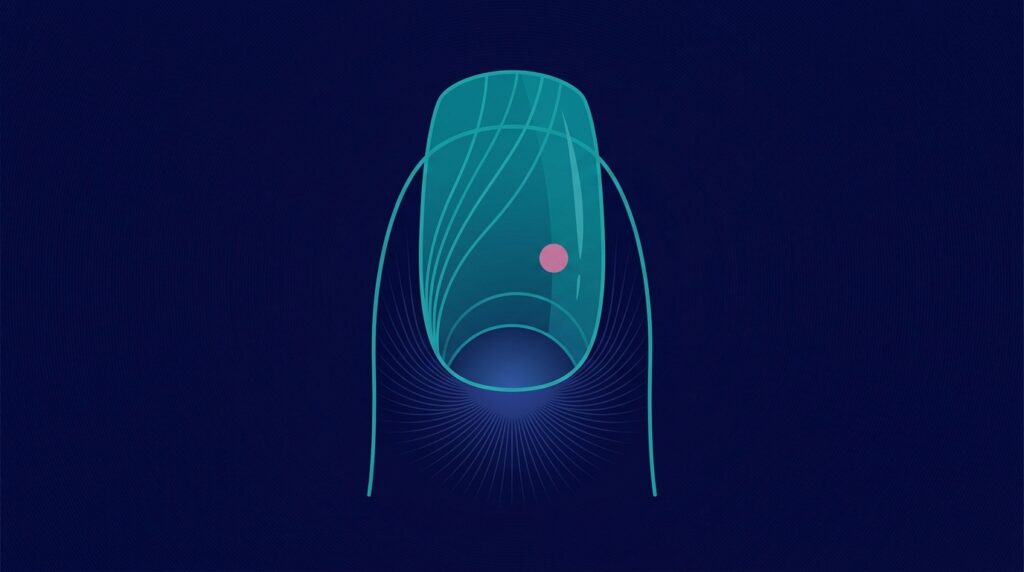
Gel polish and builder gel bond to the top layers of your natural nail. That’s by design. It’s what keeps your manicure in place for weeks without lifting or chipping.
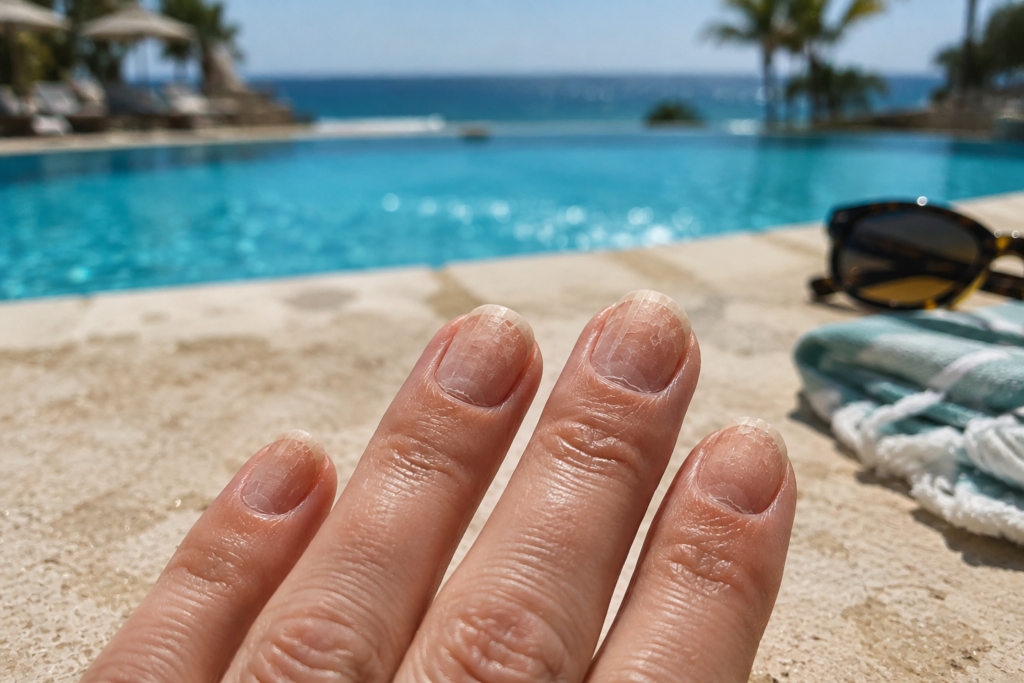
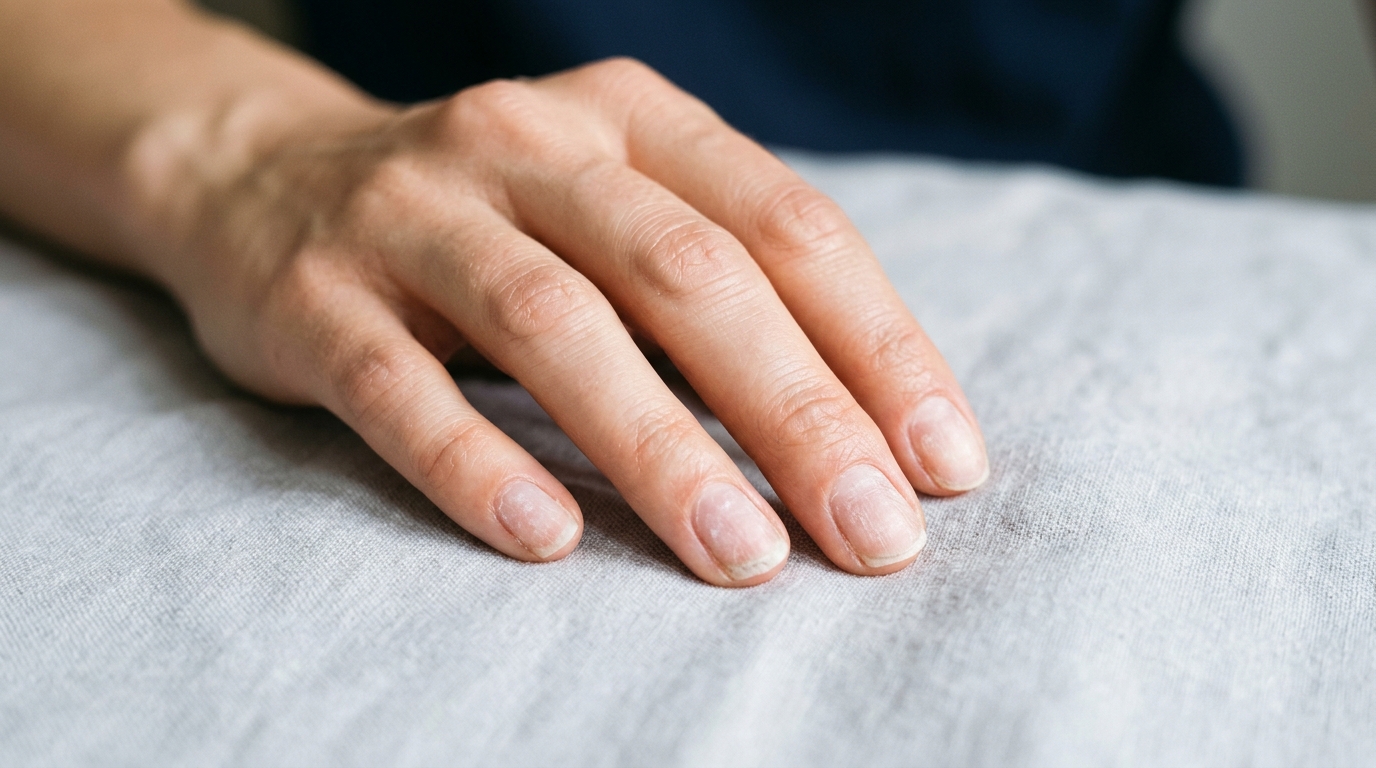
When you peel or pick that product off, it doesn’t come away cleanly. It takes those top layers of your nail plate with it. You might not feel it happening, but the evidence is right there: thin, rough, white patches where smooth nail used to be.
Think of it like pulling sticky tape off a painted wall. The tape comes off easily enough, but it takes paint with it. Your nail plate works the same way. The gel doesn’t just sit on top. It’s attached to the surface, and when you force it off, the surface comes too.
The damage you can see
The first thing most people notice is that their nails look rough and feel thin. They might have white, chalky patches or visible peeling at the tips. The nail surface, which should be smooth and slightly shiny, looks dull and uneven.
Some nails feel genuinely sore after picking. That’s because you’ve removed enough layers to get close to the nail bed, which is sensitive tissue. If your nails sting when you wash your hands or use hand sanitiser after picking off your gel, that’s your answer for why.
And those thin, bendy nails everyone blames on gel? Nine times out of ten, that’s not the gel. It’s the picking.
The damage you can’t see
Here’s where it gets more serious.
Nails that have been stripped back by picking are more porous. That means they absorb water more easily, which weakens them further. It also means they’re more vulnerable to bacteria and fungi getting in where they shouldn’t.
If you’ve ever noticed a greenish discolouration on your nail and panicked, that’s often a bacterial infection called a greenie. It’s not caused by gel itself. It’s caused by moisture getting trapped in damaged nail, and picked, porous nails are the perfect environment for it. I’ve written more about what greenies actually are and how they happen if you want the full picture.
The other thing picking does is create an uneven surface for your next manicure. Your nail tech then has to work with a compromised nail plate, which affects how well the next set adheres. It becomes a cycle: the product doesn’t bond as well to damaged nail, so it lifts sooner, so you pick it again, and the nail gets thinner each time.
Why people pick (and why I’m not judging)
I get it. I really do. A lifted edge is annoying. It catches on things. And once you start, it’s almost impossible to stop.
Most people don’t pick their gel off because they don’t care about their nails. They do it because the lifting bothered them, they didn’t have time to come in for a removal, or they honestly didn’t realise it was causing damage.
That’s exactly why I’m writing this. Not to tell you off, but to give you the information so you can make a different choice next time.
What to do instead
If your gel starts lifting, the best option is to come in and have it removed properly. Professional removal is gentle, controlled, and protects your natural nail. It takes about 20 to 30 minutes, and your nails will thank you.
If you can’t get an appointment straight away, here’s what to do in the meantime:
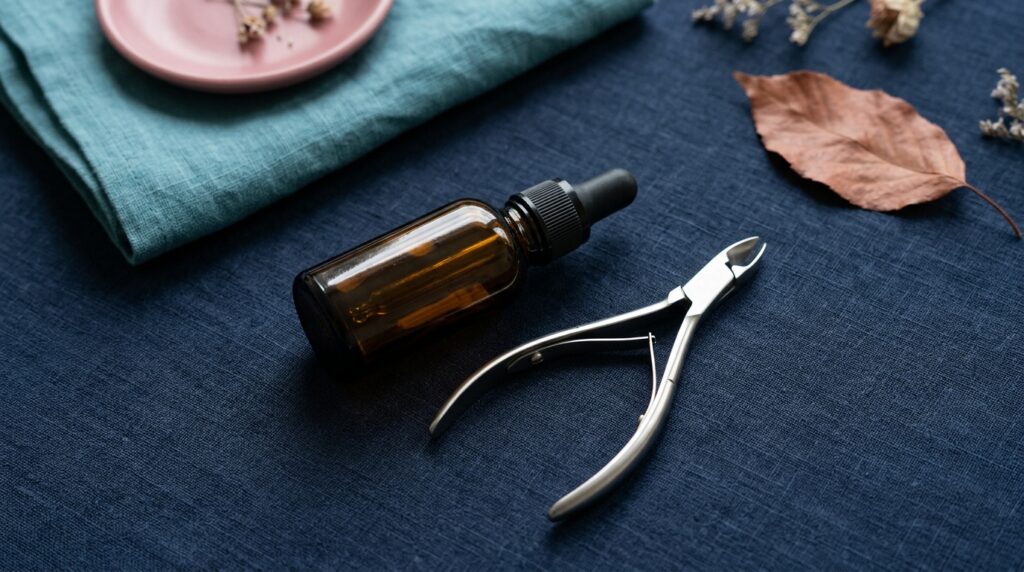
Clip the lifted edge down as close to where the product is still attached as possible. Use nail clippers, not your teeth, not your other fingernails. Then file the edge smooth so it doesn’t catch on anything.
If you have cuticle oil, use it. Generously and often. It won’t fix the lifting, but it keeps the surrounding nail and skin in good condition while you wait for your appointment.
Whatever you do, resist the urge to peel. I know it’s satisfying in the moment. But the three seconds of satisfaction aren’t worth weeks of thin, sore nails.
If you find your gel is lifting regularly before your next appointment is due, there could be something else going on. I’ve covered how to stop your gel lifting in the first place, which is worth a read.
Repairing the damage
If you’re reading this and thinking “too late,” don’t worry. Nails grow. The damage isn’t permanent, but it does take time to grow out. Your nails grow roughly 3mm a month, so depending on how much damage there is, you’re looking at a few months of consistent care.
In the meantime, builder gel can actually help. Applying a layer of builder gel over a damaged nail acts as a protective splint, giving the nail underneath time to grow out while keeping it safe from further breakage. I’ve talked more about the difference between damage and removal trauma if you want to understand the full process.
Keep using cuticle oil daily. Twice a day if you can manage it. Hydrated nails are stronger nails, and strong nails recover faster.
The honest truth
I’d rather you came to me with picked nails than felt too embarrassed to book. I’ve seen it all, and there’s nothing to be ashamed of. But now that you know what’s actually happening when you peel that gel off, I hope it makes it a little easier to stop yourself next time.
Your nails aren’t ruined. They just need a bit of patience and a proper removal next time round.