If you’ve ever had a manicure that started with your fingers sitting in a little bowl of warm water, you probably didn’t think twice about it. It feels nice. It softens things up. It’s what manicures are supposed to look like, right?
I have never used a soak bowl (other than for removals). And once you understand why, you probably won’t miss it either.
Why Soaking Your Nails Before a Manicure Causes Problems
Water isn’t your nail’s friend. Not in the way most people think, anyway.
Your nails are porous. They absorb water surprisingly quickly, and when they do, they expand. That’s fine on its own, but here’s where it becomes a problem: if I apply gel polish, builder gel, or any kind of enhancement to a nail that’s swollen with water, I’m building on a surface that’s going to shrink back down as it dries out.
That shrinking creates tiny gaps between the product and your natural nail. Those gaps are where lifting starts. And lifting isn’t just annoying. It’s one of the main ways moisture gets trapped underneath your nails, which can lead to greenies and other issues nobody wants to deal with.
So the very thing that’s supposed to make your manicure feel luxurious can actually make it fail sooner.
What Actually Happens During a Dry Manicure
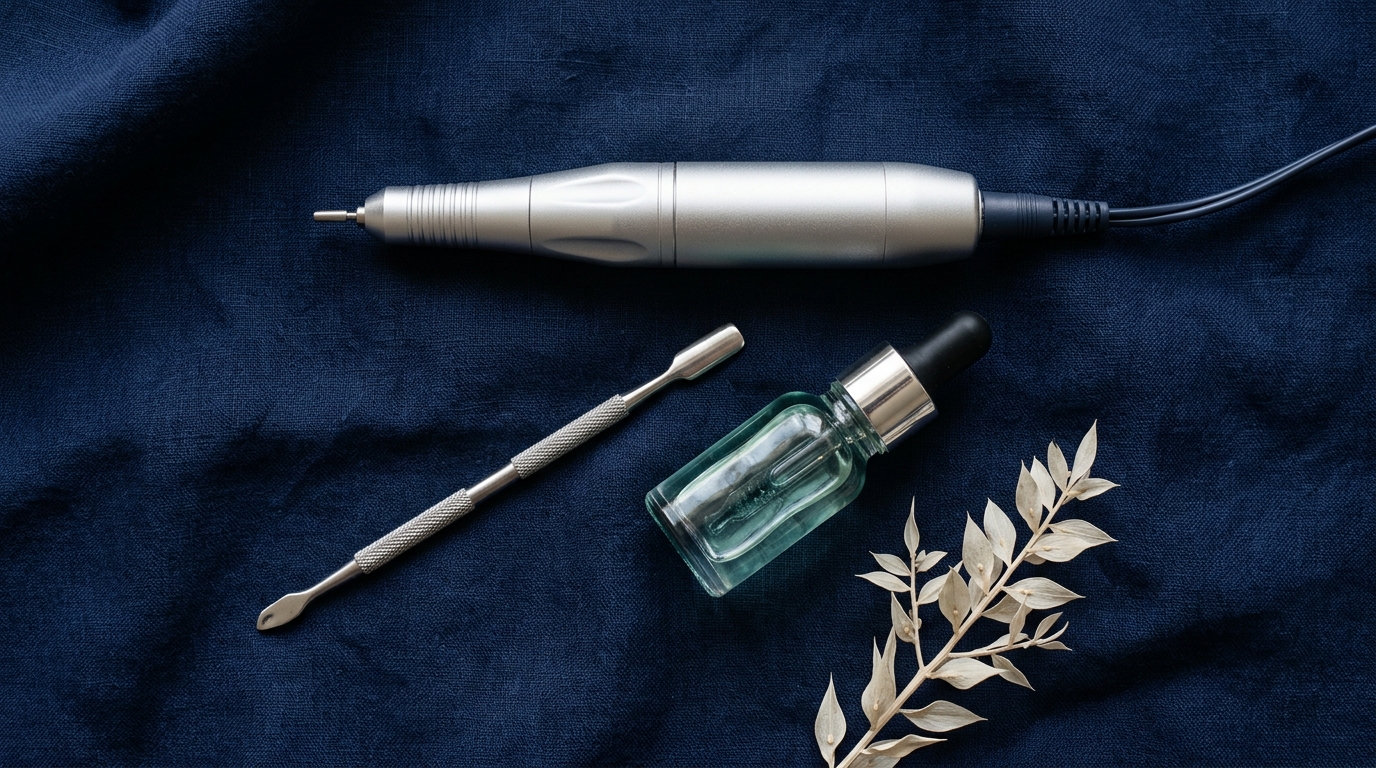
A dry manicure skips the soak entirely. Instead, I use an e-file (an electric nail file) and specialist cuticle care tools to do the prep work with precision.
Here’s what happens when you sit down in my chair.
Cuticle work
I use the e-file with a fine bit to gently lift and remove the non-living tissue that builds up around your cuticle area. This is the thin, transparent layer that creeps across your nail plate, not the living skin at the base of your nail.
I never cut the living cuticle. That protective seal is there for a reason, and damaging it opens the door to infection and irritation.
If you want to understand the difference between the living cuticle and the dead tissue that gets removed, I’ve written about it in detail in my cuticle care guide.
Surface preparation
Once the cuticle area is clean, I prep the surface of your nail plate. This isn’t aggressive buffing. It’s a light, controlled pass with the e-file to remove any remaining oils and create a lightly-etched surface that the product can properly bond to.
Think of it like lightly sanding a wall before painting. You wouldn’t slap paint on a greasy surface and expect it to stay put.
Shaping
The e-file can also handle shaping, which means I can work with more precision than a traditional hand file allows. Whether you prefer a soft square, almond, or something else entirely, the e-file gives me consistent, clean lines without the back-and-forth sawing that can weaken the free edge.
Then the fun part
Once prep is done, your nails are clean, dry, and ready for whatever comes next. That might be a builder gel overlay, a set of acrylics, or a gel polish application. The point is that whatever I put on your nails has the best possible foundation to stick to.
Why E-File Nail Prep Gets a Bad Reputation
I know some people hear “electric file” and feel nervous. That’s fair. There are horror stories out there, and most of them come from e-files being used improperly. Too much pressure, the wrong bit for the job, or someone who hasn’t been properly trained.
In the right hands, an e-file is more gentle than you’d expect. I control the speed, the pressure, and the bit selection for each client. Someone with thin, flexible nails gets a completely different approach to someone with thick, hardy nail plates.
This is part of what makes a prescriptive manicure different from a one-size-fits-all service. I’m assessing your nails and adjusting the process to suit them, not running through the same routine regardless.
You shouldn’t feel pain during e-file prep. If you’ve experienced that before, it wasn’t the tool’s fault. It was how it was being used.
It’s Also Better for the Environment
Ditching the soak bowl means I’m not using disposable liners, running through litres of water per client, or relying on single-use towels to dry everything off. It’s a small thing, but those small things add up across hundreds of appointments a year.
I’ve written more about the eco-friendly choices I make across the business if that matters to you. And I think it should.
What This Means for How Long Your Nails Last
Proper prep is the single biggest factor in how long your manicure lasts. Not the brand of gel. Not how careful you are with your hands (though that helps). The prep.
When your nails are dry, clean, and properly shaped before product goes on, everything that follows performs better. You get fewer lifts, fewer chips, and more consistent wear. That’s why I spend real time on this stage rather than rushing through it to get to the colour.
If you’ve ever wondered why nails lift or why your manicure doesn’t seem to last as long as it should, the answer often traces back to what happened, or didn’t happen, during prep.
How to Keep Your Nails Healthy Between Appointments
Good prep doesn’t stop when you leave. Keeping your cuticles hydrated with oil, avoiding your nails as tools, and wearing gloves for cleaning or washing up all help maintain the bond between product and nail.
I’ve put together a full breakdown of how to keep your nails healthy between visits if you want the complete picture.
The Short Version
A dry manicure means no soaking, precise e-file prep, and better results that last longer. It might not look like the manicures you’ve seen on television, but it works. And at the end of the day, that’s what matters more than a warm bowl of water.
If you’ve been curious about how I work or what makes an appointment with me different, now you know. The details matter, and this is one of the biggest ones.