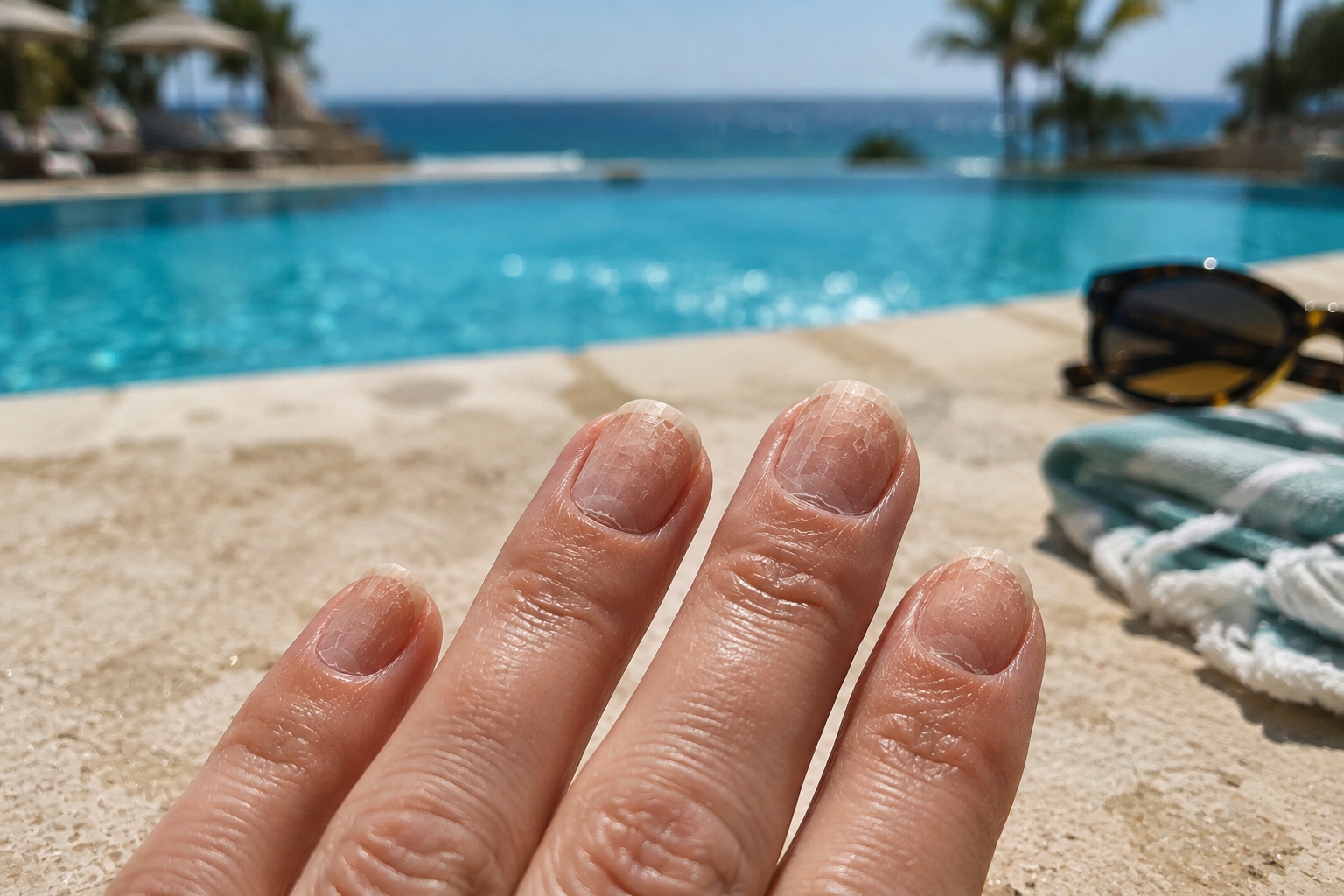
You had a lovely summer. The nails, though, tell a slightly different story.
It's early September, and something's off. They feel dry. They bend more than they used to. The tips catch on things, and the whole nail feels thinner and less reliable than it did in June. If you spent your summer in and out of pools, in the sea, or just baking in the sun with SPF on your hands all day, this is a very familiar picture at my desk this time of year.
The good news is that this is almost always temporary. The slightly less fun news is that recovery takes patience, because you can't rush how a nail grows. Let me walk you through what's actually happened, what I do about it, and what you can do at home.
What Summer Actually Does to Your Nails
Your nail plate is made up of layers of keratin, and those layers need moisture to stay flexible. Take the moisture away, and the nail becomes brittle, bendy, and prone to peeling. Summer is very good at taking the moisture away, from several directions at once.
Chlorine is a disinfectant, designed to break things down. Repeated pool sessions strip the natural oils and moisture from the nail plate, leaving it drier with every dip.
Salt water dehydrates in a slightly different way, drawing moisture out of the nail through osmosis. If your nails felt particularly parched after a beach holiday, that's why.
Sun and heat don't help either. The same UV and warmth that dry out your skin work on your nails and cuticles too, and constant sun exposure over weeks adds up.
Suncream is the sneaky one. You absolutely should be wearing it, no argument from me. But most formulas contain oils and chemicals that sit on the nail surface, and if you're reapplying every couple of hours, your nails are getting coated over and over.
None of this means you did anything wrong. It means your nails have been through a lot, and now they're showing it. If you want the prevention side of this for next year, I've written about that in my guide to protecting your manicure on holiday.
Why They Feel Dry and Bendy Right Now
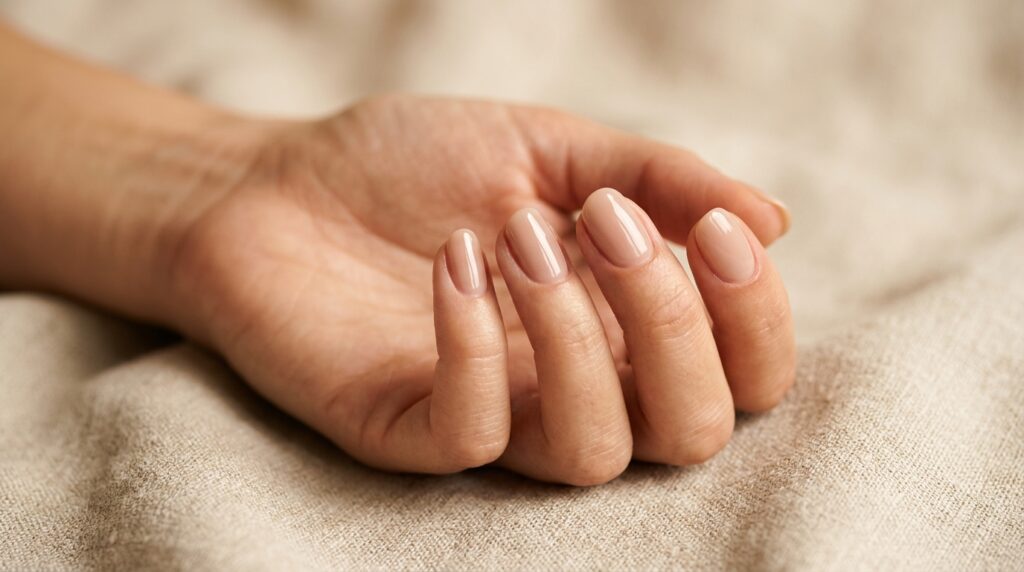
That soft, flexible, slightly rubbery feeling is the classic sign of dehydration rather than genuine weakness. A dehydrated nail bends and springs back. It might look dull or a little chalky, and it may be peeling in thin, papery layers at the free edge.
This matters, because dehydration and true weakness look similar but need different things. You can't hydrate your way out of a structural problem, and you can't strengthen your way out of dehydration. If you're not sure which one you're dealing with, my post on weak nails versus dehydrated nails has a simple test you can do at home.
For most people in September, it's dehydration. That's genuinely reassuring, because dehydration responds to consistent care faster than you'd expect.
The Recovery Timeline: Why Patience Matters
Here's the part nobody loves hearing. You cannot repair the nail you already have. The plate that grew over the summer is what it is. What you can do is grow out a healthier nail and look after the existing one while it makes its way to the free edge.
A fingernail takes roughly six months to grow out fully from base to tip. Toenails take considerably longer. So if the damage runs the length of the nail, you're looking at months, not days, before it's completely gone.
That sounds slow, and it is. But the surface improvement, the way your nails feel day to day, comes much sooner. With a proper hydration routine, most people notice their nails feel less bendy and less brittle within a couple of weeks. The full grow-out is the long game running in the background.
What I'd Do at Home, Starting Today
You don't need a ten-step programme. You need two or three habits done consistently.
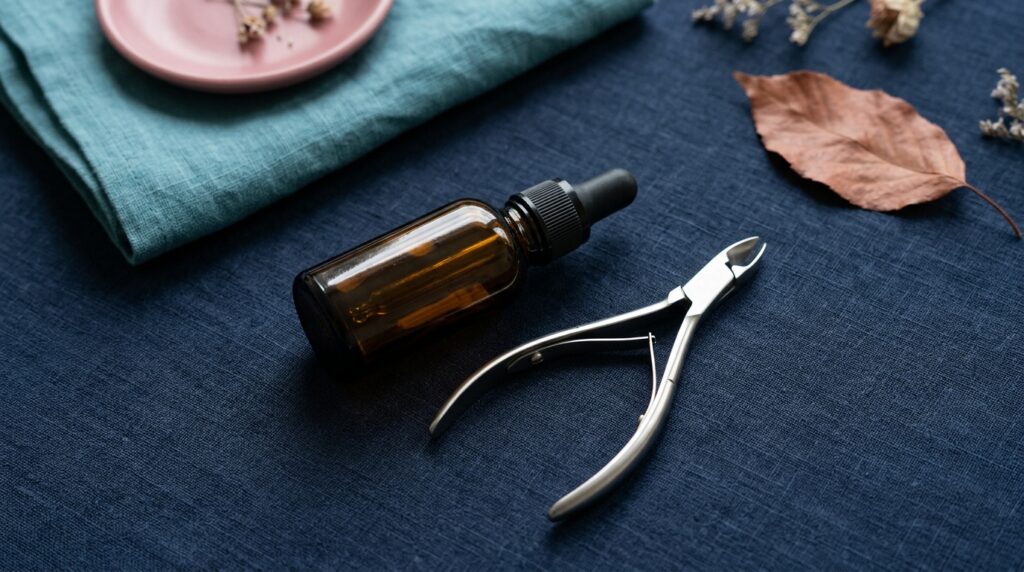
Oil twice a day. This is the single most useful thing you can do. Cuticle oil isn't a cosmetic extra. It absorbs into the nail plate and surrounding skin, replacing the moisture summer stripped out and making the whole structure more pliable. A drop at the base of each nail, morning and night, massaged in. That's it. Look for a jojoba-based oil that actually absorbs rather than sitting greasily on top.
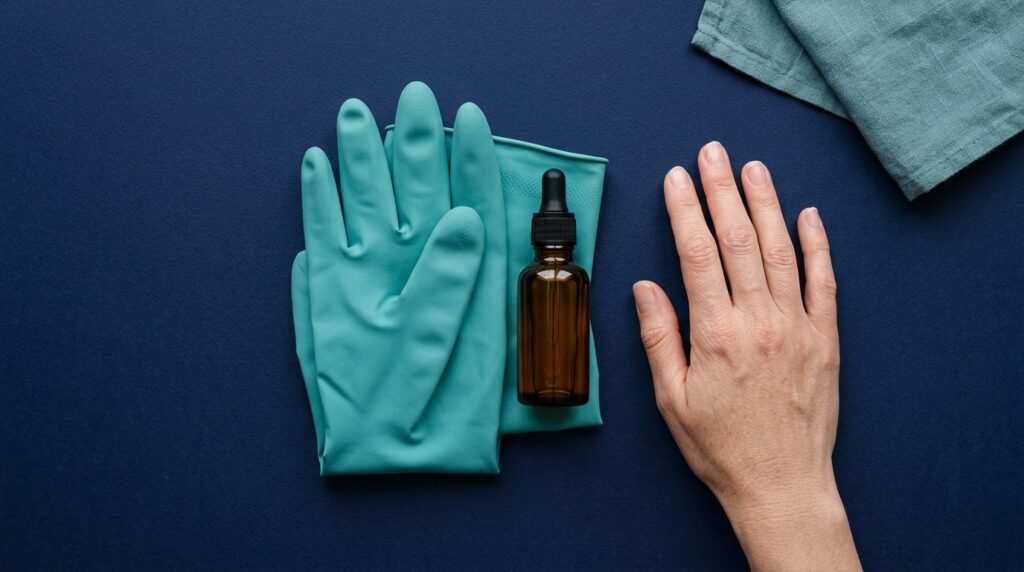
Wear gloves for washing up. Hot water and washing-up liquid are dehydrating in exactly the way you're trying to reverse. Rubber gloves make a real difference if your hands are in water a lot.
Use a good hand cream too. Dry skin around the nails pulls moisture away from the nail plate. Keep your hands hydrated and your nails tend to follow.
Give it two weeks of genuine consistency before you judge whether it's working. If your nails improve, you were dehydrated, and you're already on the right track.
The Mistake I See Most: Reaching for a Hardener
When nails feel weak, the instinct is to grab a nail strengthener or hardening treatment. I understand the logic. Nails feel soft, so make them hard. But this often backfires.
Many hardening products work by making the nail more rigid, and a nail that's already dry doesn't need more rigidity. It needs moisture and flexibility. Take a dehydrated, bendy nail and stiffen it, and you often end up with a brittle nail that snaps rather than one that's genuinely stronger. You've swapped one problem for a worse one.
So before you buy a strengthener, try hydration first. In most September cases, that's the actual fix.
When a Structured Overlay Genuinely Helps
Sometimes hydration alone isn't enough while you wait for the damage to grow out. If your nails are peeling, catching, and breaking before they've had a chance to recover, a bit of reinforcement can carry you through.
This is where a structured overlay with builder gel comes in. It creates a thin, supportive shell across the nail that reduces flex and protects the free edge, so the compromised nail underneath can grow out without snapping every few days. It's not a cosmetic decision so much as a practical one: something to lean on while the good nail makes its way up.
I want to be honest, though. I don't recommend an overlay to everyone who walks in after summer. Plenty of people just need oil and a couple of weeks. If you'd like to understand the difference between a plain gel finish and a reinforcing overlay, my post on gel versus structured manicures explains it properly. The right call depends on what your nails are actually doing, which is exactly the sort of thing we'd talk through at a consultation.
When to Speak to Your GP or Pharmacist
I'm a qualified nail technician, not a clinician. I can tell you what the nail plate is doing and what I do at the desk, but I can't diagnose anything, and dry, bendy nails after summer are usually about moisture rather than anything more.
That said, some nail changes are worth getting looked at properly. The NHS suggests seeing your GP if a nail has changed shape, changed colour, or fallen off and you don't know why, or if the skin around your nails becomes sore, red, swollen, and warm, which can be a sign of infection. Persistent changes that don't settle with basic care are also worth a conversation.
If something doesn't feel right, please speak to your GP or pharmacist rather than waiting for it to sort itself out. Your pharmacist is a great first port of call for anything that isn't urgent.
Give It Time, and Be Kind to Them
Your nails have earned their post-summer scruffiness. They've been through chlorine, salt, sun, and suncream, and now they need a bit of care and a bit of patience.
Oil them twice a day. Glove up for the washing up. Skip the hardener and hydrate instead. And if they need propping up while the damage grows out, a structured overlay can bridge the gap. Six months feels like a long time, but you won't be waiting that long to feel the difference. That part comes much sooner.