
I’m going to be blunt with you: if you’re spending money on your nails but not using cuticle oil at home, you’re undermining your own manicure.
I don’t say that to be dramatic. I say it because it’s the single most common gap I see between clients whose nails look incredible at three weeks and clients who are back at two weeks wondering what went wrong. The difference, more often than not, isn’t the product on their nails. It’s what they’re doing — or not doing — between appointments.
What Cuticle Oil Actually Does
There’s a misconception that cuticle oil is a cosmetic extra. Something that makes your hands look a bit nicer for five minutes. It’s not. Cuticle oil is functional.
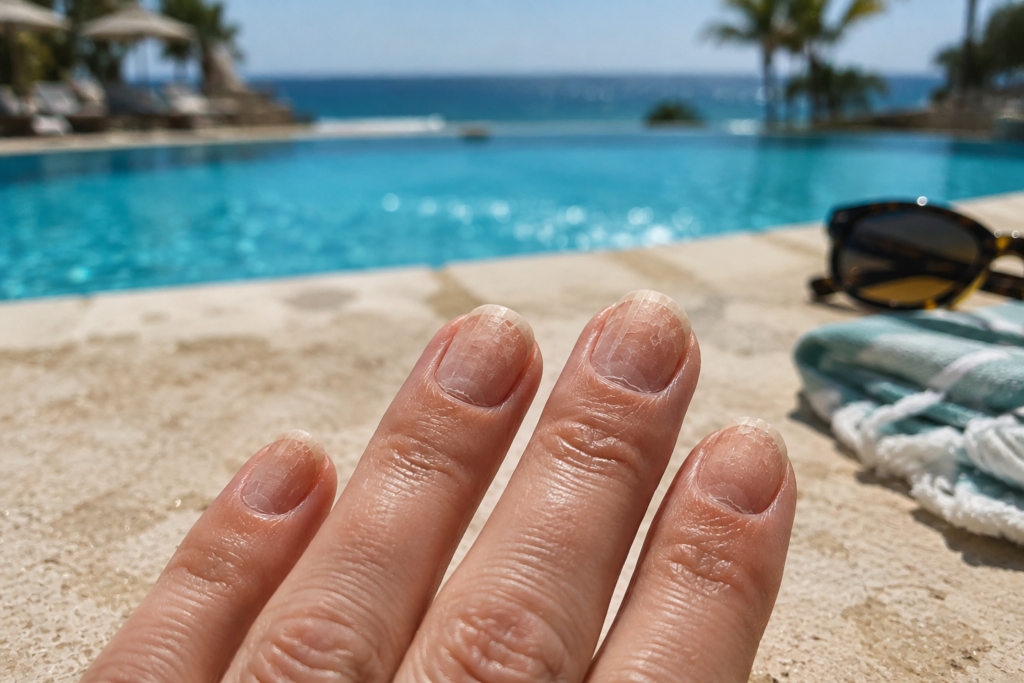
Your nail plate is made up of layers of keratin, and those layers need moisture to stay flexible and resilient. When your nails are dehydrated, they become brittle, prone to peeling, and far more likely to lift whatever product is sitting on top of them. If you’ve ever wondered why your nails peel or whether they’re actually weak or just dehydrated, the answer often starts here.
Cuticle oil penetrates the nail plate and the surrounding skin, keeping everything supple. It supports healthy nail growth from the matrix (the root of your nail, hidden under the skin at the base). It keeps the cuticle area soft and manageable, which means less hangnails, less tearing, and a much better surface for me to work with when you come in for your appointment.
It also helps your enhancements last longer. Whether you’re wearing builder gel, acrylics, or a gel manicure, hydrated natural nails provide a better foundation. Dry, flaky nail plates are one of the main reasons for lifting and premature wear.
Why Most People Skip It
I get it. Life is busy, and adding another step to your routine feels like a lot. But here’s the thing — applying cuticle oil takes about fifteen seconds. Less time than it takes to unlock your phone.
The real reason most people skip it is that they don’t see immediate, dramatic results. Cuticle oil is a slow burn. You won’t notice a massive difference after one application. But after a few weeks of consistent use, you will notice that your cuticles aren’t ragged, your nails feel stronger, and your manicure is still looking sharp when it would normally be showing its age.
The other reason people skip it is that they’ve bought a cheap one that feels greasy and sits on top of the skin without absorbing. Not all cuticle oils are created equal, and this matters.
What to Look For in a Cuticle Oil
You want an oil that absorbs quickly and actually reaches the nail plate, not one that leaves a slick film on the surface. Look for oils with a jojoba base — jojoba oil has a molecular structure similar to your skin’s natural sebum, which means it penetrates rather than just sitting on top.
Avoid anything with mineral oil or petroleum-based ingredients as a primary component. These can create a barrier that feels moisturising but doesn’t actually hydrate the nail or cuticle in any meaningful way.
I use and recommend Navy Professional cuticle oil. It absorbs fast, it doesn’t leave your fingers greasy for ages, and it smells gorgeous without being overpowering. It’s one of those products where you can genuinely feel the difference in quality. I stock it because I’ve tried a lot of cuticle oils over the years — professional and retail — and this is the one I keep coming back to.
How to Use It Properly
Twice a day is the sweet spot. Morning and evening, or whenever you remember — the important thing is consistency, not perfection.
Apply a small drop to the base of each nail, right where the cuticle meets the nail plate. Massage it in gently. That’s it. You don’t need to soak your hands. You don’t need to wrap them in cling film. Just a drop, a rub, and you’re done.
If you’re wearing enhancements, apply the oil around the edges and cuticle area. It won’t damage your acrylics or builder gel — in fact, it helps maintain the seal between your natural nail and the product.
A few moments where it’s especially worth remembering:
- After washing your hands. Soap strips natural oils from your skin and nails. A quick application afterwards helps replace what’s been lost.
- Before bed. Your body does a lot of repair work overnight. Give it something to work with.
- During winter. Cold air and central heating are brutal on your nails. I’ve written about this in more detail in my winter nail care guide, but cuticle oil is your first line of defence.
It Supports Everything Else You’re Doing
If you’re investing in regular appointments, good products, and proper cuticle care, cuticle oil is what ties it all together at home. Without it, you’re relying entirely on what happens during your appointment to carry you through until the next one. That’s a lot to ask.
Think of it this way: I can give you a beautiful set of nails, but I can’t control what happens to them for the next two to three weeks. Cuticle oil is the one thing you can do at home that has the most impact on how your nails look and feel between visits. More than hand cream. More than wearing gloves. More than any supplement.
It’s also one of the simplest parts of a solid nail care routine. You don’t need a ten-step programme. You just need this one habit, done consistently.
Stop Treating It as a Luxury
Cuticle oil isn’t a treat. It’s not something you do when you remember, or only when your cuticles look rough. It’s daily maintenance, the same as brushing your teeth. You wouldn’t skip that and then wonder why you had problems at the dentist.
If you’re only going to take one piece of aftercare advice from me, make it this one. Use your cuticle oil. Every day. Twice if you can manage it. Your nails will be stronger, your manicures will last longer, and your cuticles will stop giving you grief.
It’s a small bottle with an outsized impact — and honestly, once you get into the habit, you’ll wonder why you ever went without it.