Winter acrylics do a job. They hold everything together when nails are dry, hands are cold, and life is generally less forgiving. By the time spring arrives, most people are bored with the bulk, craving lighter colours, shorter lengths, or the idea of “natural” again.
This is also the point where nails get ruined.
Not because acrylics are bad. Not because your nails “can’t breathe”. But because the transition is rushed, poorly planned, or done at home with good intentions and a metal file.
If you want spring nails without starting from zero, this is the part that matters.
Why spring is the danger zone
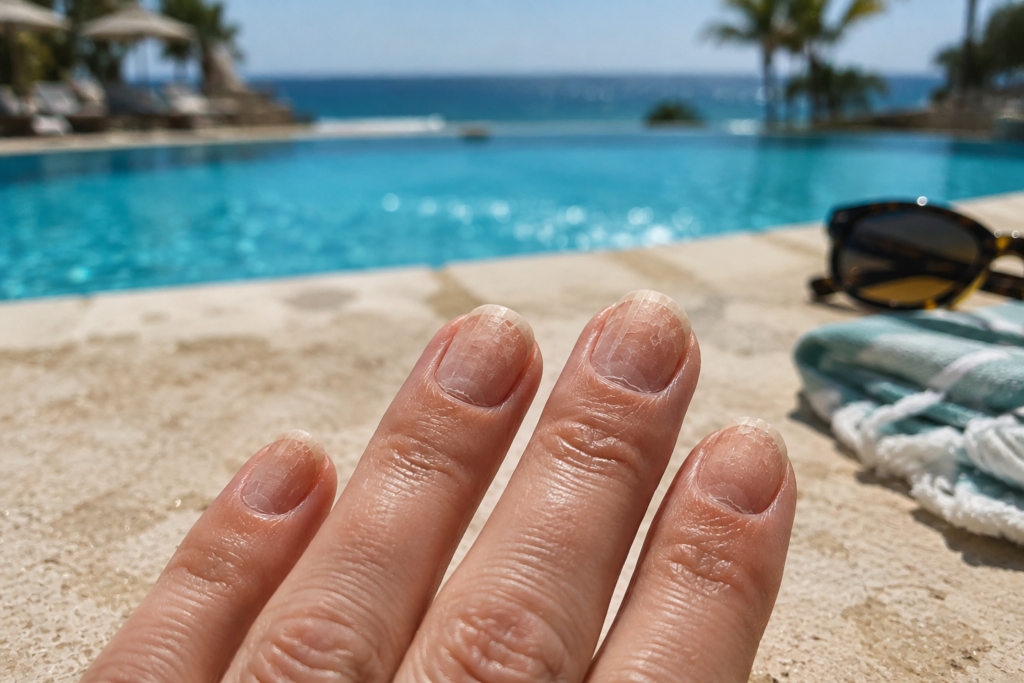
Winter damage rarely shows up in winter. Acrylics hide it well. Come spring, when enhancements come off or are reduced, everything underneath suddenly feels thin, bendy, and fragile.
That weakness is usually a mix of dehydration, seasonal growth changes, and months of relying on structure instead of nail strength. Remove that structure too fast, and the nail plate pays for it.
Spring isn’t the time for dramatic changes. It’s the time for the controlled ones.
Do not rip off your acrylics
I know, this sounds obvious, and yet, folks still do it!
Picking, levering, or even biting off acrylics without the right process removes layers of the natural nail along with the product. Once that damage is done, no oil, treatment, or “repair” polish fixes it quickly; the damage has to grow out.
If you want shorter nails, lighter nails, or no acrylics at all, the starting point is a professional removal. Clean. Patient. No shortcuts.
That one decision sets the tone for the next three months.
Step down. Do not drop straight to nothing
Going from full acrylic to bare natural nails is where most spring breakage starts.
A step-down service matters here. Reducing the length first and switching to a lighter enhancement rather than removing everything in one appointment. Builder gel overlays, for example, can act as a buffer while your natural nails recover.
This is not about keeping you in enhancements forever. It’s about letting the nail plate adjust without snapping, peeling, or flaking.
Short is not a compromise
Spring nails break because people insist on keeping winter lengths with less structure.
Shorter nails grow better. They flex less. They catch less. They recover faster.
If you want your natural nails to look good by early summer, spring is the time to cut back. Not dramatically. Just enough to remove stress points and let new growth take over.
Length can come back later. Strength has to come first.
Learn more about why short nails are not a compromise.
Hydration stops being optional
Cold weather dries your nails out. Acrylics mask it. Once you start transitioning, dehydration becomes visible fast.
Cuticle oil twice a day is not overkill in spring. It replaces flexibility. It reduces splitting. It makes every enhancement you have to behave better.
Hand cream matters too. Not once before bed. Every time your hands get wet.
This might seem like boring advice, but it works!
Expect an adjustment phase
Your nails may feel softer at first. That does not mean they are weaker. It means they are no longer being held rigid.
This phase is normal. What ruins it is panic-filing, product-hopping, or constantly switching services, trying to “fix” something that just needs time.
Consistency beats clever solutions here.
What a sensible spring transition looks like
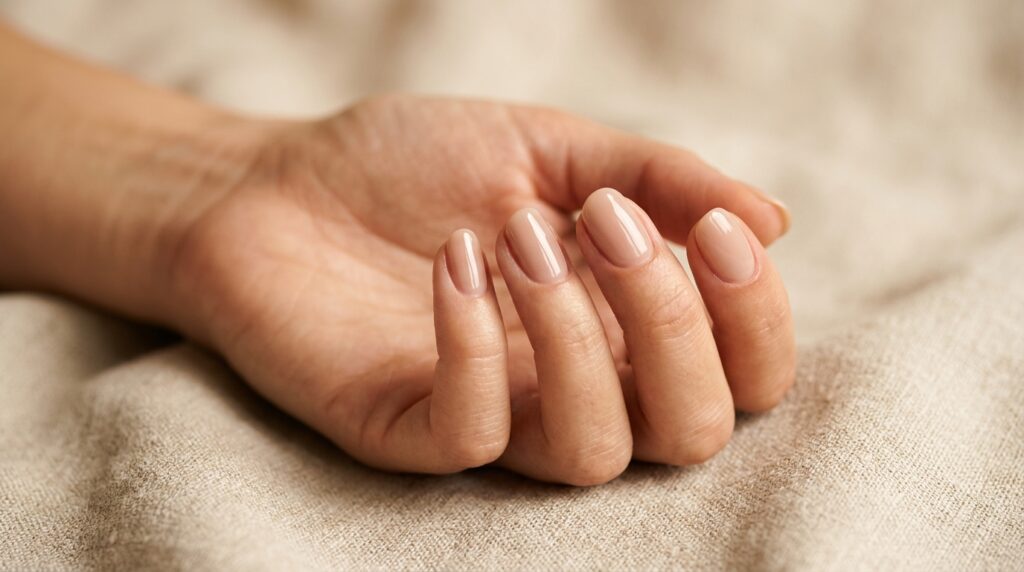
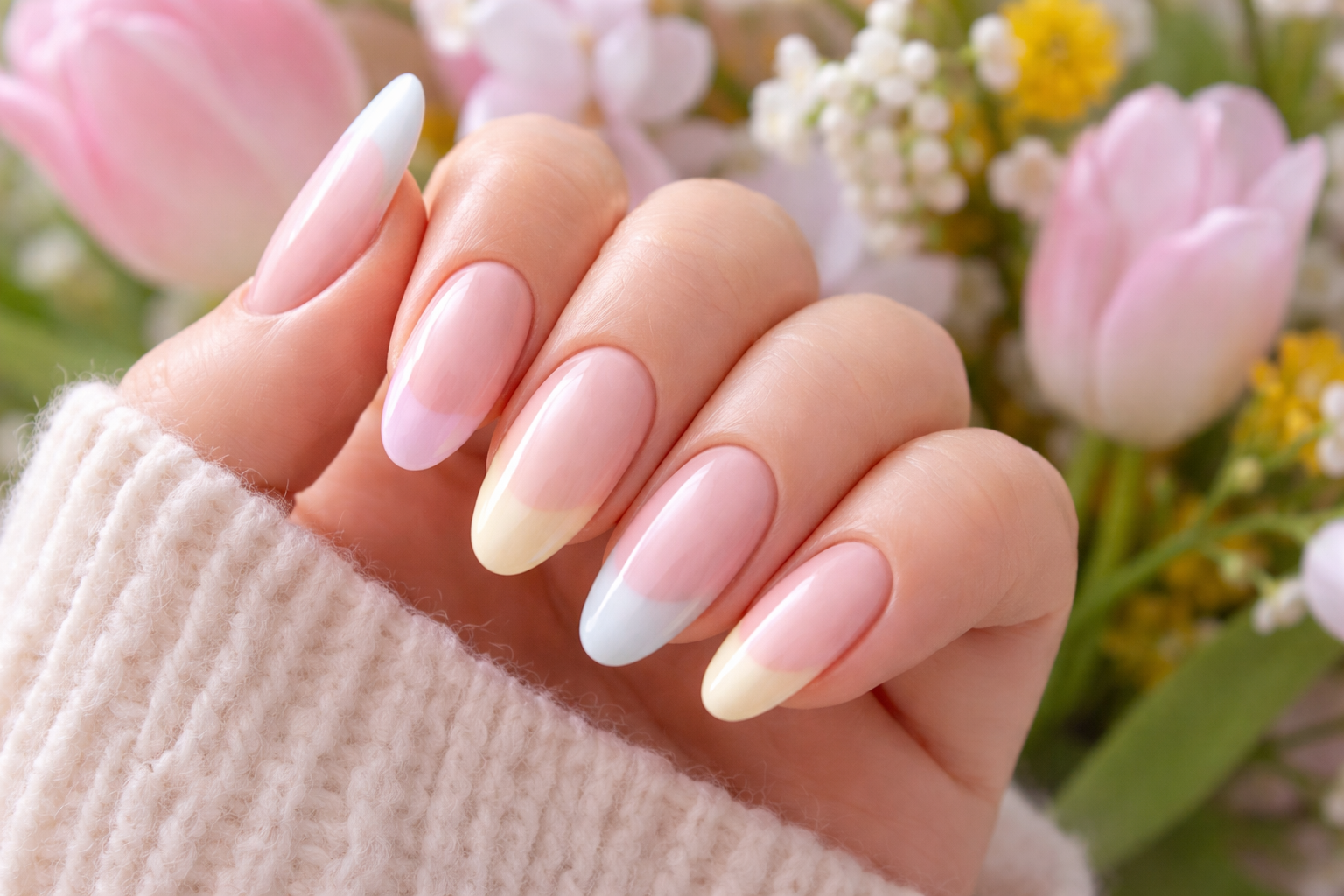
A controlled removal or infill. Reduced length. A lighter overlay. Neutral colours that show growth less harshly. Regular maintenance. Oil. Patience.
That’s it.
Spring nails aren’t about pretending winter never happened. They’re about undoing it carefully.
If you want help choosing the right step-down option for your nails, I have a service matcher on the site that walks you through it. Guesswork is how nails get ruined.