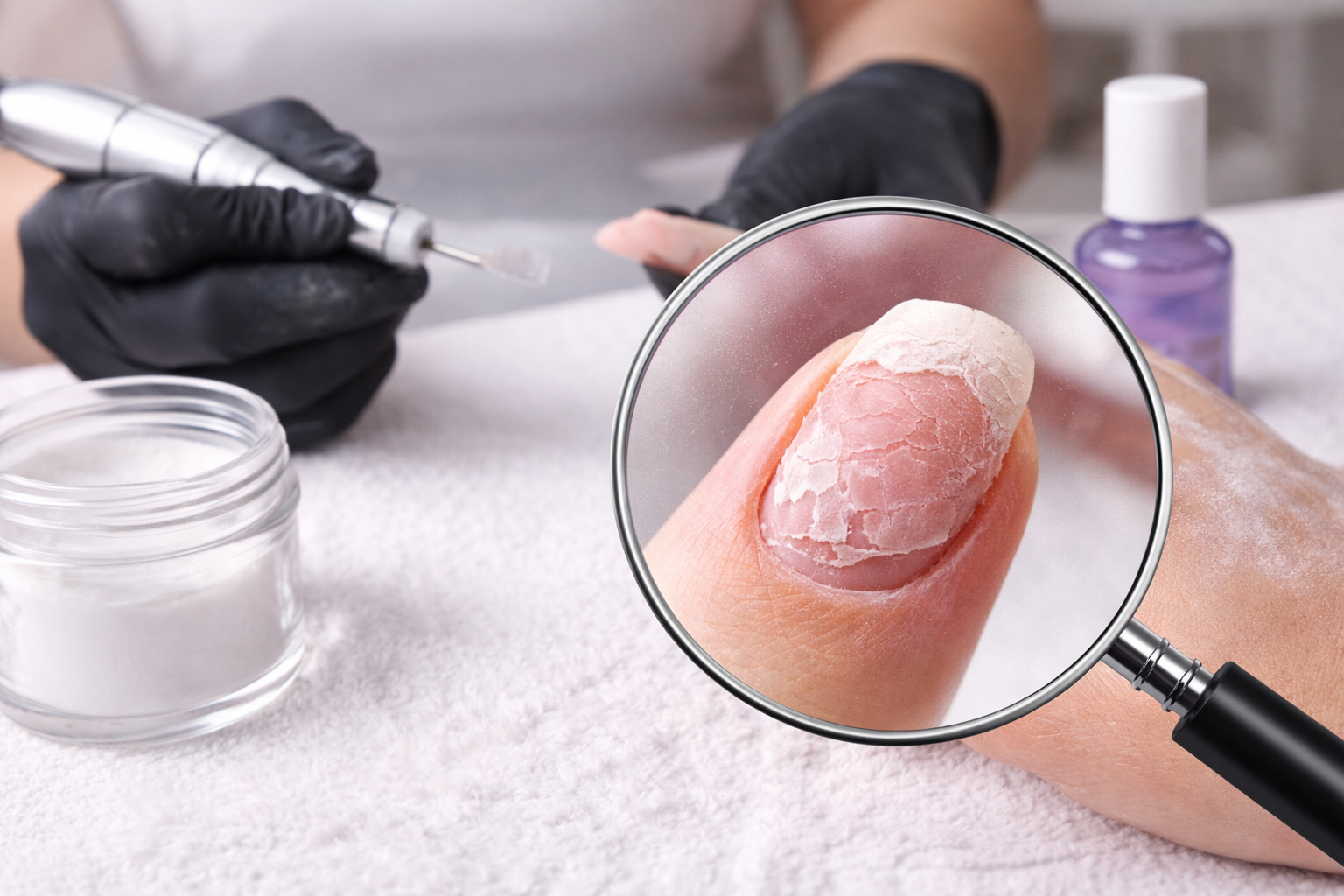
A factual reset on one of the most misunderstood systems in the nail industry.
Acrylic has earned a reputation that it does not fully deserve.
Ask most people why they avoid acrylic nails, and you’ll hear the same concerns repeated. Thin nails. Pain. Damage that “never fully recovered”. Acrylic is framed as harsh, outdated, and inherently destructive.
That narrative is convenient, but it is also incomplete.
When you strip away marketing trends and social media soundbites, the evidence points elsewhere. Acrylic itself is not the primary cause of nail damage. The damage almost always stems from bad chemistry, unsafe technique, poor removal practices, or long-term neglect.
If we are going to talk seriously about nail health, we need to be specific.
The Critical Distinction: MMA vs EMA
Any meaningful discussion about acrylic safety must begin here.
“Acrylic” is often spoken about as if it were a single material. It is not. There is more than one type of acrylic, each with fundamental differences. In the nail industry Ethyl Methacrylate (EMA), is the professional standard, and Methyl Methacrylate (MMA), is banned for cosmetic nail use.
MMA: The Root of Acrylic’s Bad Reputation
MMA was prohibited for use* in nail products decades ago after repeated reports of severe nail damage, pain, and long-term injury. Despite this, it continues to appear in some low-cost salons due to one reason only: cost.
*USA: Explicitly banned by the FDA in 1974. UK: Not explicitly banned in statute but deemed “unsafe”. Other regional regulations may vary.
MMA is significantly cheaper than EMA.
The problems with MMA are not cosmetic. They are mechanical and chemical:
- MMA cures into an extremely rigid plastic with very little flexibility
- It does not dissolve in acetone, making safe soak-off removal impossible
- To make it adhere, the natural nail must be aggressively filed or etched
- Impact forces are transferred directly into the nail bed rather than absorbed
- Removal almost always involves excessive filing or forced prying
The damage associated with MMA is not due to poor aftercare or bad habits. It is built into the material itself.
Many clients who believe acrylic “ruined their nails” were never wearing safe acrylic in the first place. They were wearing MMA, often without being informed.
EMA: The Professional Standard
EMA is the monomer used by reputable professionals.
When used correctly, EMA:
- Bonds effectively without damaging the nail plate
- Can be safely soaked off with acetone
- Allows for controlled, low-trauma removal
- Does not require deep filing or shredding of the nail surface
MMA vs. EMA Acrylics
| Feature | MMA (Methyl Methacrylate) | EMA (Ethyl Methacrylate) |
|---|---|---|
| Legal Status | Banned / Unsafe (FDA 1974) | Industry Standard / Safe |
| Cost | Very Cheap (~$15 / gal) | Expensive (~$200 / gal) |
| Rigidity | Extremely Hard & Rigid (Used as bone cement!) | Felxible & Durable (Yields slightly) |
| Adhesion | Poor chemical bonding; requires deep filing | Flexible & Durable (Yields slightly) |
| Removal | Does not soak off. Must be filed/pried off. Gummy. | Soaks off in acetone (15-20 mins). Sloughs off. |
| Damage Profile | Severe | Minimal if applied/removed correctly. |
| Identification | Fruity/sharp odour. Hard to file. Turns yellow. | Sweet/Pungent odour. Files into fine dust. |
I use EMA. Any responsible, reputable nail technician does.
This distinction matters. Without it, acrylic is judged for damage caused by a substance that should not be on nails at all.
Acrylic and Mechanical Stress: Strength Is Not the Same as Harm
Acrylic is structurally strong. That is not a flaw. It is its defining characteristic.
Unlike flexible systems, acrylic does not bend easily under pressure. When force is applied, that energy has to travel somewhere. If the nail is used as a tool, caught, or repeatedly stressed, the load transfers to the natural nail.
This is where acrylic is often misunderstood.
A flexible product may absorb impact quietly. Acrylic does not. It exposes poor habits and excessive length by making stress visible sooner. When damage appears, acrylic is still present, so it receives the blame.
The issue is not that acrylic causes damage, but that it does not mask it.
Removal: Where Most Damage Actually Happens
From a professional standpoint, this is the most important point.
The majority of nail damage attributed to acrylic occurs during removal, not wear.
When acrylic is peeled, snapped, or prised off, the failure point is rarely between the product and the nail. It occurs within the nail plate itself. Layers of natural keratin are torn away, leaving the nail thin, sore, and vulnerable.
Correct removal is slow and deliberate. It involves:
- Filing down the bulk safely
- Allowing acetone time to penetrate and break down the product
- Releasing the acrylic without force
If removal is painful, rushed, or aggressive, damage is inevitable, regardless of the system used.
Technique Matters More Than Product Choice
Acrylic is unforgiving of poor technique.
Common causes of acrylic-related damage include:
- Over-filing the natural nail during prep
- Using coarse grit files where fine grit is required
- Heavy-handed, poorly controlled or improper e-file use
- Incorrect structure placing stress in weak areas
- Overgrown sets with displaced apexes (aka going too long between fills)
These are training issues, not material failures.
Acrylic does not compensate for shortcuts. It highlights them.
The “Breathing” Myth, Explained Properly
Nails do not breathe.
The nail plate is dead keratin. It does not require oxygen from the air. The living tissue responsible for nail growth is the matrix, which receives oxygen and nutrients from the blood supply, not the environment.
What does happen under acrylic is occlusion.
Moisture accumulates beneath the product. When acrylic is removed, that moisture evaporates quickly. Nails may feel soft at first, then dry and brittle. This change is often misinterpreted as damage.
It is not suffocation.
It is a temporary shift in hydration levels.
Acrylate Allergies: A Serious, Industry-Wide Issue
There is a growing acrylate allergy problem, and it deserves careful discussion.
This issue is not exclusive to acrylic. In many cases, it is more prevalent in gel systems, particularly due to:
- At-home gel kits
- Under-cured product from weak lamps
- Gel flooding the cuticle and surrounding skin
- Prolonged skin contact with uncured monomer
Acrylic allergies typically develop through repeated skin exposure to liquid monomer. Gel allergies often develop because uncured product remains on the nail or skin for extended periods.
Gel and Acrylic: Different systems. Same chemical family. Same immune response.
This is why professional application and strict skin control matter, regardless of whether the service is acrylic or gel.
Dip Powder: Not a Gentler Alternative
Dip powder is also often presented as a safer, gentler option. Chemically, it is not.
Dip systems use a similar acrylic powder bonded with cyanoacrylate resin. Removal damage is still common, and hygiene risks increase when the same dipping powder vessel is used communally.
The method differs. The physics do not.
What Clients Mean When They Say “Acrylic Ruined My Nails”
In practice, this phrase usually points to one or more of the following:
- Mechanical trauma from forced removal
- Over-filing during prep or removal
- Use of MMA products
- Extended wear without maintenance
- Allergic reactions misattributed to strength
Acrylic becomes the label attached to the outcome, even when it was not the cause.
Troubleshooting “Ruined” Nails
| Symptom | Probable Cause | Solution |
|---|---|---|
| Rings of Fire (Red grooves) | E-file held at wrong angle/pressure during prep | Grow out (3-6 months). Switch technicians. |
| Sensitivity to Hot/Cold | Thinning of the nail plate (exposed nerve endings) | Grow out (3-6 months). Avoid heat. |
| White Chalky Patches | Keratin Granulations (Acetone dehydration) | Rehydrate with oil. Do not buff. |
| Green Stain | Pseudomonas infection under lifted product** | Remove product. Keep dry. |
| Itchy cuticle | Possible allergic reaction to acrylates | STOP USE IMMEDIATELY. Consult a dermatologist. |
**can happen with any nail enhancement product, not just acrylic!
Where the Blame Truly Lies
Acrylic is not a soft system. It is not trend-led. It does not tolerate poor practice.
Used illegally (MMA), badly, or carelessly, it causes harm. Used correctly, with EMA, proper structure, professional removal, and informed aftercare, it does not destroy nails.
Acrylic did not earn its reputation on its own. It inherited it from banned chemistry, rushed services, and a lack of education across both nail techs and clients alike.
Acrylic isn’t the villain. Poor nail work is.