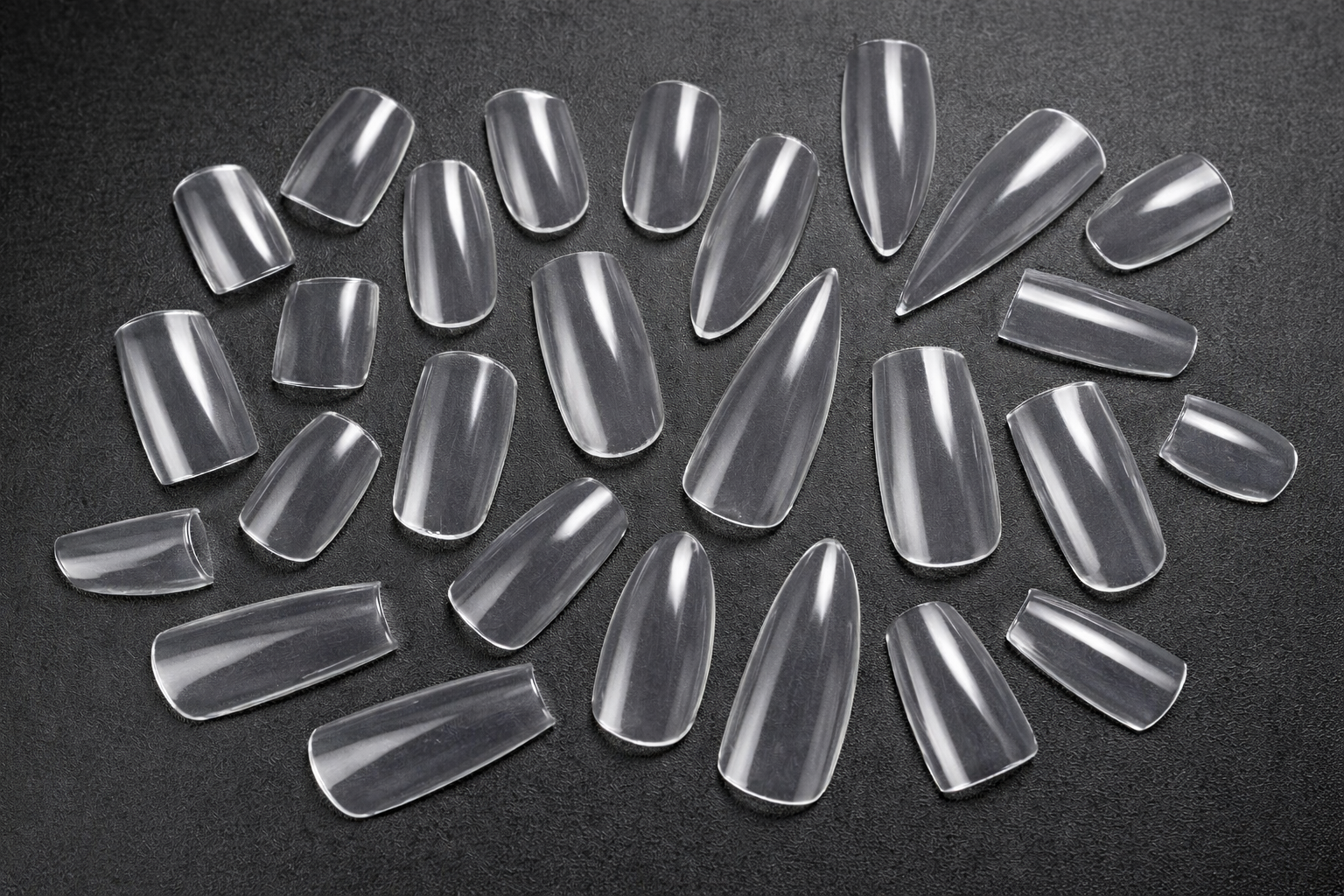
Choosing the Right Nail Shape
Finding the right nail shape changes how your hands look and how your nails behave day to day. Some shapes flatter certain hands. Some cope better with knocks, typing, childcare, or a job that does not stop. Others look incredible in photos, then chip, catch, or snap within days.
I do not believe there is a single “best” nail shape. There is only the one that suits your hands, your nails, and your life.
This guide walks through the most common nail shapes I work with, what they are good at, and where they fall down. Use it as context, not a rulebook.
Square Nails
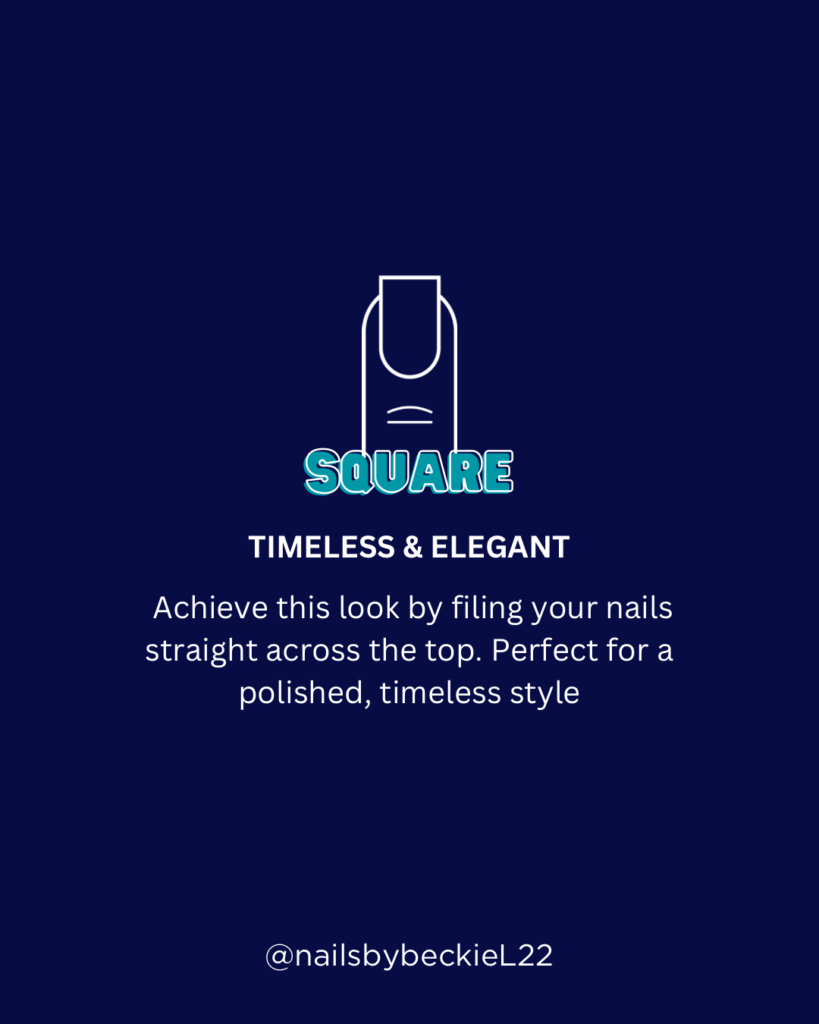
Square nails are clean, blunt, and unapologetic. They keep a straight edge across the free edge with sharp corners.
They suit wider nail beds well and give a strong, graphic finish. Short square nails can feel neat and practical. Longer lengths lean bold and editorial.
That said, those corners take the impact first. If you are hard on your hands or prone to catching edges, square can chip or knock more easily than softer shapes.
Best if: you like structure, prefer short to medium lengths, and want something crisp.
Less ideal if: your nails are weak, or you constantly use your hands as tools.
Oval Nails
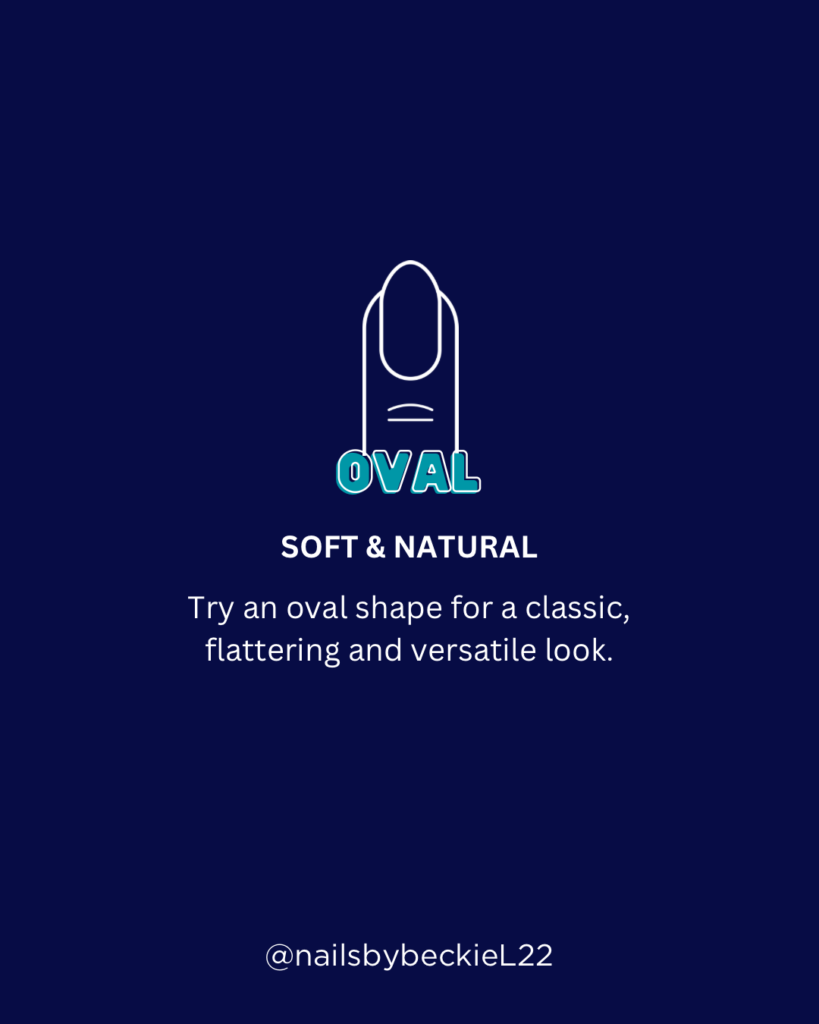
Oval is the quiet achiever. It suits almost everyone and rarely causes problems.
The softened curve visually lengthens the fingers and takes stress away from corners, which helps with longevity. It grows out gracefully and feels natural, even on longer lengths.
It is not flashy. That is the point.
Best if: you want elegance without drama, or you are growing your natural nails.
Less ideal if: you want sharp lines or a strong statement shape.
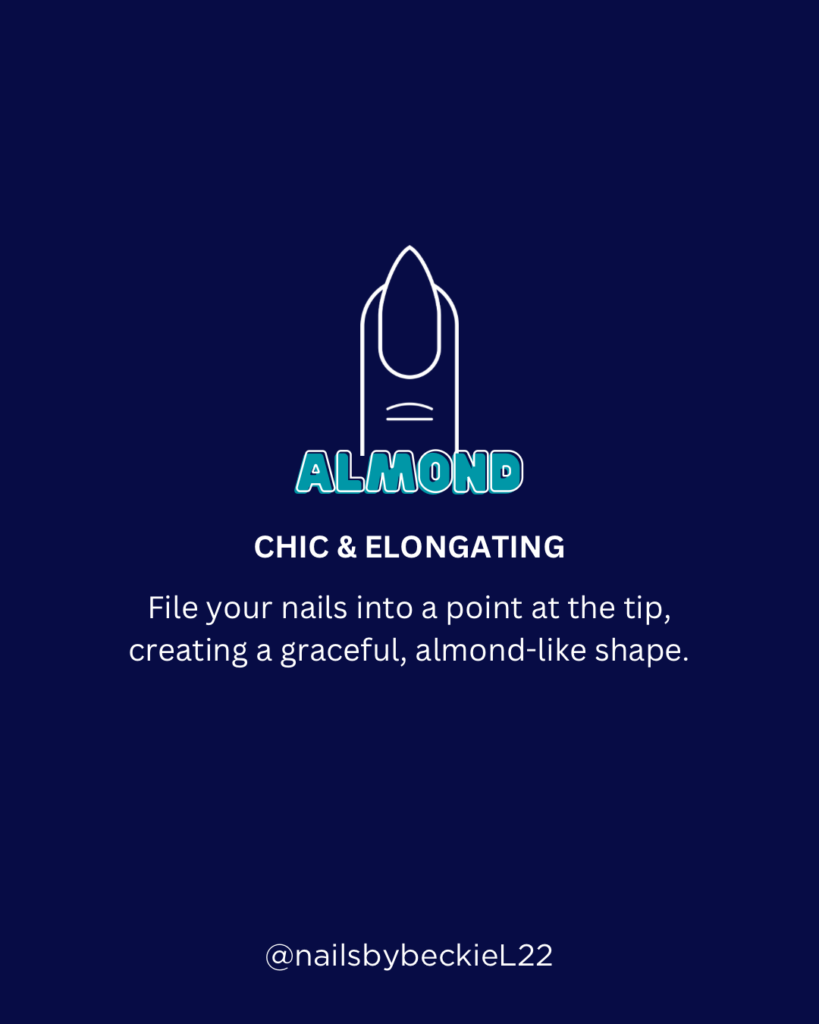
Almond Nails
Almond nails taper in from the sidewalls and finish in a soft point. They create length and balance, especially on shorter fingers or broader hands.
They photograph beautifully and feel feminine without being fragile, when structured properly. Poor structure, or too much length on weak natural nails, is where almond can struggle.
Best if: you want elongation and a polished look with some drama.
Less ideal if: your natural nails bend easily and you want extreme length.
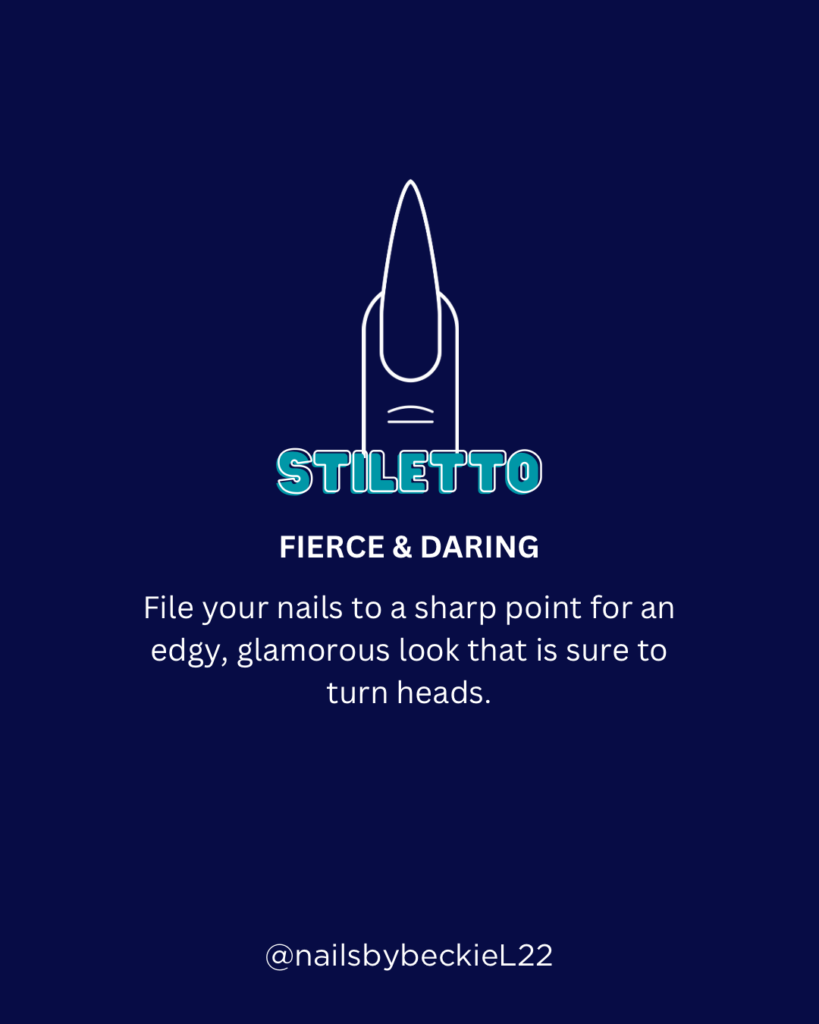
Stiletto Nails
Stiletto nails are a commitment. Long, pointed, and designed to be seen.
They elongate the fingers dramatically and carry a high-impact finish. They also concentrate pressure at the tip, which means they demand strength, structure, and sensible length choices.
This is not a shape for constant picking, peeling, or rough use.
Best if: you want a statement set and understand the upkeep.
Less ideal if: you type all day, work with your hands, or want low maintenance.
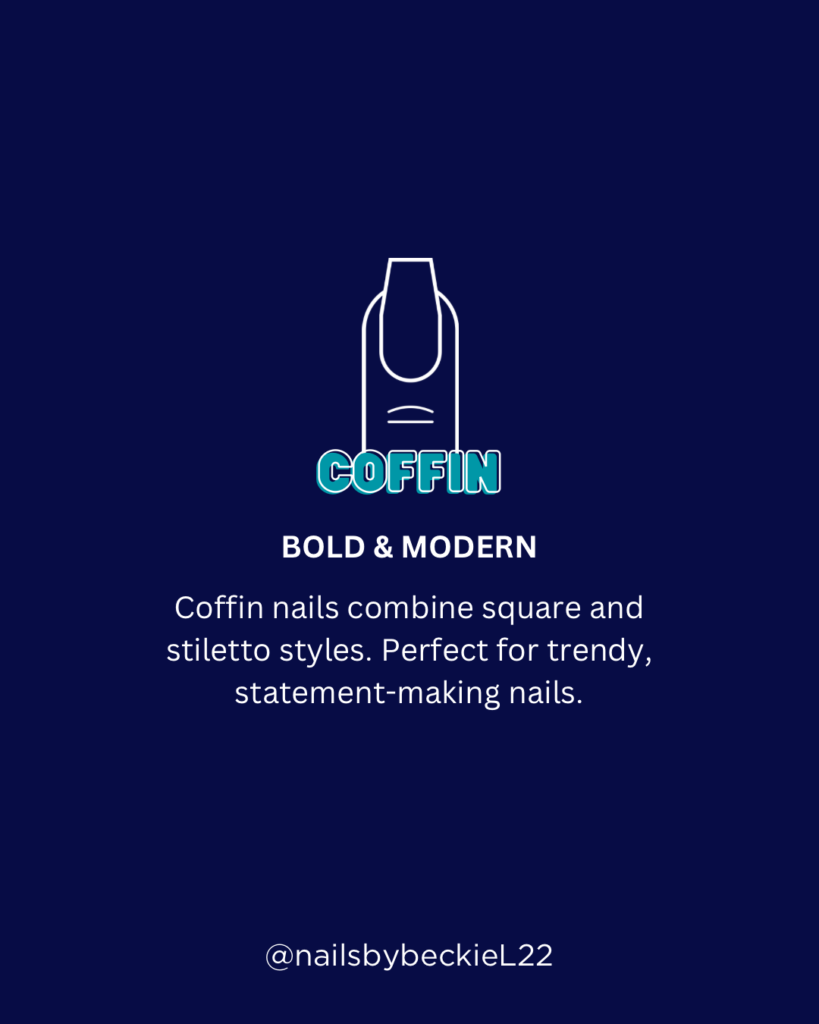
Coffin (Ballerina) Nails
Coffin nails sit between square and stiletto. Tapered sides with a flat tip give a modern, fashion-led finish.
They balance drama with wearability, but the flat edge still takes impact. Structure matters here. Done well, they last. Done thin, they fail fast.
Best if: you like trends but still want some practicality.
Less ideal if: your nails are very short or prone to peeling.
Still Not Sure?
Every nail shape has trade-offs. Some forgive weak natural nails. Some demand length. Some survive daily life better than others.
That is why this page exists alongside a tool, not instead of one.
I have created a quick nail shape quiz that looks at your hand shape, nail condition, preferred length, and lifestyle habits. It narrows down shapes that are more likely to work for you in real life, not just on Instagram.
Read the guide. Get familiar with the shapes.
Then take the quiz and walk into your next appointment with clarity.