You’ve seen the headlines. Every year or so, one does the rounds: “Gel manicures could cause cancer”, usually with a photo of a hand under a lamp and not much detail underneath.
And then you’re sitting in my chair, hands under the light, wondering if you should be worried.
It’s a fair question, and you deserve a straight answer from someone who isn’t selling you panic or waving your concerns away. So here’s what the evidence actually says, what it doesn’t, and where I draw the line myself.
What the lamp is actually doing
Let’s clear up the biggest misunderstanding first, because it changes how you read everything else.
A gel manicure sets because UVA light cures the gel. No UVA, no cure. That’s the whole mechanism. The lamp isn’t a gimmick or an upsell, it’s the thing that turns liquid gel into the hard, shiny finish you’re paying for.
Here’s the part most people miss: “LED lamps” are still UV lamps. LED describes the type of bulb, not the type of light. An LED nail lamp emits UVA, same as the older-style lamps did, it just does it more efficiently and cures faster. So if anyone tells you their LED lamp is UV-free, they don’t understand their own equipment.
That’s important, because it means you can’t dodge the question by asking for LED. The honest answer is that any gel service involves some UVA exposure. The real question is how much, and whether it matters.
The 2023 study, told honestly
Most of the recent worry traces back to a 2023 lab study that got a lot of coverage. I’m not going to pretend it didn’t happen or that it found nothing.
It found something. Researchers exposed human and mouse cells to UV nail lamp light and saw DNA damage and cell death, and in some cases mutations. That’s a real result and it deserves to be taken seriously, not brushed off.
But context matters, and the headlines left most of it out.
The study was done on cells in petri dishes, not on human skin. Your skin has layers of protection that isolated cells in a dish simply don’t have. And the exposure times were long: sessions of around 20 minutes, sometimes repeated. A real gel cure is roughly 30 to 120 seconds per hand.
So the study tells us that concentrated, prolonged UVA exposure can damage unprotected cells. It doesn’t tell us that a couple of minutes under a lamp every few weeks will give you skin cancer. Those are very different claims, and only the first one is supported.
What the wider evidence says
One lab study is a data point, not a verdict. When you step back and look at the bigger picture, the story shifts.
The FDA classes UV nail lamps as low risk when used as directed. That’s not a throwaway line, it’s a regulatory position based on the exposure levels involved.
A 2025 systematic review pulled together what we actually know. Across the literature, there were only a handful of skin cancer case reports linked to nail lamps at all. Of seven mathematical models built to estimate the risk, six calculated minimal to no risk. And an analysis of a US cancer registry found no melanoma cases tied to the lamps.
For scale, it helps to compare with tanning beds, which are a genuine, well-established cancer risk. Nail lamps emit far lower levels of UVA, and they’re aimed at a small patch of skin for seconds at a time, not your whole body for minutes on end. They aren’t in the same category.
None of this means the risk is precisely zero. It means the risk, on current evidence, is low. I’d rather say that plainly than pretend certainty in either direction.
Who should take a bit more care
Low risk across a population isn’t the same as low risk for everyone. A few people have good reason to be more cautious, and I’d rather be specific than vague here.
UV exposure is cumulative. If you’ve been a fortnightly gel client for twenty years, your hands have had far more lamp time than someone who has the odd gel manicure before a holiday. That’s worth being mindful of.
You should also take extra care if you’re at high risk of skin cancer, whether that’s family history, a lot of past sun damage, or a previous diagnosis. And if you’re on any medication that makes you photosensitive, some antibiotics and acne treatments do this, mention it, because your skin’s response to UV changes.
If any of that is you, it doesn’t mean gel is off the table. It means the precautions below are worth taking seriously.
The cheap insurance
Here’s the genuinely reassuring bit: if you want to reduce your exposure to near nothing, it costs very little and it works.
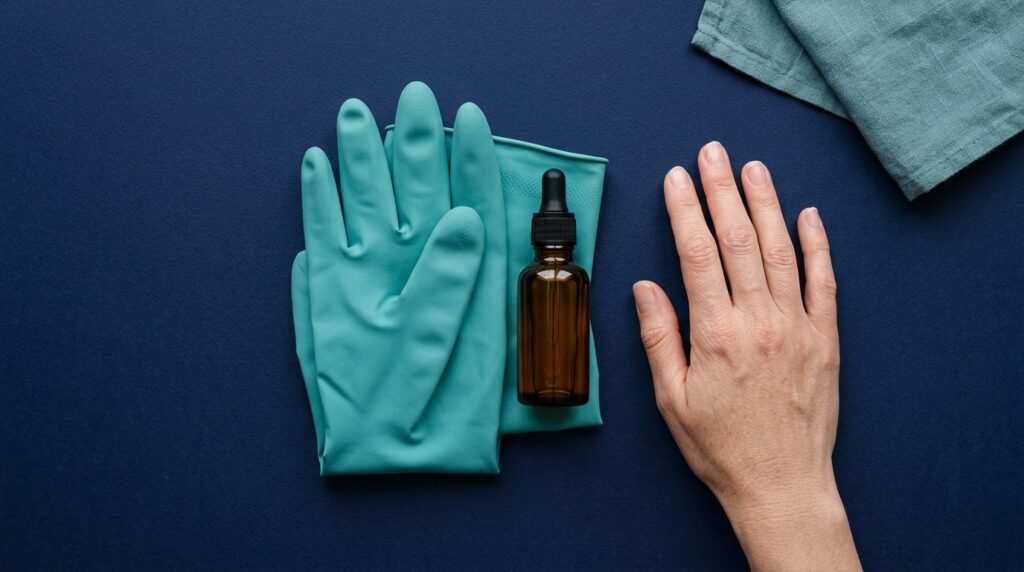
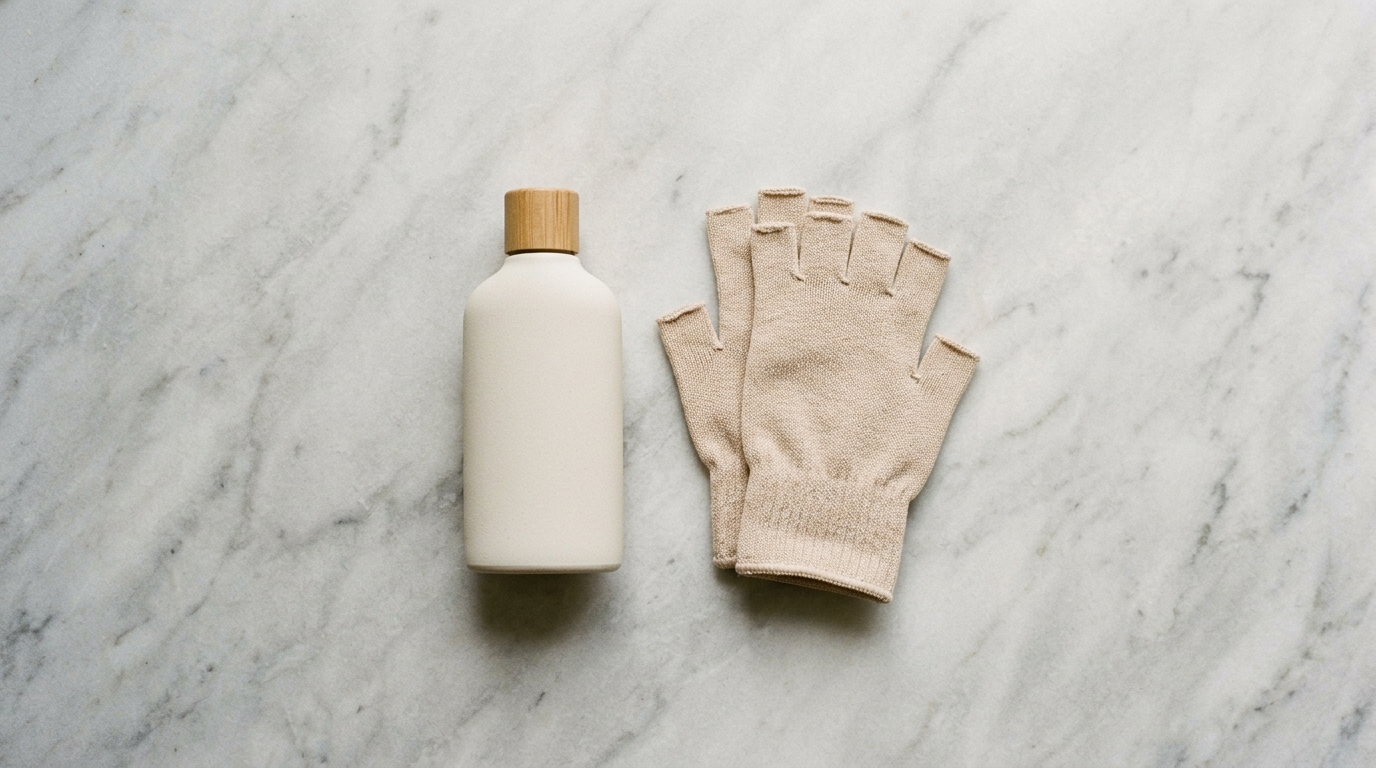
Apply a broad-spectrum SPF 30 or higher to the backs of your hands before your appointment. Or wear fingerless UV-protective gloves, which leave your nails exposed but shield your skin. Both are recommended by dermatologists, and both are the same logic you’d use for a car dashboard on a long drive.
I will never mind if you do either of these. If it means you sit in my chair relaxed instead of quietly worrying, that’s a good trade every single time. Bring the gloves, ask me for the SPF, whatever helps.
What I do at my end
My side of this comes down to using the right kit properly.
I use quality lamps matched to the gel systems I work with, and I cure for the correct times. That matters for two reasons. It keeps your exposure to the minimum needed to do the job. And it prevents undercuring, which is the real, common problem people should be thinking about.
Undercured gel is the leading cause of gel allergies, because uncured product sits against your skin and sensitises you over time. Correct curing avoids that. If you’ve ever wondered why your nails ache or feel tender after a gel service, curing and product choice are a big part of the story. I’ve written about that in more detail in why your nails hurt after acrylics, BIAB or gel.
The verdict
So, are UV nail lamps safe?
Based on the current evidence, I’m comfortable with my lamp, and I’m comfortable with you sitting under it. The 2023 study is real and worth respecting, but it tested unprotected cells for far longer than any real manicure lasts. The wider picture, from the FDA, from the 2025 review, from cancer registry data, points consistently to low risk. The line I’d watch is cumulative exposure over decades and anyone at higher skin-cancer risk, and for those cases the fix is cheap and effective.
If you’d feel better with SPF or gloves, do it, no explanation needed. And if you’ve got questions before you book a gel manicure, ask me. I’d always rather talk it through than have you sit there wondering.