There’s nothing more frustrating than looking down at your nails a week after your appointment and spotting that telltale gap where the acrylic has started to peel away from your natural nail. It catches on your hair, it lets water creep underneath, and it makes you feel like your money went to waste. If you’ve been wondering how to stop your acrylic nails lifting, the honest answer is that it comes down to a handful of things, some in your control and some in mine.
Lifting isn’t always your fault. And it isn’t always your nail tech’s fault either. It’s usually a combination of things. So let’s talk about what actually causes acrylic to lift, and what you can genuinely do to make it stay put.
What lifting actually is
Lifting is when the acrylic separates from your natural nail plate. Sometimes it starts at the cuticle area, sometimes along the sidewalls, and sometimes it’s a full flap you can feel with your thumb.
The reason it matters, beyond looking scruffy, is that any gap between the product and your nail is a space where moisture and bacteria can gather. That’s how you end up with what we call greenies, a bacterial discolouration under the nail. If you want the full picture on those, I’ve written about what greenies are and how to prevent them separately.
So lifting isn’t just cosmetic. Left alone, it can cause bigger problems. Which is exactly why it’s worth understanding.
Why acrylic lifts in the first place
Prep, or lack of it
This is the big one, and it sits on the tech’s side of the table. If your natural nail isn’t prepped properly before the acrylic goes on, nothing will make it stick.
Good prep means removing the shine from the nail plate, pushing back and tidying the cuticle area, and making sure the nail is completely free of oil and dust before any product touches it. Even a tiny bit of moisture or oil left behind creates a barrier, and that’s where lifting starts.
This is one of the reasons I work with a dry manicure rather than soaking your nails first. Soaking floods the nail plate with water, and applying product over a swollen, waterlogged nail is asking for trouble down the line.
Your natural oils
Some people are simply oilier than others. If you have naturally oily nail beds, product has a harder time gripping, and you may find you’re more prone to lifting than a friend who gets the same set and never has an issue.
This isn’t something you’ve done wrong. It just means your prep needs to be more thorough, and it might mean your infill schedule needs to be a little tighter.
Nails that are too long for your nail beds
Length puts leverage on the product. The longer the extension, the more force travels back to the point where the acrylic meets your natural nail every time you knock or catch it.
I’m honest with clients about this, which is why I won’t extend nails further than the nail bed comfortably allows. Length looks lovely until it becomes the reason your set keeps popping off.
Everyday life
Using your nails as tools is the fastest way to introduce lifting. Peeling labels, opening ring pulls, scratching stickers off, picking at things. Every one of those puts stress on the seal between your nail and the product.
Water is another one. Long, hot baths, swimming, washing up without gloves. Repeated soaking softens things and works its way into any weak spot.
How to stop your acrylic nails lifting
Wear gloves for wet work
I know, nobody wants to. But washing up, cleaning, and gardening are all soaking your nails in hot water and chemicals. A cheap pair of rubber gloves genuinely extends the life of your set more than almost anything else.
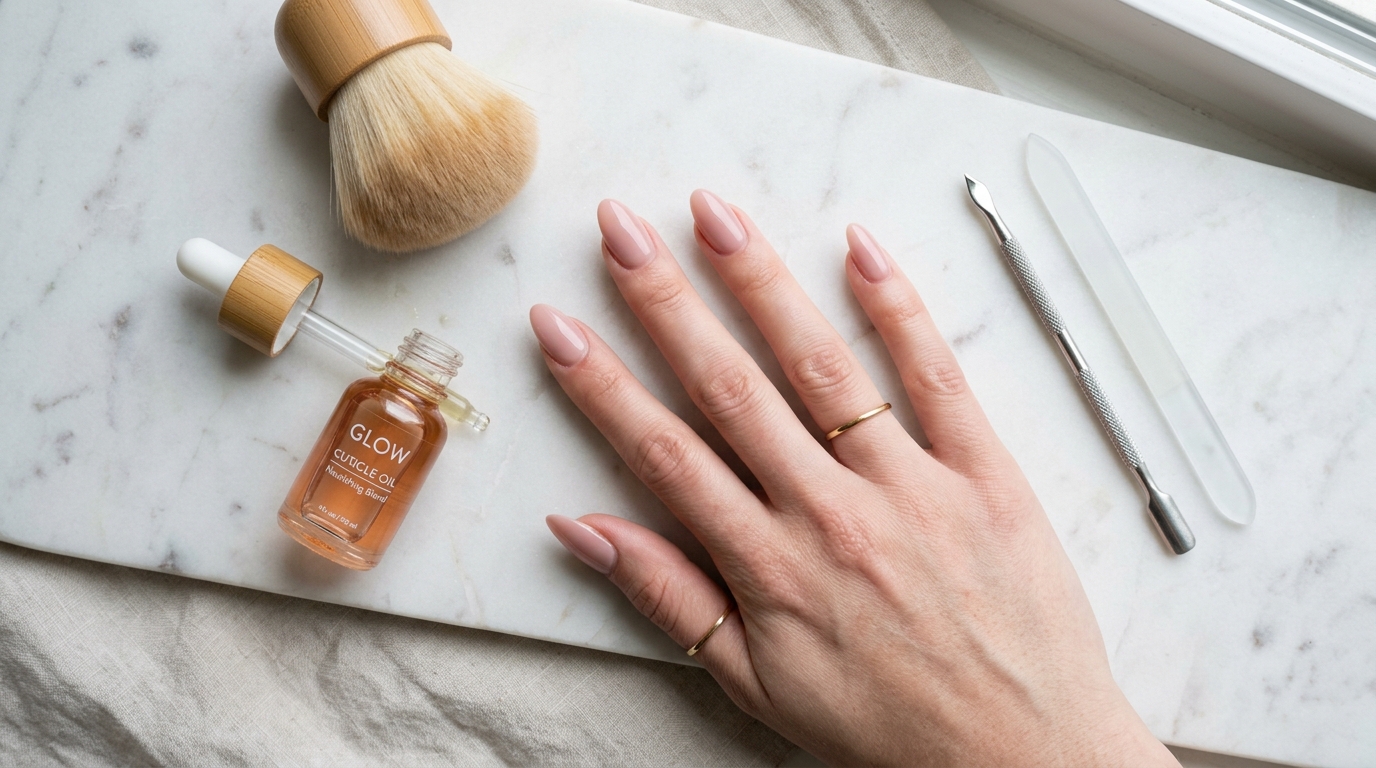
Use cuticle oil daily
This sounds counterintuitive when I’ve just told you oil causes lifting. The difference is timing. Oil during prep is a problem. Oil on a finished, cured set is a benefit, because it keeps the natural nail and the surrounding skin flexible rather than dry and brittle.
Brittle nails snap and lift at the edges. Flexible nails move with the product. Cuticle oil is not optional, and I mean that. Twice a day, worked into the base and sides of every nail.
Don’t stretch out your infills
Acrylic is designed to be maintained. As your nail grows, the balance of the enhancement shifts, weight moves down the nail, and the product near the cuticle becomes more vulnerable to catching and lifting.
Coming in every two to three weeks for an infill keeps everything balanced and sealed. If you leave it too long, you’re not saving money, you’re inviting lifting and potentially a full set redo. I’ve explained how often infills are actually ideal if you want to know where you sit.
Never pick or peel
If a nail does start to lift, please don’t help it along. Picking at a lifted edge pulls layers off your natural nail with it, and that’s where real damage happens. The difference between damage and removal trauma usually comes down to exactly this: what happens when a client picks rather than books in.
Book a repair instead. It takes me ten minutes to fix a small lift. It takes months for your natural nail to recover from being torn.
When lifting is a sign of something else
Occasionally, persistent lifting on just one nail isn’t about prep or product at all. It can point to an underlying issue with that specific nail, an old injury, or a change in your health. If one nail lifts every single time while the others behave, it’s worth a proper conversation rather than assuming it’s a bad application. I’ve written more about when one nail keeps causing trouble.
The takeaway
Lifting comes down to proper prep from your tech, sensible choices from you, and regular maintenance from both of us. Wear gloves for wet work, oil your nails daily, keep your infill appointments, and resist the urge to pick when something starts to peel.
Do those, and choose a tech who takes prep seriously, and lifting stops being the thing that ruins your set halfway through.
If your nails keep lifting no matter what you try, come and talk to me. Sometimes it’s a small tweak to your routine, sometimes it’s your length, and sometimes it’s something we need to look at properly together. Either way, you shouldn’t have to just live with it.