You’ve decided you want a professional manicure. You know you want something that lasts. But when you look at a service menu and see “gel manicure” alongside “structured manicure” or “builder gel overlay,” it’s easy to wonder what the difference actually is, and whether one is worth choosing over the other.
The honest answer? It depends on your nails and what you’re hoping to get from your appointment. Neither option is better in a blanket sense. They solve different problems. And understanding those differences means you’ll walk away with the right service every time, instead of paying for something you don’t need or missing out on something you do.
What a Gel Manicure Actually Is
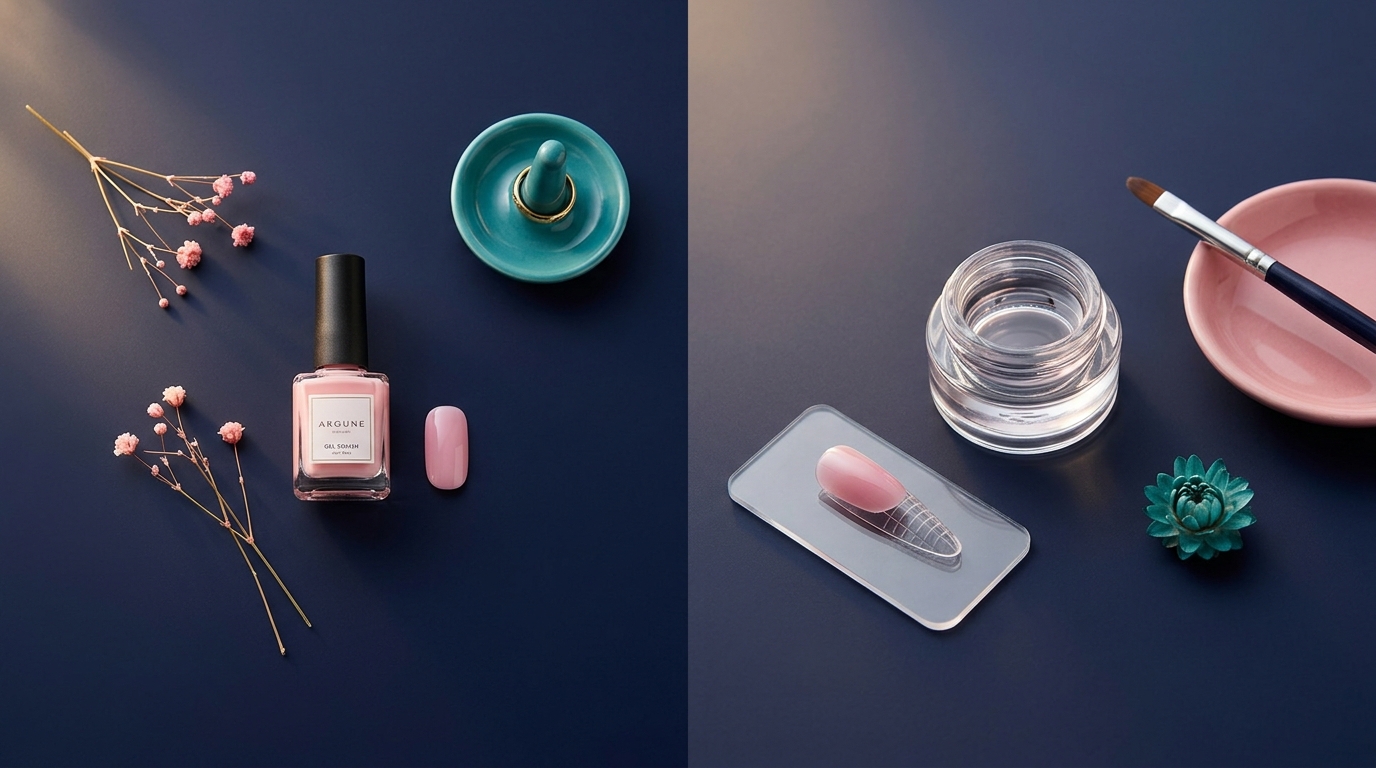
A gel manicure is gel polish applied to your natural nails. That’s it. No added structure, no extra thickness, no reshaping beyond what a file and some cuticle work can achieve.
Your nails are prepped, the gel polish is applied in thin layers, and each layer is cured under a lamp. The result is a glossy, chip-resistant finish that typically lasts two to three weeks without the peeling and chipping you’d get from regular polish.
It’s a coating, not a reinforcement.
This is an important distinction. Gel polish sits on top of your nail like a protective shell, but it doesn’t add meaningful strength. If your natural nails are healthy and reasonably strong, that’s perfectly fine. The gel polish protects the surface, keeps everything looking neat, and gives you a much longer wear time than traditional lacquer.
What a Structured Manicure Adds
A structured manicure uses builder gel as the base instead of, or alongside, gel polish. Builder gel is thicker, self-levelling, and designed to add strength and shape to the natural nail.
Think of it this way. If gel polish is a raincoat, builder gel is a suit of armour. Lightweight armour, but armour nonetheless.
During a structured manicure, I apply builder gel in a way that creates an apex, a subtle arch across the nail that reinforces its natural structure. This isn’t about making your nails look thick or artificial. Done well, a builder gel overlay looks completely natural, but feels stronger.
The gel polish colour then goes on top, so the finish looks the same. The difference is what’s underneath.
When Gel Polish is Enough
For a lot of people, a straightforward gel manicure is the right call.
If your natural nails are already a decent length, they hold up well without breaking or peeling, and you’re not particularly hard on your hands day to day, gel polish will do the job beautifully. You get colour and shine that lasts without the upkeep of regular polish, and there’s no reason to add structure you don’t need. A good gel manicure on well-prepped nails is a lovely service.
When Builder Gel Makes a Real Difference
This is where the prescriptive approach comes in. Not everyone’s nails are in the same condition, and not everyone’s lifestyle puts the same demands on their hands.
Builder gel tends to be the better choice when:
Your nails are thin, flexible, or prone to peeling. If your natural nails bend easily or you notice layers splitting at the free edge, gel polish alone won’t fix that. It’ll chip or lift faster because the nail underneath is moving too much. Builder gel gives those nails something to lean on. If you’re not sure whether your nails are genuinely weak or just dehydrated, that’s worth figuring out first. Either way, builder gel can help while you work on the underlying issue.
You want a little more length but aren’t ready for full extensions. Builder gel can extend the nail slightly beyond the natural free edge. Not dramatically, but enough to give you a bit more canvas to work with. It’s a good middle ground if you want longer nails without committing to acrylics or soft gel tips.
You’re tough on your hands. If you work with your hands a lot, whether that’s gardening, typing all day, or just the general chaos of life with small children, the added rigidity of builder gel helps your manicure survive things that would crack or chip gel polish on its own.
You’ve had lifting issues with gel polish in the past. Sometimes lifting isn’t about prep. Sometimes it’s about the nail plate being too flexible for the product sitting on it. Builder gel creates a more stable base, which often solves persistent lifting problems.
It’s Not About Spending More for the Sake of It
I want to be clear about something. I don’t recommend builder gel to every client. That wouldn’t be honest, and it wouldn’t serve you well.
A bespoke manicure means I look at your nails as they are right now, consider how you use your hands, and recommend the service that actually makes sense for you. Sometimes that’s gel polish. Sometimes it’s a structured overlay. Sometimes it’s something else entirely.
The point of having different tiers isn’t to upsell. It’s to make sure the right product goes on the right nail.
What About Maintenance?
Both services need maintaining, but the routine is slightly different.
Gel polish manicures are typically removed and reapplied every two to three weeks. The removal process is gentle when done properly, and because there’s no structural product to file back, appointments tend to be quicker.
Builder gel overlays can be infilled rather than fully removed each time. I file the existing builder gel back to a thin layer, reapply where needed, and then add fresh colour on top. This is gentler on your nails over time because you’re not stripping everything back to bare nail at every appointment.
Both services last better when you’re looking after your nails between appointments. Cuticle oil makes a bigger difference than most people realise. It keeps the nail plate hydrated, which helps product adhesion, and it keeps your cuticles from drying out and pulling away from the nail.
How to Decide
Here’s the simplest way to think about it.
If your nails are healthy, strong enough, and you just want them to look polished, go for a gel manicure. It’s a great service that does exactly what it promises.
If your nails need a bit of help, whether that’s added strength or a more stable base, a structured manicure with builder gel is worth the extra time and investment.
And if you’re genuinely not sure, that’s fine. That’s what your appointment consultation is for. I’d rather spend five minutes looking at your nails and recommending the right service than have you guess and end up disappointed.
The Right Service for Your Nails, Not Someone Else’s
One thing I see a lot is clients choosing a service because their friend has it, or because they’ve seen it on social media. Your nails aren’t your friend’s nails. What works perfectly for someone else might not be the best fit for you, and that’s not a limitation. It’s just how nails work.
If this post has helped you figure out what you actually need from your manicure, that’s a good starting point. The next step is having an honest conversation with your nail tech about what your nails need right now, not what looks good on someone else’s hands.