Winter is hard on nails. Cold air outside, dry heat inside, constant hand washing, gloves on, gloves off. It all adds up. Nails that were ticking along just fine in autumn suddenly start peeling, splitting, or snapping far too close to the nail bed.
This is usually the point where nail enhancements enter the conversation: acrylic, builder gel, hard gel. Sometimes as a solution. Sometimes as a scapegoat.
Nail enhancements can help with winter breakage. They just aren’t the blanket fix they’re often made out to be.
Why do nails break more in winter?
Nails are porous. They lose moisture easily, and winter strips it fast. Cold air pulls hydration out. Indoor heating finishes the job. Add in hot showers, washing up, and hand sanitiser, and the nail plate is going back and forth from one extreme to another, becoming brittle before you realise what’s happening.
Brittle nails do not bend. They snap.
That break usually looks sudden, but the underlying cause has been building for weeks.
What Nail enhancements can fix
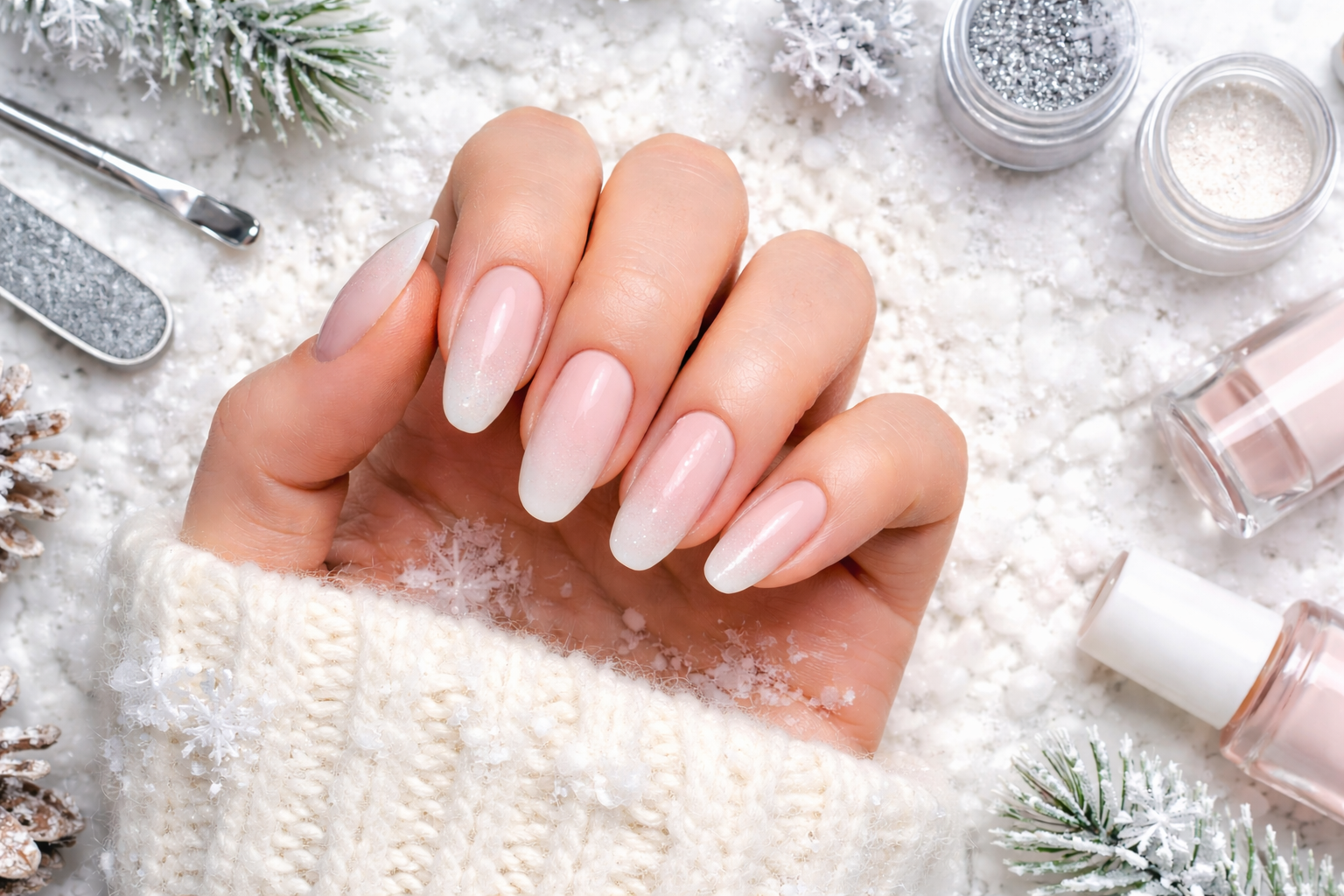
Nail enhancements add strength. When applied properly, the right product can create a more rigid structure that protects the natural nail underneath from daily stress.
In winter, that matters.
If your nails are breaking because they are flexing too much, catching on fabrics, or splitting at weak points, nail enhancement products can act as armour. They take the knocks that your natural nails no longer can.
This is especially helpful if:
- Your nails keep breaking at the same length.
- You use your hands a lot at work.
- You are growing out some damage from previous over-filing or trauma.
Nail enhancements can also lock in length. Once the natural nail is supported, it has a chance to grow past the fragile stage where winter usually wins.
What Nail enhancements cannot fix
Nail enhancements do not repair a damaged nail plate.
If your nails are dehydrated, over-filed, or already peeling in layers, products like Acrylic and Gel will not reverse that. They can cover it. They can protect it while it grows out. But they cannot undo what is already there.
They also cannot compensate for poor aftercare.
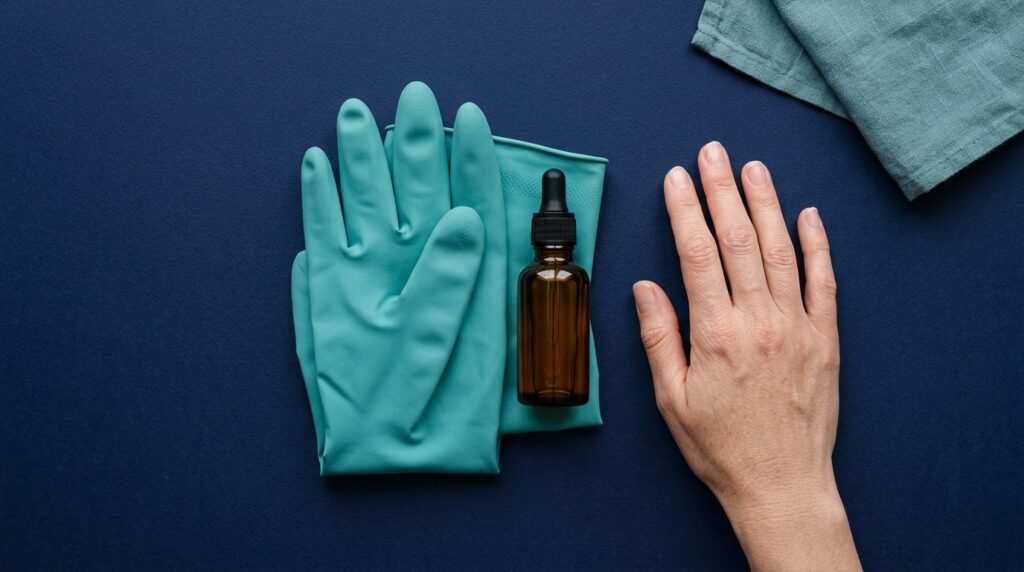
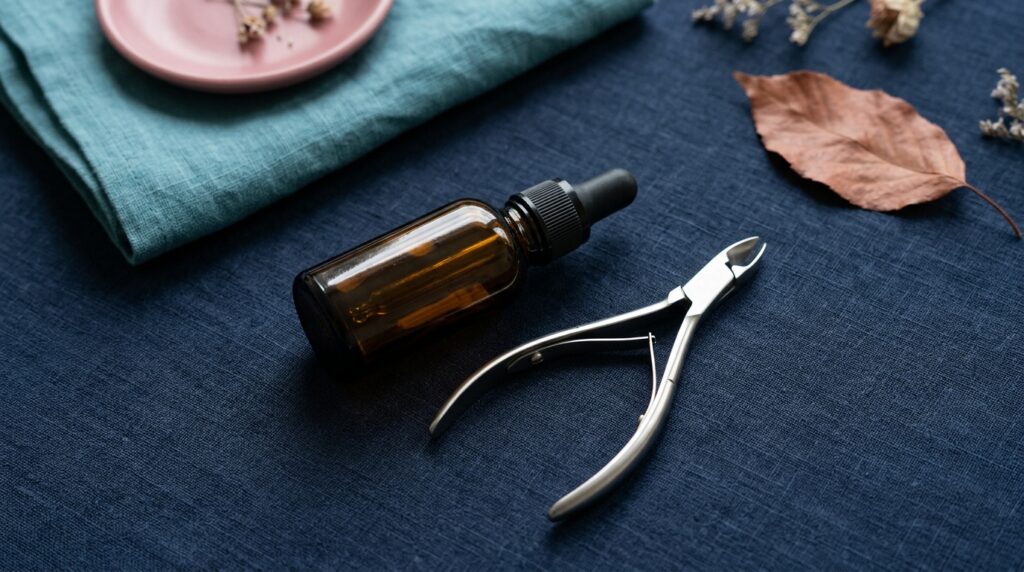
Cuticle oil is not optional in winter. Gloves matter. Picking matters. Long gaps between infills matter. Nail enhancements worn too long without maintenance become part of the problem, not the solution.
If breakage is happening underneath enhancements, that is usually a sign of dryness, lifting, or mechanical stress being ignored.
The common winter mistake
The mistake I see most often is using enhancements to chase length when the nail underneath is weak and struggling.
Longer does not always mean stronger.
In winter, shorter, well-structured enhancements often perform better than longer sets. Less leverage. Less stress at the apex. Fewer cold-induced snaps.
Nothing is boring about nails that stay intact.
Acrylics versus gel
Acrylics are not the only choice for winter breakage. Builder gel overlays or structured manicures can offer support with more flexibility, which suits some nail types better in cold weather.
The right option depends on how your nails behave, not on trends or assumptions.
This is why one-size-fits-all advice around nail enhancements does not work.
The honest takeaway
Nail enhancements can protect nails from winter breakage. They can buy time. They can add strength and structure when the natural nail is under pressure.
What it cannot do is replace care, hydration, and sensible maintenance.
If winter has turned your nails against you, adding an enhancement product might be part of the answer. Just not the whole story.
Not sure which enhancement makes sense for your nails right now? I’ve put together a quick service matcher to help narrow things down based on how your nails behave, not trends.