Acrylic nails and BIAB (Builder in a Bottle) are loved for their durability, strength, and ability to give you flawless-looking nails that last for weeks. But if you’ve ever worn them, chances are you’ve heard the advice: “Your nails need to breathe,” or “You should take a break every few months to keep your nails healthy.”
Here’s the truth: nails don’t breathe, and you don’t need to take a break from enhancements—provided they’re applied and removed correctly by a qualified nail technician, using high-quality, professional-only products.
That said, some people still prefer taking breaks, and there’s nothing wrong with that either. Let’s dive into the myths, facts, and best practices when it comes to acrylics, BIAB, and nail health.
Do Your Nails Need to “Breathe”?
This is one of the biggest myths in the nail industry. Your nails are made of keratin (the same protein as your hair), and they don’t have lungs. All the nutrients your nails need come from your bloodstream, not the air.
So no, your nails don’t need “oxygen breaks” or time without product. What really matters is whether the enhancements are:
✅ Applied correctly with proper nail prep.
✅ Maintained with regular infills.
✅ Taken off safely, without picking or peeling.
When those things are done right, your natural nails stay perfectly healthy underneath.
If lifting or infections are something you’ve worried about, I explain more in my post on Greenies! What Are They and How Can You Prevent Them?
Does Acrylic Damage Your Natural Nails?
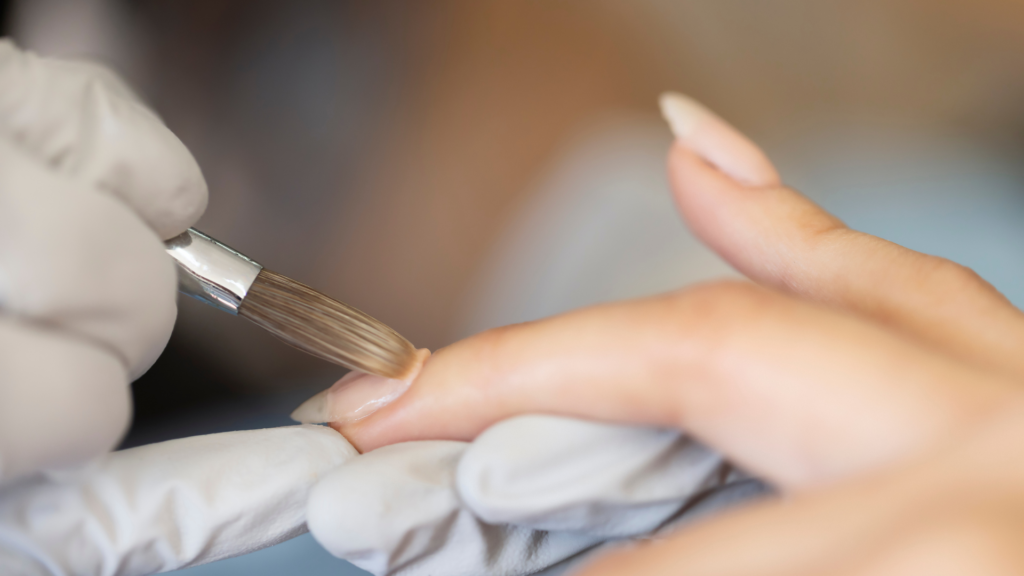
Another common misconception is that acrylics ruin your nails. Acrylic itself doesn’t damage your nail plate—it’s the application and removal that makes the difference.
Damage usually happens when:
❌ Product is ripped, picked, or forced off.
❌ Over-filing thins the natural nail.
❌ Low-quality products are used.
❌ Nails aren’t cared for properly between appointments.
With a professional nail tech using trusted, vegan, and cruelty-free brands, acrylic enhancements can be worn long-term without causing harm.
Curious about how acrylics compare with other nail systems? Take a look at my guide on Builder Gel vs. Hard Gel: What’s the Difference?
What About BIAB?
BIAB, or Builder In A Bottle, was designed to be a gentler alternative to acrylics while still giving strength and durability. Many BIAB systems are HEMA-free and hypoallergenic, making them a popular choice for those with sensitivities.
Because BIAB is lighter on the nail plate and soaks off more easily than acrylic, some people choose to wear it continuously without breaks. Again, the key factor isn’t the product itself, but how it’s applied, maintained, and removed.
Should You Take a Break Anyway?
While breaks aren’t medically or scientifically necessary, some clients choose to take them as a personal preference. Here are a few reasons why:
- To switch up their nail routine and wear natural nails for a while.
- To reassess nail health if they’ve noticed peeling, thinning, or lifting.
- To save money or time between appointments.
If you do take a break, use it as an opportunity to nourish your nails with cuticle oil, strengtheners, and regular filing—not because they “need to recover,” but to keep them looking neat until your next set.
This can also be a good opportunity to try gentler alternatives and adopt an eco-friendly nail care routine that supports stronger natural nails.
The Real Key: Nail Care & Professional Application
Whether you wear acrylics, BIAB, or both, the secret to long-term healthy nails is simple:
- Choose a qualified nail technician who uses professional-only products.
- Stick to a consistent maintenance routine (infills or removal every 2–3 weeks).
- Never pick, bite, or peel the product off.
- Apply cuticle oil daily to promote hydration and strength.
The Bottom Line
You don’t need to take a break from acrylics or BIAB unless you want to. Your nails don’t breathe, and enhancements don’t inherently cause damage. What really matters is choosing a professional who applies and removes them correctly, and maintaining your nail care in between.
So whether you love the strength of acrylics or the flexibility of BIAB, you can enjoy beautiful, long-lasting nails without the guilt—or the myths.
✨ Healthy nails are cared-for nails, not “bare” nails.