Every year it goes the same way. September rolls around, someone posts a set of spider-web tips or intricate snowflakes on Instagram, and suddenly your inbox fills up with clients wanting exactly that. You say yes because you don't want to turn work away. Then October and December turn into six weeks of overrunning appointments, freehand designs you've never actually practised, and a diary that's technically full but somehow paying you less than a normal month.
The problem isn't the art. It's the way most of us fall into the season instead of planning for it.
This is a post about the time and capacity side of seasonal nail art, not the money. I've written separately about what to charge for nail art, and pricing genuinely matters. But you can price seasonal art perfectly and still wreck your column if you haven't worked out how long each design takes and how many you can realistically fit in a week.
Why seasonal art breaks your diary
Seasonal designs differ from your everyday add-ons in one important way: they arrive all at once.
Your normal nail art requests trickle in across the year. A chrome accent here, a French tip there. You've done them a hundred times and you know exactly how long each one takes. Seasonal art doesn't behave like that. It spikes hard for a few weeks, and every client wants something more elaborate than usual because it's Halloween or it's their Christmas party.
That spike is where techs come unstuck. You're suddenly doing designs you don't have the timing for, at the busiest point in your calendar, when you can least afford an appointment to overrun.
I've talked before about how being busy is not the same as being profitable. Seasonal art is one of the clearest examples. A packed October means nothing if half your appointments ran forty minutes over.
Build a small set of designs you can actually deliver
The single best thing you can do is decide, in advance, what you offer. Not "whatever the client sends me", but a defined set of seasonal designs you've chosen, practised, and can execute reliably.
For Halloween, that might be four or five options. A few for Christmas. That's it.
This feels restrictive when you're used to saying yes to everything. In practice it's the opposite. A tight set means you get genuinely good at each design. Your hand knows the movement. You've solved the fiddly bits already. When a client books, you're not improvising, you're delivering something you know you can do well.
It's the same logic behind a focused service menu. Fewer things, done brilliantly, beats a long list that stretches you thin.
The Instagram trap
Here's the honest bit. That stunning Halloween set you saw online, the one with the hand-painted portrait and the 3D cobwebs? It probably took the tech who posted it three hours. It might have been a photoshoot piece, done unpaid, for content.
Take that on as a live client request, having never practised it, and you're gambling three hours of a fully booked day on a design you can't time and might not nail. The client leaves happy, maybe. You've earned next to nothing per hour and blown a hole in your afternoon.
You don't have to compete with content pieces. You need designs that photograph well, please your clients, and fit inside a slot you can actually book.
Time every design before you offer it
You cannot manage what you haven't measured. Before any seasonal design goes on your menu, time it properly.
Sit down before the season starts, pick your shortlist, and do each one on a practice hand or a set of tips. Not once, casually. Do it as you'd do it on a client, prep and all, with a timer running. Then add a bit, because your first few live attempts will always be slower than a relaxed practice run.
Now you have a real number. Not "about twenty minutes", but the actual time that design adds to an appointment.
Those numbers are what let you book accurately. If a design adds forty minutes, your booking system needs to reflect forty minutes, every single time. Timings that are too generous or too tight are where invisible money leaks out of a full diary, and seasonal art is exactly where that happens.
Timing everything first also tells you which designs to drop. If one shortlisted idea takes an hour and looks barely different from one that takes twenty minutes, cut it.
Cap your art slots per week
This is the part people skip, and it's the part that actually protects you.
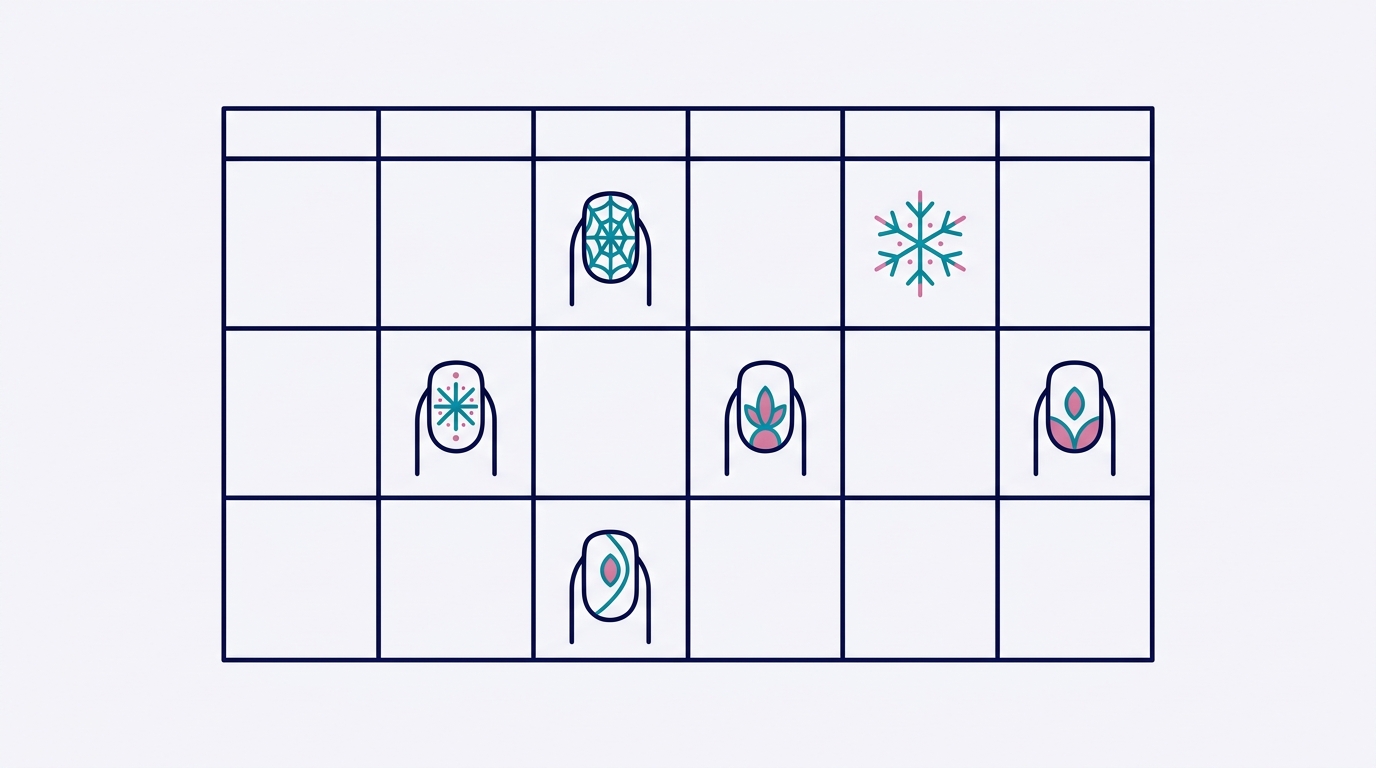
Decide how many detailed seasonal art appointments you'll take per week, and hold that line. Maybe it's three. Maybe it's five. The exact number depends on your speed and your diary, but the principle is fixed: art slots are limited, and once they're gone, they're gone. That's capacity planning, and it's no different to any other limit you set on your working week.
Detailed art is mentally demanding in a way a standard overlay isn't. You cannot do six intricate sets back to back and keep the quality up. Capping the slots protects the work as much as your time.
It also spreads the load. Two art appointments a day rather than four clustered into one afternoon leaves you some flexibility for the appointments that inevitably run long.
And there's a quiet marketing benefit. Limited slots create genuine urgency, the honest kind. "I've got three Halloween art appointments left" is true, useful for the client, and gets people booking early instead of messaging you in a panic the day before.
Build a request menu so clients choose what you can deliver
Once you've got a practised set of designs you've timed properly and capped, the last piece is how you present them.
Don't leave it open-ended. If you post "taking Christmas art requests" and let clients send whatever they fancy, you're right back to freehand designs you haven't practised. Show them what's on offer instead.
Photograph your chosen designs in advance. Put them together as a small seasonal menu, each one with a clear name and a rough idea of what it adds to the appointment. Then clients pick option two, you know exactly what you're doing and how long it takes, and you book it properly.
This does a lot of quiet work for you. It sets expectations before anyone sits in your chair. It stops the "can you just add a little something" conversation, because the something is already defined.
Your core menu stays stable underneath all this. Seasonal designs are a limited-time layer on top, present for a few weeks and then gone. If one doesn't land, you drop it next year and nobody notices.
Do this before the season, not during it
The difference between a seasonal period that pays you well and one that grinds you down comes down to work you do now, while your diary is calmer.
Pick your designs and practise them until the timings are honest. Set your weekly cap, photograph the set, and post the menu early enough that clients book from what you offer rather than sending you a screenshot on the day. If you haven't mapped out the rest of the season yet, do this alongside planning your Christmas diary rather than as a separate job.
None of that is glamorous, and none of it is about the art itself. But it's the difference between a Halloween that leaves you proud of your work and a Christmas that leaves you counting the days until January.
You already know you can do the nails. The skill was never the question. What protects your season is deciding, in advance, exactly what you'll take on and how much of it, then holding that line when the requests start rolling in.