
You had acrylics for a while. Maybe months, maybe years. Then you took them off, looked down at your natural nails, and thought: “Acrylics have ruined my nails.”
They’re thin. They’re peeling. They feel like paper. And the obvious conclusion is that the product did this to you.
But here’s the thing. In most cases, it wasn’t the acrylic that caused the damage. It was how the acrylic came off.
What actually happens to your nails after acrylic removal
When acrylic is applied properly, it bonds to the top layers of your natural nail. That bond is meant to be strong. It’s the whole point. You want your enhancements to stay put while you’re wearing them.
The problem starts when that bond is broken by force instead of by process.
Peeling off an acrylic nail doesn’t just remove the product. It pulls away layers of your natural nail with it. Sometimes several layers. What you’re left with isn’t acrylic damage. It’s removal trauma.
Your natural nail plate is made up of roughly 50 layers of keratin cells. When you forcibly remove product, you can strip away a significant number of those layers in one go. That’s why your nails feel so thin afterwards. They literally are thinner. Not because the acrylic weakened them, but because part of your nail left with the product when it was pulled off.
How improper removal causes nail damage
Let’s be honest about the ways this usually happens.
Picking and peeling. A nail starts to lift at the edge. You catch it on something. You start peeling. It’s satisfying for about three seconds, and then you see the mess underneath. This is the most common cause of removal trauma I see.
Prying them off. Using your other nails, a tool, or sheer determination to lever the product away from your nail bed. This can cause immediate pain, and the damage is often visible straight away. White patches, rough texture, thinning.
Biting them off. It happens more than people admit. And it does exactly what you’d expect.
Soaking for five minutes and then forcing it. A proper soak-off takes time. If the product isn’t dissolving freely, it isn’t ready. Scraping or pushing at product that’s still bonded is just a slower version of peeling.
None of these are removal. They’re destruction. And your natural nail is the collateral damage.
What proper removal actually looks like
Professional removal is a patient process. When I remove acrylic, the product is filed down to a thin layer first, then soaked with acetone until what remains breaks down and lifts away on its own. There’s no force involved. No scraping at product that’s still clinging on.
The key word is patience. Proper removal isn’t dramatic. It’s methodical and, honestly, a bit boring to watch. That’s how you know it’s being done right.
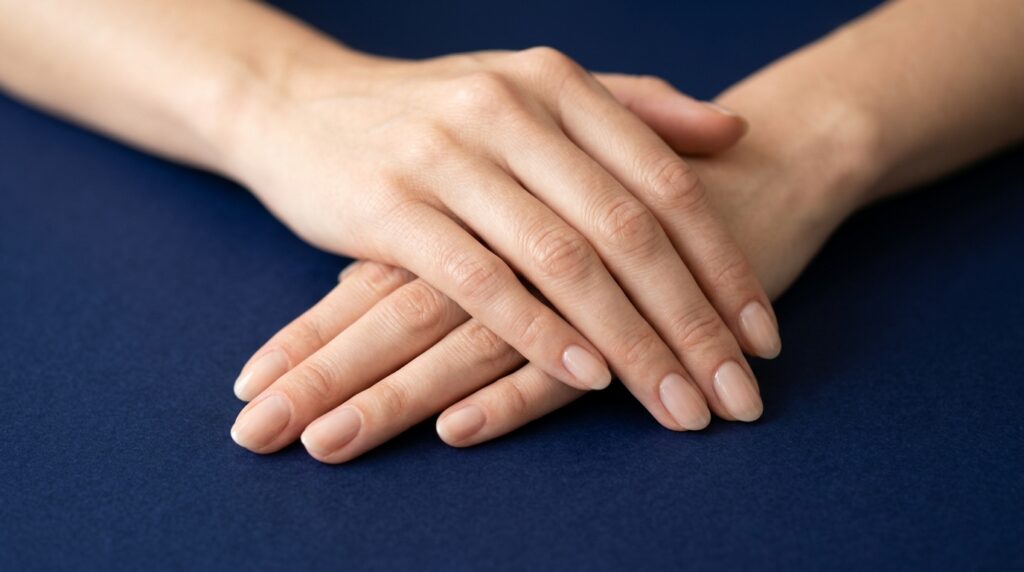
When acrylic is removed properly, your natural nails underneath should look and feel normal. Maybe a little dry from the acetone, which cuticle oil sorts out quickly, but structurally intact. No peeling. No white patches. No paper-thin fragility.
If your nails look destroyed after removal, the removal was the problem.
Why this matters more than you think
This isn’t about blame. I know that picking at your nails can feel almost compulsive. A lifting edge is hard to ignore. And if nobody has ever explained what happens when you pull product off, why would you know not to?
But understanding where the damage actually comes from changes everything. It means you don’t have to avoid acrylics forever because you think they’re bad for your nails. It means you can enjoy wearing enhancements without dreading what your nails will look like when they come off. You just need to let a professional handle the removal part.
It also means that if a nail does start to lift between appointments, you know what not to do. Leave it alone. Book in for a repair or a removal. Stick a plaster over it if the temptation to pick is too strong. Whatever it takes to keep your hands off it.
How to recover from nail removal damage
If you’re reading this with thin, peeling nails and a sinking feeling, don’t panic. Your nails grow. That damaged nail will eventually grow out entirely, replaced by healthy new growth from the matrix.
In the meantime:
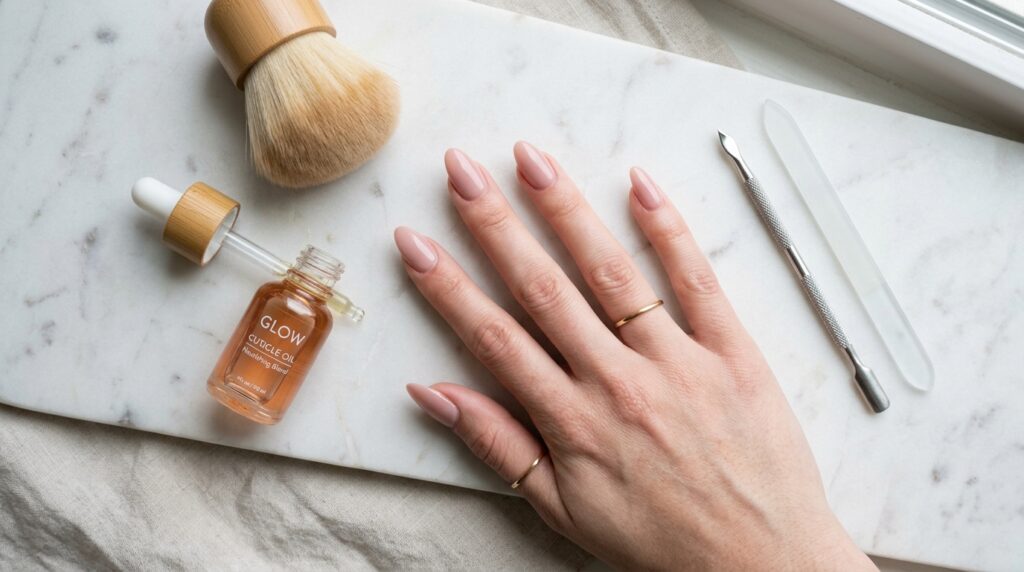
Use cuticle oil twice a day. It won’t repair what’s already damaged, but it keeps the new growth and the surrounding skin healthy and hydrated.
Keep them short. Thin nails are more flexible and more likely to bend, catch, and tear. Keeping them short reduces the risk of further damage while they recover.
Don’t put anything on them to “fix” them. Layering product over traumatised nails won’t help. Let them breathe and grow.
Be patient. Fingernails take roughly three to six months to grow out fully. It’s not a quick fix, but it is a reliable one.
The takeaway
Acrylic, when applied well and removed professionally, doesn’t damage your nails. Full stop. The product isn’t the villain in this story. The removal method is.
If you’ve been avoiding enhancements because of a bad experience, it might be worth reconsidering what actually caused it. Chances are, it wasn’t the acrylic itself. It was the moment you, or someone else, decided to skip the proper removal process.
Next time a nail lifts or you’re ready for a change, book a professional removal. Your nails will thank you for it. Quietly, over the next few months, by just growing back exactly as they should.