You have just had a fresh set done. They look incredible. You want them to last forever.
I get it. But false nails are not designed to last forever, and understanding why will save you a lot of frustration, a lot of unnecessary damage, and probably a bit of money too.
Let me walk you through what realistic wear time actually looks like, why your nails need regular maintenance, and what you can do between appointments to get the most out of every set.
How long do different types of false nails last?
When most people ask how long their nails will last, what they really mean is: how long until they still look good?
That is a fair question, but the answer depends on what type of enhancement you are wearing.
Gel polish on natural nails typically looks its best for two to three weeks. After that, you will start to see visible growth at the cuticle area, and depending on your lifestyle, you might notice minor chipping or wear at the free edge.
Builder gel and soft gel extensions can last three to four weeks before they need attention. The product itself holds up well, but your natural nail is growing underneath it the entire time. That growth shifts the balance point of the enhancement, which is why things start to feel different even if they still look fine on the surface.
Acrylic and hard gel extensions are the most durable. A well-applied set can go three to four weeks comfortably, sometimes a little longer. But again, growth is happening. The structure needs rebalancing.
None of these are meant to be applied once and forgotten about. Every single type of nail enhancement is designed to work within a maintenance cycle.
Why your nails grow out (and why that matters more than you think)
Your natural nails grow at roughly 3mm per month. That does not sound like much, but on a nail plate that is only 10-15mm long, it is significant.
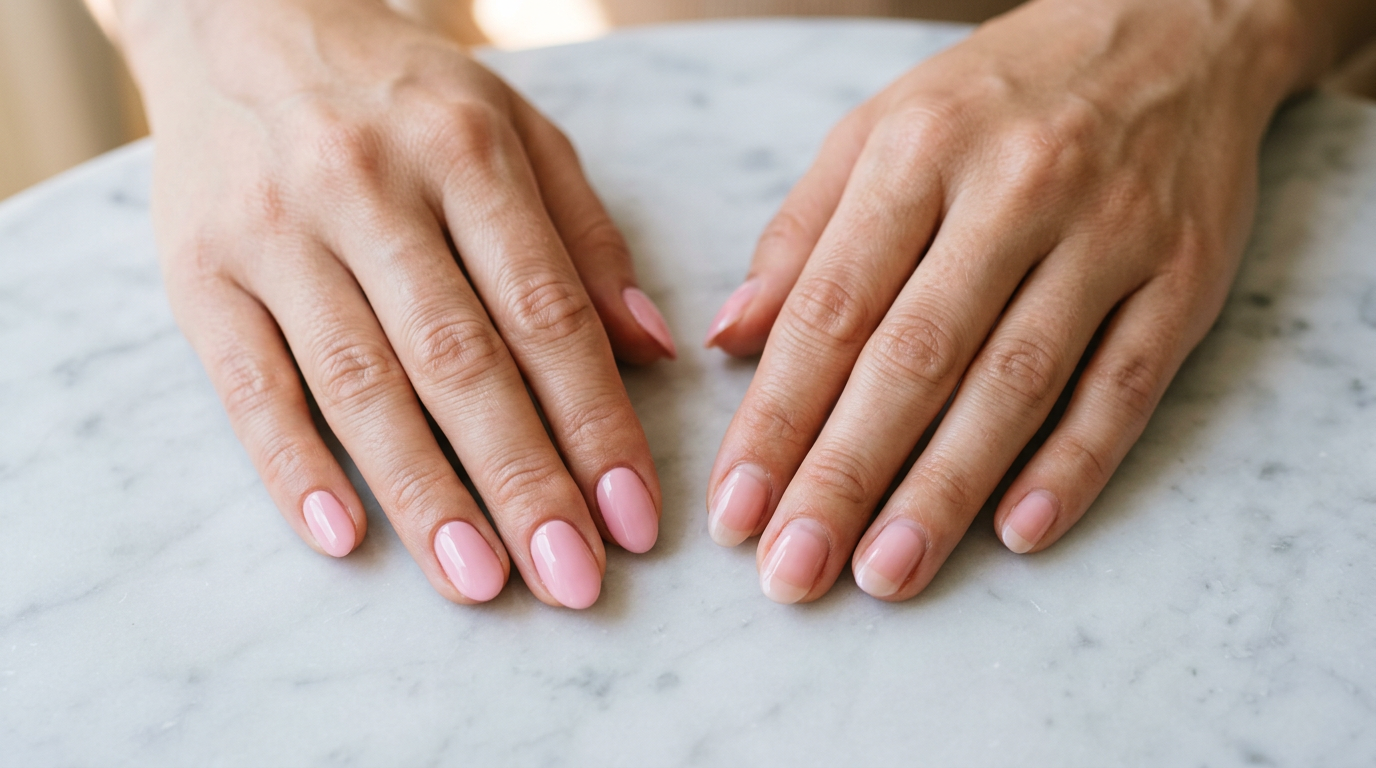
As your nail grows, the product that was applied right at the cuticle area moves further and further away from where it started. This creates a gap, which is purely cosmetic at first. But it also shifts where the thickest, strongest part of the enhancement sits.
Think of it like this. When your nails are freshly done, the structure is balanced. The apex, which is the strongest point, sits exactly where it needs to be to support the length. Three or four weeks later, that apex has migrated forward with your natural growth. The nail becomes weaker at the base and heavier at the tip.
This is why nails are more likely to break, lift, or snag the longer you leave them. It is not a fault with the product or the application. It is physics.
Infills are not a shortcut
Some people see infills as the budget option, or assume they are somehow lesser than a full new set. They are not. Infills are the proper way to maintain your enhancements.
During an infill appointment, I rebalance the structure. I remove any lifted product, prep the new growth, and rebuild the apex back to where it should be. I check the overall health of your natural nail underneath. If there is any damage or thinning, I can address it early rather than letting it get worse under a product you cannot see through.
A good infill at the right time keeps your nails strong, healthy, and looking fresh. Skipping infills and just waiting until everything falls apart is how people end up with damaged nails and the impression that enhancements are “bad for you.”
They are not bad for you. Neglecting the maintenance cycle is what causes the problems.
The maintenance schedule that actually works
Here is what I recommend for most of my clients.
Gel polish on natural nails: book every two to three weeks. Do not peel it off when it starts to lift. If it lifts early, come in and I will fix it properly. Peeling gel polish off takes layers of your natural nail with it, every single time.
Builder gel or soft gel extensions: book every three to four weeks. If you are new to enhancements, lean towards three weeks while you get used to how they wear and what your growth pattern looks like.
Acrylic or hard gel extensions: book every three to four weeks. Some people can stretch to five if their growth is slow and they are careful, but four weeks is the sweet spot for most.
The pattern here is simple. Regular maintenance means your nails always look good, the product stays structurally sound, and your natural nails stay healthy underneath.
What you can do between appointments
You are not powerless between visits. A few small habits make a genuine difference to how your enhancements wear.
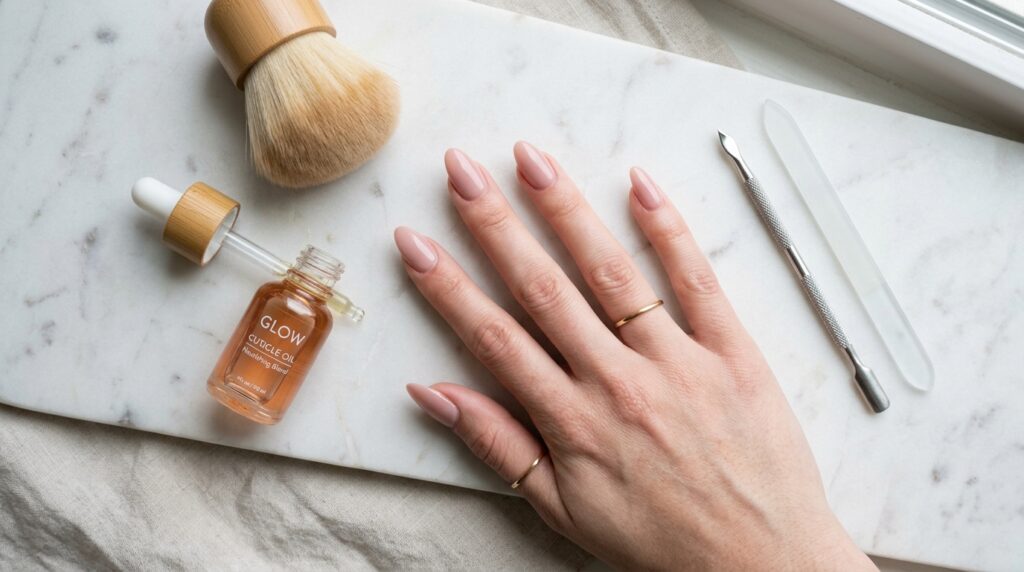
- Use cuticle oil twice a day. Morning and evening, work it into the cuticle area and the skin around your nails. This keeps the natural nail flexible and hydrated, which helps the product stay bonded to it. Dry, brittle nails are more likely to cause lifting and breakage. I recommend cuticle oil to all of my clients, and I sell it at every appointment for a reason. It works.
- Wear gloves for cleaning and washing up. Prolonged contact with water and household chemicals is one of the fastest ways to shorten the life of any nail enhancement. Your nails are not tools, and neither are your ungloved hands.
- Do not pick, peel, or bite. I know this one sounds obvious, but it is worth saying. If something chips or lifts, leave it alone and get in touch with me. A quick repair is always better than the damage caused by picking at it yourself.
- Be mindful of how you use your hands. Opening cans, scraping labels off things, using your nails to prise things open. These are all common habits that put unnecessary stress on enhancements. Use tools, not your fingertips.
When a full new set is needed
Infills can maintain a set for several cycles, but they are not infinite. Over time, product layers build up, and occasionally a full removal and fresh application is the better option.
How often that happens depends on the individual. Some clients go three or four infill cycles before needing a new set. Others prefer a fresh start every second appointment. There is no single rule here, because every person’s nails behave differently.
What I will say is this: I will always be honest with you about what your nails need. If an infill is enough, I will do an infill. If a new set is the better call, I will tell you and explain why. I am not interested in upselling you on work you do not need.
Setting realistic expectations
If someone promises you nails that last six weeks with no maintenance, be cautious. Either they do not understand how nail growth works, or they are not being upfront about what “lasting” means.
A well-applied set of enhancements, maintained on a proper schedule, will keep your nails looking beautiful consistently. That is the goal. Not one perfect set that slowly deteriorates, but a rolling cycle of nails that always look and feel their best.
It does require commitment. Regular appointments, a bit of homecare, and the willingness to treat your nails as something worth maintaining rather than something you get done once and forget about.
What to do next
If you are already a client, check when your next appointment is and make sure you are not stretching it too far. If you are not sure what schedule suits your nails, ask me at your next visit and I will give you an honest answer based on what I can see.
If you are new here and thinking about booking, now you know what to expect. I would rather you walk in with realistic expectations and leave happy than come in expecting miracles and feel let down. That honesty is the foundation of every appointment I do.
Your nails deserve proper care. And proper care is not complicated. It is just consistent.